







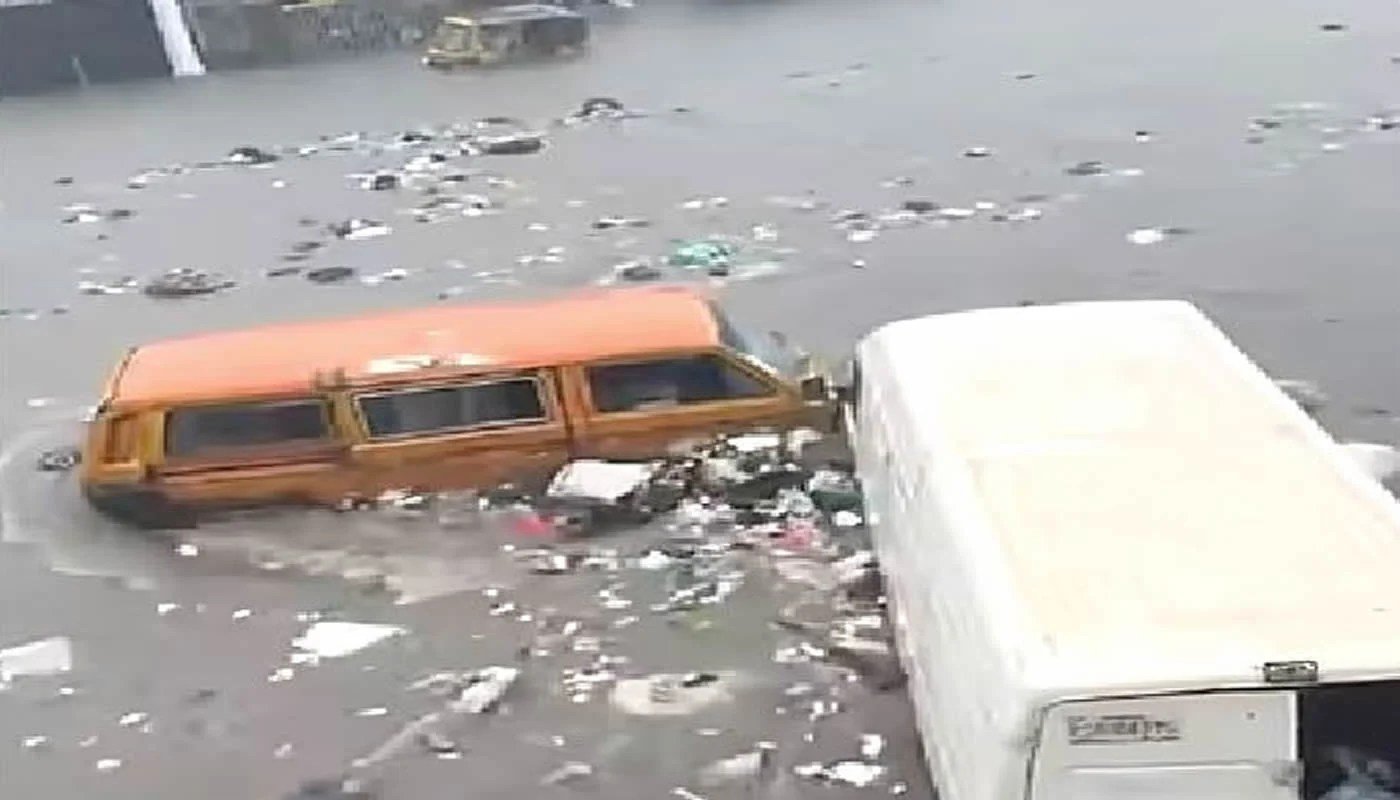
Heavy rainfall swept across Lagos on July 3, leaving several major roads submerged, stranding motorists and disrupting business activities as flash floods once again exposed the city’s drainage challenges.
Areas including Lekki Phase 1, the Lekki-Epe Expressway, Victoria Island, Ikeja, Gbagada, Mushin and Mafoluku experienced severe flooding after an intense downpour overwhelmed drainage systems.
Videos shared on social media showed vehicles partially submerged, commuters wading through floodwaters and traffic brought to a standstill in several parts of the state. The flooding occurred despite lasting for only a relatively short period, highlighting the impact of extreme rainfall on Lagos’ infrastructure.
The Lagos State Government appealed for calm, describing the incident as an extreme weather event caused by an unusually high volume of rainfall within a short time. Commissioner for the Environment and Water Resources, Tokunbo Wahab, said the intensity of the rain exceeded the capacity of some drainage channels, leading to temporary flooding across affected communities.
In response, Governor Babajide Sanwo-Olu approved the immediate dredging and maintenance of 28 additional primary drainage channels as part of emergency flood-control measures. The state government also urged residents to stop dumping refuse into drains and waterways, warning that blocked channels continue to worsen flooding during the rainy season.
The latest flooding comes after meteorological authorities warned that Nigeria could experience above-normal rainfall between July and September, increasing the risk of flash floods in low-lying urban areas. Urban planners and environmental experts say rapid urbanization, inadequate drainage infrastructure and rising sea levels continue to make Lagos especially vulnerable during the peak rainy season.
While floodwaters gradually receded in some areas, many residents renewed calls for long-term investments in drainage expansion, better waste management and climate-resilient infrastructure to reduce the recurring disruption caused by seasonal rains.