





Author: exaltedimage.studio@gmail.com

  • Japan’s $3.5m Rice Grant Targets Nigeria’s Problem Before It Reaches the Farm

    Japan has committed $3.5 million to strengthen Nigeria’s rice seed production system, providing equipment and technical support to the National Cereals Research Institute (NCRI) and its outstations. The intervention is designed to improve the quality and availability of rice seeds supplied to farmers across the country.

    But the interesting part of this intervention is that Japan is not simply giving farmers more inputs. It is targeting one of the problems that happens before farmers even begin planting: the quality of the seed itself.

    The grant will finance 20 medium-sized tractors, three rice transplanters, four combine harvesters and two excavators, alongside laboratory equipment, weather-monitoring systems and seed-drying machinery. The project also includes technical assistance, maintenance training and institutional capacity building.

    That matters because Nigeria’s food-security conversation often focuses on fertilizer, land and increasing the number of people farming. But if farmers are planting unreliable or low-quality seeds, simply putting more resources into cultivation may not produce the expected jump in yields.

    Japan’s intervention is therefore aimed at strengthening the foundation of the rice value chain. The timing is also significant. Nigeria’s Second National Rice Development Strategy for 2020–2030 aims to double domestic rice production by 2030, while Japan says demand for rice continues to outpace domestic production.

    The real question, however, is what happens after the cameras leave the handover ceremony. Equipment can improve production dramatically, but only if it is maintained, properly managed and actually reaches the people who need it. Japan’s ambassador specifically urged NCRI to ensure effective operation and maintenance of the equipment so that the investment continues delivering benefits for years.

    Nigeria has also received agricultural interventions before. The difference this time will be measured by whether better breeder and foundation seeds translate into more reliable certified seeds for farmers, higher yields and eventually more affordable rice for consumers.

    That is the real test. If the system works, the $3.5 million could have an impact far beyond the value of the grant itself, because improving the seed system means potentially improving the productivity of thousands of farmers who never directly receive a dollar from Japan.

  • DRC’s Ebola Outbreak Is Moving Faster Than the Response Can Contain It

    The Democratic Republic of Congo’s latest Ebola outbreak has crossed a grim milestone: more than 2,000 people have died, with health authorities reporting 4,381 confirmed cases and 2,011 deaths. The outbreak, declared less than three months ago, is now being described as the fastest-growing Ebola outbreak on record.

    But the most alarming part is not simply the death toll. It is how quickly the numbers are accelerating. The first 1,000 deaths took roughly nine weeks. The next 1,000 came in just three weeks. That means the outbreak is not merely continuing to spread; its pace has dramatically increased.

    That changes the question from “Can Congo contain Ebola?” to “Can the response move faster than the virus?” So far, that is proving difficult.

    The outbreak is concentrated in eastern DRC, particularly around Ituri, an area already dealing with insecurity, difficult terrain and limited healthcare capacity. Health officials have also warned that a large proportion of new infections are occurring through community transmission rather than known chains of contact. That makes traditional contact tracing much harder because responders are increasingly discovering cases without knowing who exposed them.

    There is another major complication: this outbreak involves the Bundibugyo ebolavirus, rather than the Zaire species responsible for several previous major Ebola outbreaks. Unlike Zaire Ebola, there are currently no approved vaccines or treatments specifically available for Bundibugyo Ebola, making early detection, isolation and supportive medical care even more important.

    Scientists are also investigating the likely origin of the outbreak, with recent research pointing towards a possible new animal-to-human spillover rather than a continuation of an old chain of transmission. The international response will therefore be crucial over the coming weeks.

    The danger is not necessarily that this automatically becomes another 2014–2016 West African-scale epidemic. Ebola spreads differently from respiratory viruses and requires specific forms of contact. But the current growth rate shows why waiting for the numbers to become even more dramatic would be dangerous.

    Every delay in finding cases creates more contacts to trace, more communities to reach and more opportunities for transmission. The real story now is whether health authorities can finally get ahead of the curve.

  • Nigeria’s Detention Problem Is Becoming a Rule-of-Law Crisis

    Nigeria’s security agencies face renewed scrutiny over allegations of people being held for years without trial, raising a question that goes beyond individual cases: how can the state fight insecurity effectively if people can remain in detention without a clear judicial resolution?

    One of the cases attracting attention is that of Onyeaka Ozioma Elizabeth, an Anambra woman who was reportedly arrested in 2020 and held at the Wawa military detention facility in Kainji, Niger State. She recently appeared at the Federal High Court in Abuja, where reports said she described being in detention for more than five years without trial. Her lawyer, Aloy Ejimakor, has repeatedly raised concerns about her detention.

    There is also the case of Ahize, whose arrest in Imo State in 2022 allegedly involved DSS and Army personnel before he was moved through different detention facilities, according to Ejimakor and reports on the broader issue.

    These cases are particularly troubling because detention is supposed to lead somewhere: a suspect is investigated, charged where there is sufficient evidence, tried and either convicted or released. When that process stretches into years, the distinction between lawful detention and punishment without conviction becomes increasingly difficult to defend.

    The wider scale of the allegations is even more concerning. A joint report by Intersociety and the Ekwenche Research Institute claims that more than 6,000 South-East families remain unable to trace relatives who disappeared between 2021 and 2026, with the organizations alleging that many disappeared after arrests by security agencies. Those figures are claims by the organizations and have not been independently verified, but they illustrate the depth of distrust surrounding security operations in the region.

    And that distrust has consequences. Security agencies may have legitimate reasons to investigate suspected links to violent groups, particularly amid attacks associated with separatist and criminal networks. But national security cannot become a substitute for judicial process. The longer authorities cannot explain where detainees are, what they are accused of, or why they have not been brought before a court, the harder it becomes to convince affected communities that security operations are being conducted fairly.

    The real test now should be transparency. For every person held for years without trial, Nigerians deserve answers: What is the allegation? Where is the evidence? Why has there been no trial? And if there is insufficient evidence, why has the person not been released?

    Fighting insecurity requires intelligence and strong security institutions. But it also requires public trust. Without that, every new arrest risks creating another family that believes the state has simply made their relative disappear.

  • Real Madrid and Barcelona Get Their World Cup Stars Back, But Who Benefits More?

    The 2026/27 season is beginning to take shape as Real Madrid and Barcelona welcome back some of their biggest stars following Spain’s World Cup triumph, but their returns also create a new preseason problem: how quickly can these players go from celebration mode to title-race mode?

    At Real Madrid, Jude Bellingham has returned to preseason training after spending additional time in London for personal and commercial commitments. His arrival completes another important piece of José Mourinho’s squad as Madrid continue preparing for the new campaign.

    But Madrid fans should probably resist the temptation to read too much into his return just yet. Bellingham is back, but he has not immediately been thrown into the squad for Wednesday’s friendly against Deportivo. That suggests the priority is getting him physically ready rather than rushing him into competitive action.

    That could actually be important for Madrid. The club are dealing with a preseason in which several players are returning at different times. Bellingham’s midfield position is also one of the areas where Madrid have plenty of competition, particularly with Arda Güler impressing during preseason. Bellingham’s return could change the entire balance of the midfield and force Mourinho to decide who gets to occupy the most influential positions.

    Barcelona face a similar situation, with Lamine Yamal, Dani Olmo, Pedri and Pau Cubarsí reporting back for training after their World Cup commitments. The club had already scheduled the Spanish internationals to return on Wednesday.

    For Hansi Flick, however, their return could be even more significant. Yamal, Pedri and Olmo are central to Barcelona’s attacking creativity, while Cubarsí provides another important option in defense. Their arrival gives Flick a much clearer idea of what his strongest squad could look like, but also leaves him with the challenge of managing players who have had very little recovery time after a major tournament.

    And that may be the biggest story of the preseason. Neither Madrid nor Barcelona simply needs its stars back. They need them back healthy.With the new season approaching, the club that manages the post-World Cup transition better could gain an advantage before the first Clásico is even played.

  • Ronaldo’s Wedding Was Real. The Internet Still Managed to Invent Half of It.

    Cristiano Ronaldo and Georgina Rodríguez are officially married, but their wedding has already become a perfect example of how difficult it is to separate a real celebrity moment from AI-generated fiction.

    The couple held a private civil ceremony in Cascais, Portugal, on August 11, surrounded by their five children. Ronaldo and Rodríguez confirmed the milestone themselves, sharing a simple photograph of their hands displaying their wedding rings rather than releasing a huge collection of wedding pictures. Reuters and other major outlets have independently confirmed the marriage.

    Then the internet did what the internet does. Images began circulating showing Ronaldo supposedly celebrating with some of football’s biggest names, including Lionel Messi, Kylian Mbappé, Erling Haaland and Harry Kane. At first glance, they looked convincing enough to be mistaken for genuine wedding photographs.

    They weren’t. A fact-check found that the viral images were AI-generated. Details such as distorted tattoos, facial features and other visual inconsistencies exposed the manipulation. There is no evidence that those footballers attended Ronaldo’s private ceremony.

    And that is arguably the more interesting story. Ronaldo’s actual wedding was deliberately private. That created an information vacuum. Fans knew the marriage had happened, but there were very few authentic photographs available. AI effectively filled that vacuum with images that looked like the photographs people expected to see.

    That is the problem celebrities and audiences are increasingly going to face. When an event is highly anticipated but the real images are limited, people may unconsciously treat a convincing image as evidence simply because it fits the story they already believe. The fact that Messi, Mbappé and Haaland appearing together at Ronaldo’s wedding sounds extraordinary, but not completely impossible, makes the deception even easier to spread.

    The situation is also a reminder that “I saw the picture” is no longer enough. Even obvious clues can be missed when an image is viewed quickly on X, Instagram or TikTok, particularly when thousands of other users are sharing it with captions claiming it is genuine.

    Ironically, Ronaldo’s actual wedding was far less spectacular online than the fake version. The real event was a private family ceremony after years together. The internet turned it into a football reunion that apparently never happened.

  • Oil at $87: The Bigger Risk Is What Happens If Hormuz Stays Disrupted

    Global oil markets are once again being pushed higher by the standoff between the United States and Iran over the Strait of Hormuz, with Brent crude climbing sharply as hopes of a quick reopening of the strategic waterway fade. The U.S. Energy Information Administration has raised its 2026 Brent price forecast to about $87 per barrel, while prices briefly moved as high as $90 earlier this week.

    But the important question is not simply whether oil can reach $87. It is how long it can stay there.

    The Strait of Hormuz is one of the world’s most important energy chokepoints. Continued restrictions on shipping have already disrupted oil flows and forced producers in the region to shut in significant volumes. The EIA previously estimated that production shut-ins linked to the disruption had reached millions of barrels per day, while warning that restoring normal production and trade patterns could take months even after shipping resumes.

    That makes the latest price movement more than a temporary geopolitical reaction. If tensions ease and shipping through Hormuz returns to something approaching normal, some of the geopolitical premium could quickly disappear. Oil could fall just as rapidly as it rose.

    But if the confrontation drags on, $87 could start looking less like a ceiling and more like a new floor. That would have consequences far beyond petrol stations. Higher crude prices feed into transportation, aviation, manufacturing, electricity generation and food distribution because businesses ultimately pay more to move goods and operate equipment.

    For oil-producing countries such as Nigeria, the situation presents an obvious opportunity: higher crude prices can increase government oil revenue and foreign-exchange earnings. But that benefit is not automatic. Nigeria also needs to translate higher export earnings into stronger fiscal conditions rather than allowing the additional revenue to disappear into existing spending pressures.

    There is another problem. Higher oil prices can become self-defeating if they begin to weaken global economic growth. Expensive energy raises costs for businesses and consumers, potentially keeping inflation elevated and forcing central banks to maintain restrictive interest rates for longer.

    So the real market question now isn’t “Will oil hit $87?” It already has. The question is whether Washington and Tehran can prevent a temporary supply shock from becoming a prolonged global energy problem.

  • Putin’s Ship Warning: Could a Sanctions Fight Turn Into a Maritime Escalation?

    Russian President Vladimir Putin has warned that Moscow would retaliate if Western countries seize Russian commercial vessels, raising the stakes in an already increasingly aggressive campaign against Russia’s so-called shadow fleet.

    Putin’s warning comes as Western governments have become more willing to intercept and seize vessels suspected of helping Russia circumvent sanctions. The UK, for example, has carried out maritime operations against sanctioned shadow-fleet vessels, arguing that such actions can be conducted under international and domestic law.

    Russia disputes that interpretation. Moscow has repeatedly argued that Western seizures violate freedom of navigation and international maritime law, particularly when vessels are operating on the high seas. In January, Russia protested the seizure of the tanker Marinera, arguing that a civilian Russian-flagged vessel was protected by the jurisdiction of its flag state except in narrowly defined circumstances.

    That is what makes Putin’s latest warning significant. The real danger is that sanctions enforcement is moving from the financial world into physical confrontation at sea.

    For years, Western sanctions have largely relied on banks, insurers, ports and companies refusing to deal with Russian oil and other restricted goods. But the growing use of shadow-fleet vessels has made enforcement considerably more complicated. The UK government says hundreds of vessels are involved in transporting Russian oil outside conventional restrictions, while Russia increasingly relies on these ships to maintain its trade.

    If Western countries continue boarding or detaining these vessels, Moscow now appears to be signalling that Russia could respond directly rather than limiting its retaliation to diplomatic protests.

    That does not necessarily mean Russia is about to attack Western merchant ships. Putin’s statement is primarily a warning, and the precise form of any retaliation remains unclear. But even a limited confrontation could have consequences far beyond Russia and the West.

    Commercial shipping companies may become increasingly reluctant to operate through areas where Russian and Western naval forces could come into contact. Insurance costs could rise, ships could take longer routes and energy markets could react to fears of disruption.

    The bigger question is therefore whether Western governments can continue tightening enforcement without turning sanctions enforcement into a military confrontation. The next Russian or Western vessel seizure could reveal just how serious Putin’s warning really is.

  • Kebbi Clash: 10 Police Officers Killed, But Can Security Forces Keep Winning Battles and Losing the War?

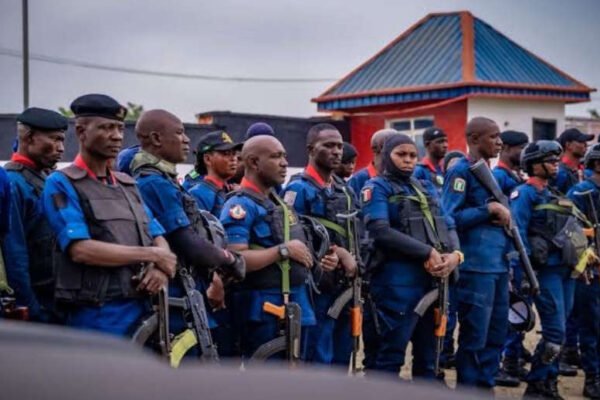
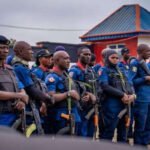
    Ten police officers and two civilians have been killed in a major gun battle with suspected bandits in Sakaba Local Government Area of Kebbi State, highlighting just how dangerous the north-western security crisis remains even as authorities report increasing successes against armed groups.

    The confrontation happened around 9:25 a.m. Monday along the Rafin Makuku axis, after security personnel intercepted an armed group moving between Zamfara and Kebbi. The Kebbi State Police Command said at least 17 suspected bandits were neutralized, while four motorcycles belonging to the attackers were burnt. Two other police officers were injured.

    But the numbers raise a difficult question: what does “success” actually look like when 10 security officers and two civilians are killed in the same operation?

    The police have described the encounter as a significant blow to the bandits, and follow-up operations are reportedly underway against those who fled. Yet the fact that such a heavily armed group was able to move across the Zamfara-Kebbi corridor and engage security forces in a prolonged firefight suggests that the problem is bigger than simply eliminating individual fighters.

    There were also reports of military airstrikes against an armed group moving from Zamfara towards the Makuku area around the same period. Some reports estimated that more than 200 fighters were travelling on motorcycles, although security authorities have not independently confirmed that figure. It is also unclear whether the airstrikes occurred before or after the deadly confrontation.

    That uncertainty matters. The police themselves have cautioned that the casualty figures on the bandits’ side remain subject to further verification. So while “17 bandits neutralized” is the official figure currently being reported, it should not automatically be interpreted as 17 confirmed deaths.

    The immediate concern for Kebbi residents is what happens next. If some attackers escaped, authorities will need to prevent them from regrouping, retaliating against communities or moving deeper into neighboring states. Additional security personnel have already been deployed, with operations continuing against fleeing members of the group.

    The real test, therefore, is not whether security forces can win one gun battle. It is whether they can stop armed groups from repeatedly returning to the same communities and corridors.

    Until that changes, every reported victory risks becoming another bloody episode in the same cycle.

  • Nigeria’s Alleged Coup Plot Raises a Bigger Question: How Deep Did the Network Go?

    Fresh details from the ongoing investigation into Nigeria’s alleged 2025 coup plot have put Army Colonel Mohammed Ma’aji at the centre of the case. Investigators reportedly identified him as a key organiser of the alleged plan to overthrow President Bola Tinubu, with statements attributed to him naming other military officers allegedly involved.

    But the bigger issue is no longer simply whether a coup was discussed. It is how far the alleged network was able to reach inside Nigeria’s security establishment.

    According to court and investigative records reported in recent months, the alleged plot went beyond conversations among a few disgruntled officers. Investigators have described attempts to obtain weapons, conduct reconnaissance around the Presidential Villa and identify insiders who could provide access. One police officer attached to the Villa allegedly told investigators that Ma’aji sought assistance in gaining entry to the presidential complex.

    That makes the reported confession particularly significant, but it should still be treated as evidence in an ongoing case, not a final judicial finding.

    The allegations are being tested in court. Thirty-six serving military personnel are facing a General Court Martial over alleged involvement in the plot, while six other defendants are being prosecuted in the Federal High Court. The civilian defendants have pleaded not guilty, and defense lawyers have challenged the admissibility of some of the statements investigators obtained.

    There is also an important political dimension. Investigators have reportedly linked Ma’aji’s alleged motivations to dissatisfaction over military promotions, welfare and broader economic conditions. Recent court reporting has described alleged plans to present a post-coup government as an alternative to what the conspirators considered failed leadership.

    If prosecutors ultimately establish the allegations, the case could expose serious weaknesses in Nigeria’s military command and intelligence structures: how did officers allegedly have enough time and access to discuss recruitment, funding, reconnaissance and an attack on the seat of government?

    For now, the answer remains contested. But the trial could become one of Nigeria’s most consequential tests of civilian control over the military since the country returned to democracy in 1999.

  • Funke Akindele’s Next Film Has the Cast, But Can It Deliver Another Nollywood Blockbuster?

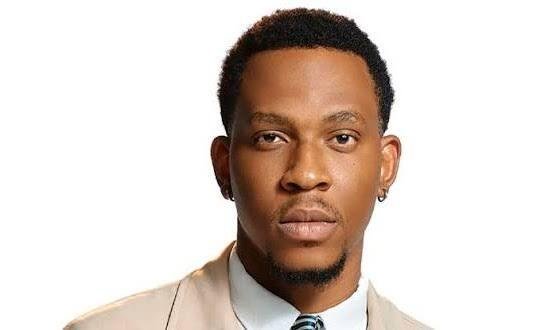
    Funke Akindele is betting on another big-screen event with The Four: No One Fights Alone, a new drama featuring an impressive mix of Nollywood veterans, established stars and a rising Afrobeats name. The cast includes RMD, Chioma Akpotha, Timini Egbuson and Shoday, with the film scheduled for a worldwide cinema release on December 11, 2026.

    But the interesting part isn’t simply who is in the movie. It is whether Akindele can once again turn a star-studded cast into the kind of cinema event Nigerian audiences actually want to pay to see.

    Akindele has already demonstrated that she understands the commercial side of Nollywood. Her previous films have shown the power of combining recognizable actors with stories designed to appeal to a broad Nigerian audience. Battle on Buka Street, for example, is among her established film credits.

    The Four appears to be taking a different emotional route. The title, No One Fights Alone, immediately suggests a story built around relationships, resilience and people confronting difficult circumstances together. That could give the film an advantage beyond celebrity appeal: audiences may be coming for the stars but staying for the story.

    The December release date is also significant. A Christmas-season cinema release can become a major opportunity in Nigeria, when families and friends are already looking for entertainment and cinema attendance traditionally becomes more competitive.

    But there is a risk. Nollywood has increasingly shown that a huge cast does not automatically equal a huge movie. Audiences have become more selective, particularly as streaming platforms give viewers more alternatives. A film can have RMD, Timini and Chioma Akpotha on the poster and still struggle if the story does not live up to the marketing.

    That makes The Four an interesting test for Akindele. If the emotional drama connects, the film could become another December crowd-puller and further strengthen her reputation as one of Nollywood’s strongest commercial filmmakers. If the story feels secondary to the star power, audiences may quickly move on.

    The cast has already created the hype. Now the December release has to prove the hype was deserved.