










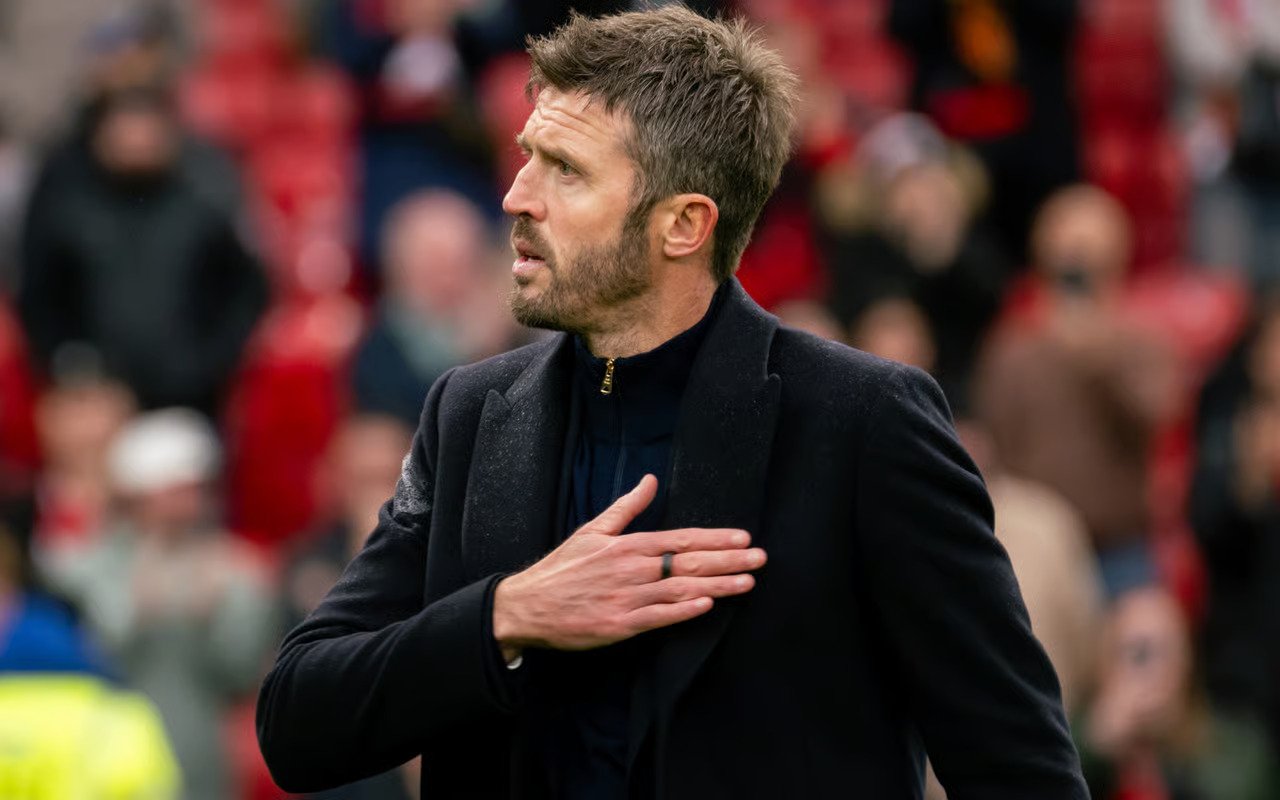
Manchester United’s 3-0 defeat to Bournemouth at Old Trafford on Sunday, October 25, has turned an already difficult season into a serious test of the club’s leadership. Eight consecutive games without a win have left Michael Carrick facing growing pressure, with reports suggesting that Eddie Howe and Julian Nagelsmann are among the possible alternatives if the club decides to make another managerial change.
The result was more than another disappointing afternoon for United supporters. It exposed a team struggling to defend, create confidence and respond when matches turn against it. Bournemouth scored through Rayan, Marcus Tavernier and Evanilson, punishing defensive mistakes and leaving the home side without a goal.
But the most important question is not simply whether Carrick should be sacked. It is whether Manchester United can solve its problems by changing managers again, or whether the club needs to confront the decisions that have repeatedly brought it to this point.
Why Did Manchester United Lose 3-0 to Bournemouth?
United entered the match needing a response after losing 4-1 away to Como in midweek. Instead, the players produced another performance that raised questions about their confidence, organisation and ability to compete under pressure.
Bournemouth took control in the closing stages of the first half. Rayan opened the scoring in the 38th minute before Tavernier added a second five minutes later. Evanilson scored in the 71st minute to complete the victory.
The goals were particularly damaging because United’s defensive mistakes made Bournemouth’s job easier. The home side struggled to deal with dangerous deliveries and failed to recover quickly enough when possession or defensive positioning went wrong.
United did show some attacking intent after the break, but the pressure did not produce a goal. Bournemouth remained comfortable enough to protect their lead and take all three points.
This is where the defeat becomes more worrying than the scoreline alone. Losing to a well-organised opponent is part of football. Repeatedly making similar mistakes, however, suggests that the team has not found a reliable way to respond to difficult situations.
Carrick must accept responsibility for preparing the team and choosing the right approach. Nevertheless, the players also have a duty to perform basic tasks, protect their goal and show enough determination to change the direction of a match.
When those things are missing, changing the person on the touchline may not be enough.
Has Carrick Lost the Manchester United Dressing Room?
One of the biggest talking points before the Bournemouth match was Carrick’s decision to leave captain Bruno Fernandes out of the starting line-up.
The decision followed Fernandes’ public criticism of the team’s tactics after the 4-1 defeat to Como. The midfielder’s absence therefore raised questions about whether Carrick was making a tactical choice or responding to the disagreement.
Carrick maintained that the decision was based on footballing considerations. However, the timing made it difficult to separate the selection from the wider tension surrounding the team.
United’s performance did little to strengthen the manager’s position. If a coach leaves out his captain to change the team’s direction, supporters expect to see a clear improvement in discipline, energy or attacking quality. That improvement did not arrive against Bournemouth.
Still, it would be premature to conclude that Carrick has completely lost the dressing room. A poor performance and a disagreement with a senior player do not automatically prove that the players have stopped listening to their manager.
Defender Harry Maguire publicly indicated that the dressing room continued to support Carrick, although the team’s performances have not matched those assurances. Former United winger Ashley Young also questioned whether the players were responding adequately to their manager.
For Carrick, the immediate challenge is to restore trust through results and performances. For the players, it is to demonstrate that their commitment to the club is not dependent on who manages them.
A dressing room cannot function effectively if players and coaches are pulling in different directions. United need clarity, accountability and a shared plan, regardless of who starts the next match.
Why Another Managerial Change May Not Fix Manchester United
Manchester United have spent much of the period since Sir Alex Ferguson’s retirement in 2013 searching for a permanent return to their former standards.
Several managers have arrived with different approaches, recruitment priorities and ideas about how the team should play. Yet the club has continued to experience periods of instability, underperformance and uncertainty over its long-term direction.
That history makes Carrick’s current situation especially important. If he leaves, United will have to decide whether the next appointment represents a genuine change in direction or another attempt to escape an immediate crisis.
A new manager can improve tactical organisation, rebuild confidence and make better use of the players available. Those benefits should not be dismissed. However, a coach cannot independently resolve every problem involving recruitment, squad balance, player development and executive decision-making.
United’s struggles also raise questions about how the club identifies the players it signs, whether the squad has the right balance of experience and ability, and how consistently its football leadership supports a manager’s plans.
If the club continues to appoint coaches without establishing a clear long-term strategy, each new manager risks inheriting many of the same weaknesses.
This is why the decision over Carrick should involve more than an assessment of his latest result. The board must establish what it expects from the team, which problems it believes the manager can solve and whether the available squad is suited to the football it wants to play.
My view is that United should not keep a manager simply because another dismissal would look embarrassing. Nor should it sack one merely to demonstrate that someone has been punished for poor results. The decision should depend on whether the club has a credible plan for improving the team.
If Carrick cannot deliver that improvement, a change may be justified. But if the club has no coherent plan for his successor, it risks repeating the same cycle.
Who Could Replace Michael Carrick at Manchester United?
The names of Eddie Howe and Julian Nagelsmann have emerged in reporting about potential alternatives should United decide to move on from Carrick. Their inclusion reflects the club’s need to consider what type of manager could bring greater stability to the team.
Howe has experience managing English clubs and building competitive teams within the Premier League. His work at Newcastle United has demonstrated his ability to organise a squad, improve its intensity and compete against established opponents. However, moving to United would bring a different level of scrutiny and pressure.
Nagelsmann offers a different profile. The German coach is known for his tactical flexibility and experience working at the highest levels of European football. His appointment would represent an attempt to bring a strong tactical identity to a team that has struggled for consistency.
Neither candidate would provide a guaranteed solution. A manager’s success depends on more than reputation or tactical knowledge. The club must also give the person in charge the right squad, sufficient time to implement a plan and support from the executives responsible for recruitment.
United should therefore assess potential replacements against clear requirements. Can the candidate improve the defence? Can they build a consistent attacking system? Can they develop younger players while managing experienced stars? Most importantly, can the club agree on a football strategy that will remain in place beyond one disappointing season?
Choosing a replacement without answering those questions would be a costly gamble.
Manchester United’s Poor Start Raises Relegation Concerns
The league situation makes the crisis more urgent. United have collected only seven points from their first eight Premier League matches, their worst start at this stage since the 1986-87 season, according to Reuters. The Bournemouth defeat also left them just one point above the relegation zone.
That position is alarming for a club with United’s resources and ambitions. Although it is too early to conclude that the team will be relegated, the possibility of being dragged into a prolonged survival battle cannot be ignored if results fail to improve.
A poor start can affect more than the league table. Players may begin to approach matches with fear of making mistakes, opponents may grow more confident when facing United, and supporters may lose patience with both the manager and the club’s leadership.
The upcoming fixture against Chelsea on Saturday, October 31, will be another important test. United need to show that the Bournemouth result has prompted a response rather than another round of excuses.
The challenge is not necessarily to produce a perfect performance immediately. It is to demonstrate better organisation, greater concentration and a clear plan for creating chances. Even when results are difficult, supporters need evidence that the team is moving in the right direction.
If United continue to struggle, pressure on Carrick will intensify and the club may have to make a decision sooner rather than later.
The Bigger Problem: Who Is Accountable at Manchester United?
The reaction to the Bournemouth defeat has extended beyond Carrick. Former players and supporters have questioned the attitude of some members of the squad, while frustration with the club’s ownership and leadership has resurfaced.
This is an important distinction. A manager is responsible for team selection, tactics, preparation and performance standards. Players are responsible for carrying out instructions, competing for the ball and showing discipline. Executives are responsible for recruitment, planning and ensuring that the club’s football operations work towards a consistent objective.
When results deteriorate, these responsibilities can become blurred. The manager is often the most visible person in the crisis, making dismissal the easiest action for a club to take. Yet replacing a coach does not automatically resolve poor recruitment decisions or establish a stronger sporting structure.
United need a proper review of the football operation, including how players are recruited, how tactical decisions are evaluated and how the club measures progress over a full season.
That does not mean Carrick should be protected from criticism. His team has gone eight matches without a win, and the defeat to Bournemouth was unacceptable given the club’s ambitions. But accountability should apply to everyone involved, not only the person who stands beside the pitch.
If the club wants to avoid another period of instability, it must identify the causes of its repeated failures rather than treating every managerial change as a fresh start.
What Happens Next for Carrick and Manchester United?
Carrick’s immediate future remains uncertain. Reports have placed his position under serious pressure, but speculation about replacements should not be confused with an official announcement that he has been dismissed.
The Chelsea match offers an immediate opportunity for United to respond, although one result alone is unlikely to settle every concern about the club’s direction. The performance, the team’s defensive discipline and its ability to create meaningful chances will all matter.
If Carrick remains in charge, he needs to show that he can restore confidence and make difficult decisions without losing the trust of his players. If the board decides to replace him, it must be prepared to explain what will change under the next manager and how that change will be supported.
Manchester United cannot afford to let the discussion end with another name being added to the list of dismissed managers.
The 3-0 loss to Bournemouth has exposed a team in serious trouble. Carrick must answer for the performances, and the players must answer for their contribution. But the club’s leadership must also decide whether it has built an organisation capable of supporting sustained success.
Sacking Carrick may become necessary, but it should not be mistaken for a complete solution. Manchester United need more than a new manager. They need a clear football strategy, a balanced squad and accountability that reaches every level of the club.
One thought on “Is Michael Carrick the Problem at Manchester United, or Is the Club Failing Again?”