Ukrainian President Volodymyr Zelenskyy has acknowledged that Ukraine’s recent military operation against Russian vessels in Libya was not coordinated in advance with European partners, raising fresh concerns about the possibility of the Russia-Ukraine war extending into the Mediterranean.
The admission followed growing criticism from Italian Prime Minister Giorgia Meloni, who warned that the conflict must not spread into the Mediterranean after Ukrainian forces struck Russian naval assets at Benghazi port in eastern Libya.
The November 28 development has exposed a delicate disagreement between Ukraine and some of its European supporters. While Kyiv maintains that Russian military assets remain legitimate targets wherever they operate, European governments are increasingly concerned about the consequences of military operations near their strategic interests.
The controversy comes as Zelenskyy continues to criticise US President Donald Trump’s approach to Russian President Vladimir Putin, particularly his previous description of the Russian leader as a friend.
Meanwhile, Russia has used the same period to showcase its military capabilities, with President Putin attending the commissioning ceremony of the nuclear-powered submarine Perm, a vessel designed to carry Zircon hypersonic missiles.
Together, these developments highlight a dangerous question for Europe: could Ukraine’s expanding military operations create security problems even among the countries supporting its defence?
Why Did Ukraine Attack Russian Ships in Libya?
The controversy began following a Ukrainian operation against Russian naval assets at Benghazi port on November 22, 2026.
Ukraine said its forces used seven domestically produced naval drones to attack the Russian Navy corvette Merkury, which was docked at the Libyan naval facility.
The operation also targeted a Russian cargo vessel, the MV Angara, which Kyiv said was being used to transport military equipment and weapons.
Ukrainian authorities described the vessels as legitimate military targets because of their alleged involvement in supporting Russia’s war effort.
Zelenskyy praised the operation, describing it as an effective demonstration of Ukraine’s ability to strike Russian military assets far beyond the traditional battlefield.
The distance involved makes the attack particularly significant. Benghazi is approximately 2,400 kilometres from Ukraine’s front lines, demonstrating how far Ukrainian naval drone capabilities can reach.
However, the location created a diplomatic problem.
The attack took place in Libya, a country that has struggled with political division and competing centres of power since the fall of Muammar Gaddafi in 2011.
Military operations involving foreign countries in Libyan territory are therefore particularly sensitive because they risk worsening an already complicated security environment.
Ukraine has insisted that its target was Russian military infrastructure, not Libya itself. Nevertheless, the operation has raised questions about sovereignty, military coordination and the potential consequences for countries outside the war.
Zelenskyy’s Admission Exposes a Divide With European Allies
Zelenskyy’s comments became particularly important after Italian officials challenged his earlier explanation of how Ukraine coordinates military operations abroad.
During an interview with the BBC published on November 26, the Ukrainian president suggested that his country’s forces worked with other governments whenever operations involved foreign or international waters or infrastructure belonging to another country.
However, Italian Foreign Minister Antonio Tajani disputed that account, saying Italy had not been informed about the operation in Libya.
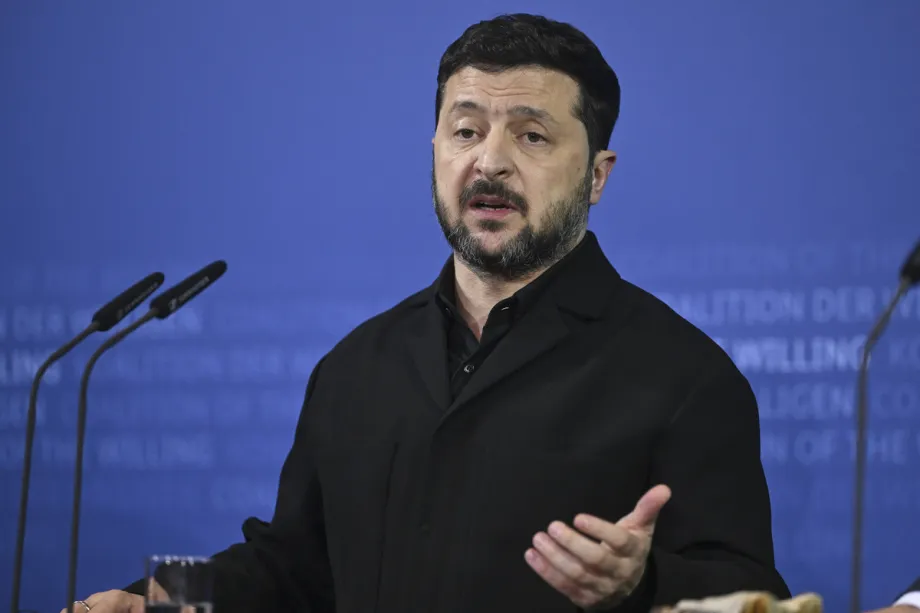
The disagreement became more significant on November 27 when Zelenskyy spoke with Italian Prime Minister Giorgia Meloni.
Following their conversation, he confirmed that the recent operation had been conducted without prior coordination with European partners.
He also stressed the importance of improving communication between the countries and ensuring that relevant authorities exchanged necessary information.
This clarification matters because European governments have provided Ukraine with considerable military, financial and diplomatic support since Russia launched its full-scale invasion in February 2022.
However, supporting Ukraine’s defence does not necessarily mean European countries want military operations expanding into areas where their own national interests could be affected.
The distinction is becoming increasingly important.
Ukraine wants the freedom to strike Russian military infrastructure wherever it can weaken Moscow’s ability to continue the war. European partners, meanwhile, must consider the possibility that such operations could expose their territories, shipping routes and regional interests to additional security risks.
In my opinion, this is one of the biggest diplomatic challenges facing Ukraine. Kyiv needs its allies, but it also wants to demonstrate that it can independently determine how and where to weaken Russian military capabilities.
Those two objectives will not always align.
Why Is Italy Worried About the War Spreading to the Mediterranean?
Italy’s reaction is not simply about disagreeing with Ukraine’s military strategy. Libya has important economic and security connections with Rome.
The North African country is a major energy partner for Italy, particularly through natural gas supplies and infrastructure connecting the two countries.
Italy is also concerned about irregular migration across the Mediterranean, making stability in Libya an important part of its regional security policy.
An escalation involving foreign military operations could threaten these interests.
Speaking on November 26, Meloni warned that Russia’s war against Ukraine must not expand into the Mediterranean.
She maintained that Italy would continue supporting Ukraine’s right to defend itself but insisted that the conflict should not create additional risks for the wider region.
Her position reflects a difficult balance.
Italy wants Russia’s invasion to end, but it also wants to avoid becoming exposed to a broader confrontation because of military operations conducted far from Ukraine.
Libya’s political division makes the situation even more complicated. The internationally recognised authorities in Tripoli and the eastern-based administration around Benghazi do not exercise unified control over the country.
Foreign military activity in either area can therefore become part of a wider struggle involving competing political and military interests.
The United Nations has also raised concerns about Libya being drawn further into the Russia-Ukraine conflict, calling for an independent investigation into the attack.
For Italy, preventing further instability is therefore both a diplomatic and an economic priority.
Zelenskyy Challenges Trump’s Description of Putin as a Friend
The disagreement over Libya is not the only diplomatic issue facing Zelenskyy.
The Ukrainian president has also criticised Trump’s previous description of Putin as a friend, arguing that such language is difficult to understand given Russia’s invasion of Ukraine.
In a BBC interview broadcast on November 27, Zelenskyy described Trump’s comments as strange.
He questioned how an American president could describe a leader responsible for ordering an invasion of another country as a friend.
Zelenskyy compared the description to someone referring to Adolf Hitler as a friend during the Second World War.
His remarks reflect growing frustration in Kyiv over Washington’s approach to negotiations with Moscow.
Trump has repeatedly expressed his desire to end the war through negotiations and has defended his language towards Putin as a way of maintaining communication and creating opportunities for a settlement.
He has argued that openly expressing hostility towards the Russian president would make negotiations more difficult.
However, Zelenskyy believes the United States should apply greater pressure on Moscow rather than appear too accommodating towards the Kremlin.
This disagreement matters because American support remains important to Ukraine’s military and diplomatic position.
European countries may continue providing assistance, but Washington’s influence over weapons supplies, intelligence and negotiations makes its position particularly important.
The challenge for Zelenskyy is maintaining strong American support while making sure that any eventual peace agreement does not leave Ukraine vulnerable to another Russian attack.
Russia Unveils the Nuclear-Powered Submarine Perm
While Ukraine is trying to demonstrate its ability to strike Russian military assets abroad, Moscow has also been showcasing its naval capabilities.
On November 27, Russian President Vladimir Putin attended a flag-raising ceremony for the nuclear-powered submarine Perm at the Sevmash shipyard in Severodvinsk.
The submarine belongs to Russia’s Yasen-M class, a series of nuclear-powered attack submarines designed for advanced naval operations.
The Perm is particularly significant because it is the first submarine of its class equipped to carry Zircon hypersonic cruise missiles.
These weapons are designed to travel at extremely high speeds, making them difficult to intercept using conventional missile defence systems.
The submarine is the fifth Yasen-M class vessel to join Russia’s fleet in six years, according to reporting by Euronews.
Putin also announced plans for five additional missile-carrying submarines to be delivered to the Russian Navy by 2030, including three Yasen-M class vessels.
The ceremony sends a message about Moscow’s determination to maintain and expand its military capabilities despite the financial and military pressure created by the war.
It also demonstrates that Russia’s military priorities extend beyond the immediate fighting in Ukraine.
The country’s submarine programme is part of a wider effort to strengthen its ability to operate across international waters and maintain strategic military influence.
What Does This Mean for the Future of the Russia-Ukraine War?
The developments surrounding Libya, Italy and the Perm submarine suggest that the Russia-Ukraine conflict is entering another complicated phase.
Ukraine is demonstrating that Russian military assets are not necessarily safe simply because they operate far from the front lines.
However, expanding the geographical reach of military operations also creates diplomatic risks.
Countries that support Ukraine may become uncomfortable if attacks threaten their regional interests or involve territories where they have important economic and security concerns.
For Russia, the situation offers an opportunity to highlight NATO and European divisions while continuing to strengthen its military capabilities.
The Kremlin could use disagreements between Kyiv and European capitals to argue that Western support for Ukraine is not as unified as it appears.
That does not mean European countries are abandoning Ukraine. Meloni has explicitly maintained Italy’s commitment to helping Kyiv defend itself.
Nevertheless, the disagreement shows that support for Ukraine has limits, particularly when military operations could affect the security of other regions.
I believe Ukraine’s ability to strike Russian assets at long distances is a significant military advantage, but Kyiv cannot afford to ignore the diplomatic consequences.
Military success is important, but maintaining the confidence of the countries providing support is equally necessary.
The next major test will be whether Ukraine and its European partners can establish clearer communication around operations that affect international waters and foreign territory.
Without that understanding, the war could create disagreements among allies at a time when unity remains one of Ukraine’s most important strategic advantages.