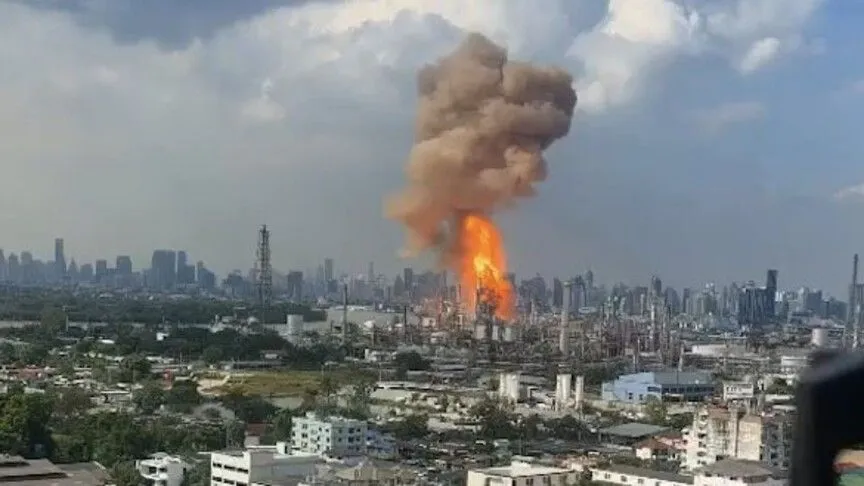
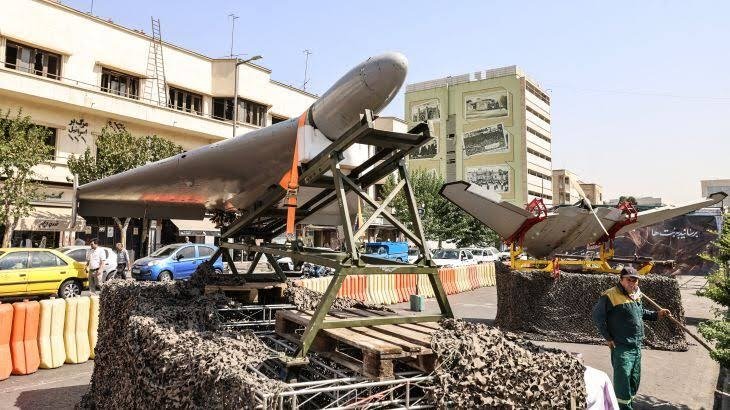
Kuwait’s military has intercepted several Iranian drones that entered its airspace, but the operation has not prevented casualties after falling shrapnel injured four people and damaged a vital facility. The November 26, 2026, incident has raised fresh concerns about the growing security risks facing Gulf countries as the conflict involving Iran continues to threaten neighbouring states.
According to Kuwait’s Ministry of Defence, the armed forces detected and engaged several hostile drones within the country’s airspace. However, debris from the incident struck a vital facility, injuring one Kuwaiti national, two Italian nationals and one Pakistani national.
All four victims were initially reported to have received hospital treatment.
The ministry condemned what it described as an Iranian attack and promised to maintain a high level of military readiness to protect Kuwait’s sovereignty and national security.
However, a subsequent Reuters report, citing a source close to the matter, said two Italian technicians working for German defence company Rheinmetall had been killed in an Iranian drone attack in Kuwait. The relationship between that report and the ministry’s initial casualty figures requires further clarification.
The incident is particularly significant because Kuwait has largely been viewed as a country seeking to avoid direct involvement in the wider confrontation. Its latest experience shows how quickly regional military tensions can affect countries that are not necessarily the primary targets of a conflict.
Beyond the immediate injuries and damage, the attack raises a bigger question: how secure are the Gulf’s critical facilities when drones can cross national borders and threaten infrastructure despite military interception efforts?
What Happened During the Iranian Drone Attack on Kuwait?
The incident occurred on Thursday, November 26, when Kuwait’s armed forces detected several hostile drones entering the country’s airspace.
The military responded by engaging the drones before they could complete their apparent mission.
In its statement, the Ministry of Defence said the attack targeted a vital facility, although officials did not immediately identify the exact location or provide a detailed assessment of the damage.
The falling shrapnel reportedly caused injuries to four people, including foreign nationals working or residing in Kuwait.
The presence of Italian and Pakistani nationals among the injured highlights another dimension of the incident. Attacks on industrial, commercial and strategic facilities can affect international workers who have no direct involvement in military operations.
The ministry described the incident as Iranian aggression and reaffirmed its commitment to protecting the country’s territory.
The military also said it would continue coordinating with relevant authorities to ensure the safety of citizens and residents.
While intercepting the drones was an important defensive achievement, the resulting injuries demonstrate that an interception does not always eliminate the danger.
When a drone is destroyed in the air, debris can still fall onto buildings, vehicles, workers and surrounding communities.
This is one of the major challenges facing countries investing heavily in air defence systems.
Why Is Iran Targeting Facilities in the Gulf?
The latest incident cannot be understood without considering the wider conflict involving Iran and its regional adversaries.
Since the US-Israeli military offensive against Iran began in February 2026, Tehran has carried out retaliatory strikes across parts of the Gulf region.
These attacks have increased security concerns in countries hosting American military facilities, strategic infrastructure and international business operations.
Kuwait occupies an important position in this regional security environment.
The country has longstanding defence and security relationships with the United States and hosts American military personnel and facilities. Its geographical location also makes it strategically important for military movements and regional logistics.
However, this does not mean every attack involving Kuwait should automatically be interpreted as an attack on an American military installation.
The Kuwaiti authorities have described the November 26 incident as an Iranian attack on a vital facility, but have not publicly identified the specific target.
That distinction matters.
Without knowing the precise location and intended target, it would be premature to conclude whether the objective was military, economic or connected to another strategic interest.
Nevertheless, the attack demonstrates how the wider confrontation can expose neighbouring countries to serious security risks.
Iran’s military strategy has increasingly involved the use of drones and missiles, which can threaten targets across considerable distances.
For Gulf governments, the challenge is no longer simply protecting their borders from conventional military incursions. They must also defend important facilities against relatively inexpensive weapons that can be launched from considerable distances.
Kuwait’s Air Defence Faces a Difficult Test
One of the most important lessons from the incident is the difficulty of defending critical infrastructure against multiple drone threats.
Modern air defence systems can detect and intercept incoming drones, but their effectiveness depends on several factors, including detection time, radar coverage, weapon availability and the number of incoming targets.
Drones also create a difficult economic calculation.
Some relatively inexpensive unmanned aircraft can force countries to use significantly more expensive interception systems.
If attacks continue over an extended period, maintaining constant defensive readiness can become financially and operationally demanding.
There is also the danger of falling debris.
Even when a drone is successfully intercepted, fragments can travel considerable distances before reaching the ground. If an interception occurs above a populated or industrial area, civilians and workers can still be injured.
That appears to be an important part of what happened in Kuwait.
The military may have prevented the drones from reaching their intended objective, but the resulting debris still caused injuries and property damage.
In my opinion, this is why Gulf governments need to think beyond simply purchasing more air defence equipment. They also need stronger emergency response systems, better protection around strategic facilities and effective communication with nearby communities.
International Flights Also Face Growing Risks
The latest security incident has implications beyond Kuwait’s military and industrial infrastructure.
Flight-tracking information showed aircraft changing routes around the affected airspace as concerns about drone activity increased.
Euronews reported that civilian flights travelling through a major international corridor between Europe and the Gulf were redirected south, away from Kuwait’s airspace.
This is significant because the Gulf is one of the world’s most important aviation regions.
Airports in Dubai, Doha, Abu Dhabi and other major cities connect passengers travelling between Europe, Asia and Africa.
Disruptions to airspace can therefore affect international airlines, passengers, cargo operators and businesses.
When military activity increases, aviation authorities may restrict certain routes or require aircraft to follow alternative corridors.
Such changes can increase flight times, fuel consumption and operating costs.
Airlines must also consider the safety of passengers and crew before deciding whether to continue using routes near areas experiencing military activity.
For passengers, the immediate consequences could include delays, cancellations and unexpected changes to travel arrangements.
For Gulf economies, prolonged disruptions could affect the wider aviation and tourism industries.
The November 26 incident is another reminder that regional military tensions can quickly become an international transport problem.
Could the Attack Escalate the Iran-Kuwait Conflict?
The biggest question now is whether Kuwait will respond beyond strengthening its military readiness.
The country has condemned the incident and promised to take necessary measures to protect its sovereignty.
However, a direct military response could create additional complications.
Kuwait has strong reasons to avoid becoming another active battlefield in the wider confrontation. Its economy, energy infrastructure and international trade depend heavily on regional stability.
At the same time, allowing repeated attacks on its territory without an effective response could weaken public confidence in the government’s ability to protect the country.
This leaves Kuwaiti authorities with a difficult balance.
They must demonstrate that attacks on their territory will not be tolerated while avoiding decisions that could draw the country deeper into a regional war.
Diplomatic engagement, intelligence cooperation and stronger defensive arrangements may therefore remain important parts of Kuwait’s response.
Iran, meanwhile, had not publicly responded to Kuwait’s latest accusation at the time of reporting.
Any further statement from Tehran could influence how the incident develops diplomatically.
What Does This Mean for Oil and the Global Economy?
Kuwait is an important oil-producing country, making the security of its energy infrastructure relevant to international markets.
Any attack on a major oil facility, export terminal or related infrastructure could create concerns about supply disruptions.
However, it is important not to confuse an attack on an unidentified vital facility with a confirmed disruption to Kuwait’s oil production.
The Kuwaiti authorities have not established that the November 26 incident caused an interruption to national oil output.
Still, investors and energy traders will be watching developments closely.
The wider Iran conflict already carries significant risks for global energy markets, particularly because of the strategic importance of the Strait of Hormuz.
A substantial portion of the world’s seaborne oil trade passes through this narrow waterway.
Any prolonged military confrontation that threatens shipping routes or major energy facilities could increase insurance costs, shipping expenses and oil price volatility.
For countries that import large quantities of petroleum products, including Nigeria, further instability in the Gulf could have economic consequences.
Higher international oil prices can increase fuel import costs, transport expenses and inflationary pressure, even in countries that produce crude oil.
This makes the security situation in the Gulf important far beyond the Middle East.
Kuwait Needs to Prepare for More Than One Attack
The November 26 incident shows that the threat facing Kuwait is not limited to the possibility of a drone successfully reaching its target.
Even intercepted weapons can cause injuries, damage infrastructure and disrupt civilian activities.
The government must therefore strengthen protection around critical facilities while ensuring that emergency services can respond quickly when military threats occur.
It should also provide more information about the damaged facility and the circumstances surrounding the injuries and reported deaths.
For now, the immediate priority is protecting residents and workers while preventing another attack.
Kuwait’s military has demonstrated that it can detect and engage hostile drones, but the incident also shows the limits of relying on interception alone.
The wider Iran conflict is increasingly affecting countries across the Gulf, including those that would prefer to remain outside direct military confrontation.
If the attacks continue, Kuwait and its neighbours may face difficult decisions about how far they are willing to go to defend their territory.
The real concern is that a conflict involving one major regional power could gradually turn into a much wider security crisis, with consequences for international aviation, energy markets and millions of civilians.