For generations, Thanksgiving morning in New York City has meant giant cartoon balloons, marching bands, colourful floats and millions of people gathering to watch one of America’s biggest holiday celebrations. But in 2026, an approaching storm has forced organisers to make a decision the parade has never experienced before: postpone the entire event because of dangerous weather.
The Macy’s Thanksgiving Day Parade, which was scheduled for Thursday, November 26, has been moved to Saturday, November 28, following forecasts of heavy rain, powerful winds and coastal flooding across New York City.
The decision marks the first weather-related postponement in the parade’s history. It also creates an unusual situation for an event celebrating its 100th parade edition, with thousands of performers, volunteers and organisers having to adjust their plans at short notice.
The storm, described as a powerful Nor’easter, is expected to affect several parts of the United States, particularly communities along the East Coast.
Although the postponement may disappoint families who had planned to attend the Thanksgiving celebration, the decision highlights an important reality: even the biggest public events must sometimes give way to safety concerns.
Why Was the 2026 Macy’s Thanksgiving Day Parade Postponed?
The immediate reason for the postponement is a severe weather system approaching the northeastern United States.
Forecasts warned that New York City could experience sustained strong winds, heavy rainfall and gusts reaching approximately 50 to 60 miles per hour, with some forecasts indicating even stronger gusts.
The approaching Nor’easter also raised concerns about coastal flooding, particularly in low-lying communities around the New York metropolitan area.
For an ordinary outdoor gathering, these conditions would already create serious challenges. For the Macy’s Thanksgiving Day Parade, the risks are considerably greater.
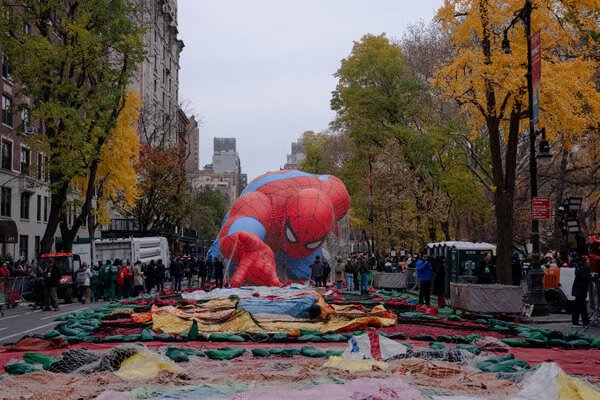
The parade features enormous character balloons that are controlled by teams of handlers walking through Manhattan’s streets. Strong winds can make these balloons difficult to control, especially around tall buildings where wind patterns can become unpredictable.
There are also elaborate floats, performers, marching bands and thousands of spectators who line the parade route.
Organisers therefore had to consider more than whether the event could continue in the rain. They needed to determine whether participants and spectators could remain safe throughout the procession.
Macy’s announced the postponement on Wednesday, November 25, following consultations with New York City officials and relevant agencies.
The company explained that the safety of participants and spectators was its priority and confirmed that the celebration would move to Saturday.
Saturday, November 28: When Will the Parade Take Place?
The rescheduled Macy’s Thanksgiving Day Parade will take place on Saturday, November 28, 2026, beginning at 8:30 a.m. Eastern Time.
The parade traditionally moves through Manhattan, featuring giant character balloons, floats, marching bands, celebrity appearances and musical performances.
The change means families who travelled to New York specifically for the Thanksgiving celebration will have to adjust their plans.
It also creates additional work for organisers, who must coordinate performers, security personnel, transportation, equipment and broadcast arrangements.
According to New York City’s official event listing, the rescheduled parade is expected to run from 8:30 a.m. until noon.
The postponement also raises questions about whether every originally scheduled performer and participant will be available on Saturday.
For an event involving thousands of people, changing the date is not as simple as updating a calendar. It requires considerable coordination between several organisations.
Nevertheless, the decision gives organisers an opportunity to hold the celebration under safer conditions rather than risk a dangerous event on Thanksgiving morning.
A Historic First in the Parade’s Long History
The Macy’s Thanksgiving Day Parade began in 1924 and has developed into one of America’s most recognisable holiday traditions.
Its original purpose was partly promotional. Employees of Macy’s department store organised a procession to celebrate the Christmas shopping season and attract attention to the company’s flagship store in Manhattan.
The first parade was very different from the colourful television spectacle people recognise today. It featured circus performers, musicians and animals borrowed from the Central Park Zoo.
Around 10,000 people reportedly attended that first procession.
Over the decades, the event expanded, introducing enormous character balloons, elaborate floats and performances from popular entertainers.
Although the parade has experienced interruptions, weather-related postponements have never previously forced organisers to move the entire celebration.
The event was suspended between 1942 and 1944 during World War II because materials such as rubber and helium were needed for the war effort.
There was also a major weather-related disruption in 1971, when strong winds forced organisers to ground all the giant balloons. However, the parade continued with floats and performers.
The 2026 postponement is therefore different. Rather than simply changing how the balloons would appear, organisers have moved the entire event to another day.
That makes this year’s decision an important moment in the history of an American tradition that has survived wars, changing technology and several generations of entertainment.
Why Giant Balloons Make Strong Winds So Dangerous
One of the biggest challenges facing Macy’s organisers is the enormous size of the parade balloons.
These inflatable characters can reach several storeys in height, making them particularly vulnerable to strong winds.
Although the balloons are controlled by trained handlers, their large surface areas allow wind to push them in unpredictable directions.
This can create problems around buildings, streetlights, traffic signals and spectators.
New York City introduced stricter balloon safety rules following a serious incident during the 1997 parade, when strong winds caused the Cat in the Hat balloon to strike a lamppost. Two people were injured.
The incident encouraged authorities to introduce tighter restrictions on balloon operations.
Under the established safety rules, giant balloons cannot fly when sustained winds exceed 23 miles per hour or wind gusts exceed 34 miles per hour.
These restrictions explain why the 2026 weather forecast created such serious concerns.
Even if organisers could have continued with the floats and marching bands, removing the balloons would have changed one of the parade’s biggest attractions.
More importantly, allowing enormous inflatables into crowded streets during dangerous winds could put both handlers and spectators at risk.
Postponing the event was therefore a more practical decision than attempting to stage a reduced or potentially dangerous celebration.
The Storm Is Bigger Than the Thanksgiving Parade
Although the Macy’s postponement has attracted international attention, the Nor’easter is affecting a much wider area.
The storm is expected to bring heavy rainfall, strong winds and coastal flooding across parts of the eastern United States.
These conditions could disrupt road transportation, railway services and airport operations during one of America’s busiest holiday periods.
Thanksgiving is traditionally associated with large-scale domestic travel, as millions of Americans travel to spend time with family and friends.
Poor visibility, strong crosswinds and heavy rainfall can create delays for aircraft, while flooded roads and fallen trees may affect motorists.
The National Weather Service has issued weather warnings across several areas, with concerns extending beyond New York.
The situation also demonstrates how a single weather system can affect different parts of everyday life, from major public celebrations to transportation and local businesses.
For retailers and hospitality businesses, the postponement could also affect customer traffic around the parade route.
Hotels, restaurants and other businesses that expected large Thanksgiving crowds may now experience a different pattern of demand across the weekend.
What Does the Postponement Mean for Viewers?
The parade attracts millions of spectators in New York City and a much larger television audience across the United States.
New York City’s official event information estimates that more than 3.5 million people watch the parade in person, while approximately 50 million watch from home.
That makes the event an important part of America’s holiday entertainment calendar.
Moving the celebration to Saturday means television viewers will also have to adjust their plans.
NBC is expected to provide coverage of the rescheduled celebration, while its Thanksgiving morning programming will not follow the usual live parade schedule.
The change may also affect people who had arranged family gatherings around the traditional Thursday morning broadcast.
However, the additional preparation time could allow organisers to deliver a more complete celebration without compromising safety.
For many viewers, the most important thing is that the balloons, floats and performers eventually make it to the streets.
Safety Should Come Before Tradition
There is something unusual about seeing an event that has survived for more than a century forced to change its schedule because of weather.
The Macy’s Thanksgiving Day Parade is not simply a procession. It is a cultural tradition that connects generations of Americans and has become an important part of how the country celebrates Thanksgiving.
However, traditions should not become more important than people’s lives.
Thousands of people are involved in organising the parade, while millions may gather along its route. Allowing the event to proceed under dangerous weather conditions simply to maintain its traditional date would have been an unnecessary risk.
In my opinion, Macy’s and New York City officials made the right decision.
The postponement may be disappointing, particularly for families who travelled long distances to attend, but the alternative could have been much worse.
The 2026 edition will now be remembered for something different from its balloons, celebrity appearances and performances. It will be remembered as the first time severe weather forced organisers to move the entire parade.
On Saturday, November 28, the celebration is expected to return to Manhattan.
And perhaps that is the biggest lesson from this unusual Thanksgiving: even a 100-year tradition can change when circumstances demand it.