Nearly 64,000 people have fled northern Nigeria for neighbouring Niger in 2026, escaping attacks by Islamist militants and armed criminal gangs. The growing displacement has created another humanitarian emergency in West Africa, placing additional pressure on a country already struggling to support hundreds of thousands of refugees and asylum seekers.
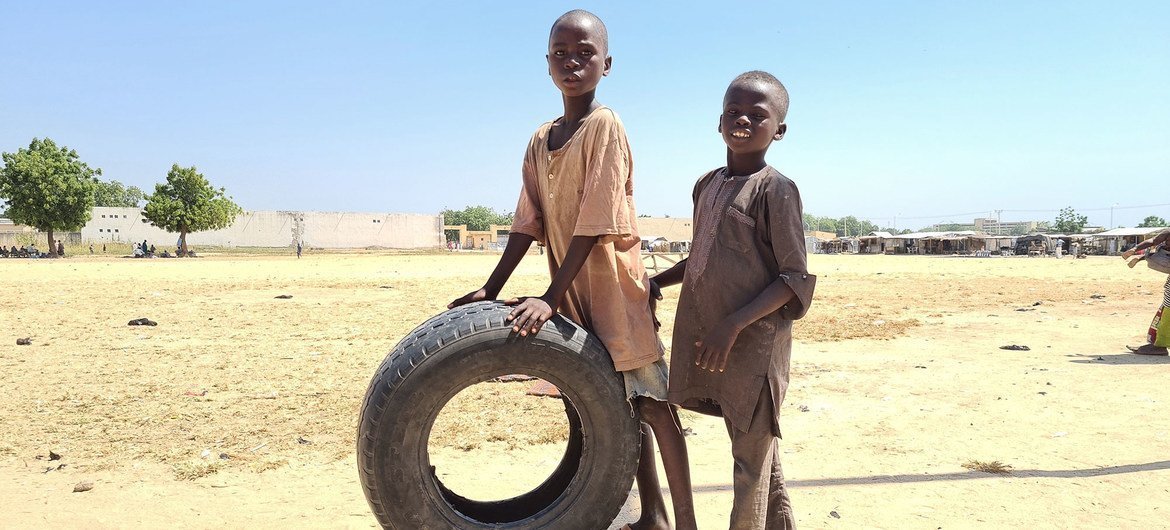
According to the United Nations High Commissioner for Refugees (UNHCR), most of the new arrivals have settled in Niger’s border regions of Diffa and Tahoua. More than 23,000 Nigerians have reached Diffa alone since the beginning of the year, with children accounting for over two-thirds of the arrivals.
The situation is becoming increasingly difficult. Families are arriving without adequate food, clean water, shelter and access to essential services. Aid agencies have also reported rising malnutrition, respiratory infections and poor sanitation among displaced populations.
Perhaps even more disturbing is that only about 5 per cent of Nigerians who arrived in Niger this year have been formally registered, leaving thousands without the documentation needed to access assistance and public services.
The figures reveal something that should concern Nigeria beyond its security challenges: the country’s violence is increasingly affecting neighbouring nations, turning an internal crisis into a regional humanitarian problem.
And while Nigerian authorities continue to face pressure to tackle insurgency and armed banditry, thousands of families are already making a decision they never wanted to make: leaving their homes and crossing an international border simply to survive.
Why Are Nearly 64,000 Nigerians Fleeing to Niger?
The growing exodus is linked to persistent insecurity across northern Nigeria, particularly attacks by Islamist militant groups and armed criminal gangs.
Among the groups responsible for violence in the region are Boko Haram and the Islamic State West Africa Province (ISWAP). Their activities have contributed to years of displacement, particularly in northeastern states such as Borno and Yobe.
Armed criminal gangs, commonly described as bandits, have also intensified insecurity in parts of northwestern Nigeria. Their activities include village raids, kidnappings, killings and attacks on communities.
For families living in affected areas, the threat is not limited to occasional attacks. Many communities face repeated violence that makes farming, trading, schooling and ordinary economic activities increasingly difficult.
When people cannot predict whether their villages will be attacked, whether children can safely attend school or whether roads are safe enough for transportation, remaining at home becomes a serious risk.
Crossing into Niger therefore becomes an attempt to find security rather than an ordinary decision to relocate.
This is particularly concerning because displacement often does not end when people reach another country. They may escape the immediate threat of violence only to encounter hunger, homelessness and limited access to healthcare.
Children Are Bearing the Biggest Cost of Nigeria’s Security Crisis
One of the most heartbreaking details in the UNHCR report is the number of children among the new arrivals.
More than 23,000 Nigerians have reportedly reached Niger’s Diffa region since January 2026, with children representing over two-thirds of that population.
This means that a significant proportion of those fleeing Nigeria are young people who should be attending school, receiving healthcare and growing up in relatively stable environments.
Instead, many are arriving in communities where humanitarian resources are already stretched.
Displacement can interrupt a child’s education for months or even years. Families who leave their homes often have little opportunity to collect school records, certificates, clothing or other important belongings.
There are also health concerns.
Children living in overcrowded temporary shelters are more vulnerable to respiratory infections, malnutrition and diseases associated with poor sanitation. Without proper healthcare and clean water, even relatively common illnesses can become dangerous.
Girls and women face additional protection risks during displacement, particularly where accommodation, sanitation facilities and security arrangements are inadequate.
I believe this is one of the strongest reasons why Nigeria’s security situation should be treated as an urgent humanitarian issue, not simply a military challenge.
Every family forced to cross into Niger represents more than a statistic. It represents disrupted education, lost livelihoods and children growing up with experiences of violence and displacement.
Niger Is Already Hosting Hundreds of Thousands of Nigerians
The growing arrivals are placing additional pressure on Niger, a country already dealing with significant displacement challenges.
UNHCR says Niger hosts more than 500,000 refugees and asylum seekers, including approximately 327,500 Nigerians.
This is important because Niger is not receiving these new arrivals from a position of unlimited resources.
It already has substantial humanitarian responsibilities, including providing shelter, food, healthcare and protection to people displaced by insecurity in neighbouring countries.
The new arrivals are concentrated mainly in Diffa and Tahoua, where local communities must also share limited resources with displaced families.
For people arriving without adequate money or belongings, finding accommodation and securing food can become immediate challenges.
Some families are reportedly living in makeshift shelters, while women have to walk several kilometres to collect water.
This creates pressure not only on humanitarian organisations but also on the host communities.
Local residents may already be struggling with poverty, limited healthcare facilities and inadequate infrastructure. An increase in population can make these challenges more difficult if humanitarian support does not expand accordingly.
This is why the situation requires international attention. Niger should not be expected to manage the consequences of Nigeria’s insecurity without adequate support from humanitarian organisations and international partners.
Why Are Thousands of Nigerian Refugees Still Unregistered?
Perhaps the most worrying part of the latest figures is the registration problem.
According to UNHCR, only around 5 per cent of Nigerians who arrived in Niger this year have been formally registered.
Registration is important because it helps humanitarian organisations identify displaced people, assess their needs and determine who requires urgent assistance.
It can also help refugees and asylum seekers obtain documentation needed to access certain services.
Without proper registration, thousands of people may remain largely invisible to the systems designed to protect them.
Aid organisations may struggle to determine how many people need food, healthcare, shelter and other essential services. Children who need protection or access to education may also be overlooked.
The problem becomes more serious when displacement happens quickly and large numbers of families arrive within a short period.
There is also the challenge of reaching remote communities. Insecurity can make it difficult for humanitarian workers to travel safely, assess conditions and distribute assistance.
The situation demonstrates why emergency border reception facilities and faster registration systems are necessary.
It is not enough to allow people fleeing violence to cross into safety. They must also be identified, protected and given access to basic assistance.
How Much Is the Humanitarian Crisis Costing?
Responding to the growing displacement requires substantial financial resources.
UNHCR is seeking $11.4 million to expand its humanitarian response in Niger, Nigeria and Benin, warning that thousands of displaced families could be left without essential assistance if additional funding is not secured.
The money is intended to support people affected by displacement, including those who have crossed international borders and those facing insecurity within their own countries.
The funding challenge is particularly serious because humanitarian needs are increasing across the wider region.
The Lake Chad Basin, which includes Nigeria, Niger, Chad and Cameroon, has experienced years of insecurity and forced displacement.
In July 2026, UNHCR warned that more than 3.5 million people were forcibly displaced across the Lake Chad Basin, while 8.2 million required humanitarian assistance.
The agency also reported a sharp deterioration in security, with attacks, kidnappings and other incidents affecting communities across the region.
These figures demonstrate that the Nigerian exodus is part of a much wider humanitarian emergency.
However, there is a danger that international attention will shift elsewhere while displaced families continue struggling to survive.
Humanitarian appeals do not automatically translate into money received. Governments and international donors must actually provide the resources required to deliver assistance.
What Does the Exodus Mean for Nigeria’s Security?
The movement of nearly 64,000 Nigerians into Niger should also raise questions about the effectiveness of Nigeria’s security strategy.
Military operations against insurgents and armed criminal groups remain important, but the government must also address the conditions that allow insecurity to persist.
Communities need protection before attacks happen, not simply military responses after people have been killed or displaced.
This requires better intelligence gathering, stronger local security arrangements, improved border monitoring and effective action against the financial networks supporting armed groups.
The government must also recognise that displacement creates long-term economic consequences.
When farmers abandon their land, agricultural production suffers. When traders leave their communities, local markets lose economic activity. When children leave school, the country risks creating another generation whose education and future opportunities have been disrupted.
The consequences can continue long after the immediate security threat has disappeared.
Nigeria also needs stronger cooperation with Niger and other neighbouring countries. Armed groups do not always operate within clearly defined national boundaries, and humanitarian emergencies rarely stop at border checkpoints.
Information sharing, coordinated border security and cooperation between intelligence agencies will therefore be essential.
But security cooperation must not come at the expense of people fleeing violence. Refugees and asylum seekers need protection, not suspicion simply because they are crossing from an insecure region.
Is Nigeria Doing Enough to Prevent More Families From Fleeing?
The latest UNHCR figures should serve as a warning to the Nigerian government.
A country that continues losing thousands of citizens to insecurity cannot measure its security progress only through military announcements or the number of operations conducted against armed groups.
It must also consider whether people can safely return to their communities, whether farmers can work without fear, whether children can attend school and whether families believe their homes are protected.
These are the measures that ultimately determine whether security has improved.
The government must intensify efforts to protect vulnerable communities, dismantle the networks supporting armed groups and improve humanitarian assistance for people displaced within Nigeria.
It must also work with Niger to support displaced Nigerians who cannot safely return home.
There is another important responsibility: rebuilding communities after violence.
People who have lost their homes and livelihoods will need more than temporary shelter. They will need access to education, healthcare, employment and opportunities to rebuild their lives.
Without these measures, displacement can become permanent, even when the immediate fighting reduces.
The Bigger Picture: Nigeria’s Insecurity Is No Longer Just Nigeria’s Problem
Nearly 64,000 Nigerians fleeing to Niger in one year is a disturbing reminder of how deeply insecurity can affect an entire region.
The crisis is putting pressure on Niger’s humanitarian resources, exposing children to additional risks and creating new responsibilities for international aid organisations.
It also raises uncomfortable questions about Nigeria’s ability to protect its citizens and prevent armed groups from repeatedly disrupting communities.
My concern is that the figures may become another headline that attracts public attention for a few days before disappearing from national conversations.
That should not happen.
Behind the statistics are families who have lost their homes, children whose education has been interrupted and parents who have been forced to leave everything familiar in search of safety.
Niger deserves support for receiving these displaced families, but Nigeria must address the reasons they are leaving in the first place.
Until communities can live, work and raise their children without fear of attacks, the country’s security crisis will continue producing consequences far beyond its borders.
The real measure of Nigeria’s fight against insecurity should not be how many militants are neutralised. It should also be how many Nigerians can finally return home without fearing for their lives.