











Nigeria’s capital market is facing an important test as investors rush to buy shares in Dangote Petroleum Refinery and Petrochemicals ahead of the October 27, 2026, deadline for its initial public offering (IPO). The offer, priced at ₦525 per share, gives eligible investors an opportunity to own part of one of Africa’s largest industrial projects.
The excitement is understandable. The refinery has reported a sharp improvement in its financial performance, and interest in the offer has spread beyond Nigeria to investors across Africa and other international markets. But there is another side to this story. A popular investment is not automatically a profitable one, and a closing deadline should not replace careful financial decisions.
The bigger question is whether the Dangote Refinery IPO can turn public enthusiasm into lasting shareholder value while giving ordinary Nigerians a meaningful opportunity to participate in the country’s industrial growth.
Why Are Investors Rushing to Buy Dangote Refinery Shares?
The immediate reason is the approaching deadline. The Dangote Refinery IPO opened on September 14, 2026, and was initially scheduled to close on October 13. The company subsequently extended the application period to Tuesday, October 27, following approval from the Securities and Exchange Commission (SEC).
The company has reported increased subscriptions from individual investors, institutions, asset managers, business owners and Nigerians living abroad. According to reports published in October, the offer has also attracted participation from 51 African countries, with applications reported from more than 90 countries worldwide.
This level of attention reflects more than curiosity about billionaire industrialist Aliko Dangote’s latest business move. Investors are looking at a refinery that could influence Nigeria’s fuel supply, foreign exchange earnings, industrial development and position in the international petroleum market.
There is also a psychological factor. When a high-profile investment has a fixed deadline, people can feel that they must act quickly or miss an opportunity. That pressure can bring new investors into the market, but it can also encourage rushed decisions.
In my view, the most important development is not simply that investors are buying the shares. It is that a major Nigerian industrial company is attracting public investment on a scale that could encourage more people to consider the stock market.
However, the final subscription figures will matter more than social media excitement. Without verified figures showing total applications against the shares available, it would be premature to conclude that the offer is fully subscribed or oversubscribed.
What Makes the ₦525 Dangote Refinery IPO Attractive?
The offer comprises 4.1 billion ordinary shares priced at ₦525 each. Investors can apply for a minimum of 10 shares, meaning the minimum subscription is ₦5,250 before any applicable charges. If fully subscribed, the offer could raise approximately ₦2.15 trillion.
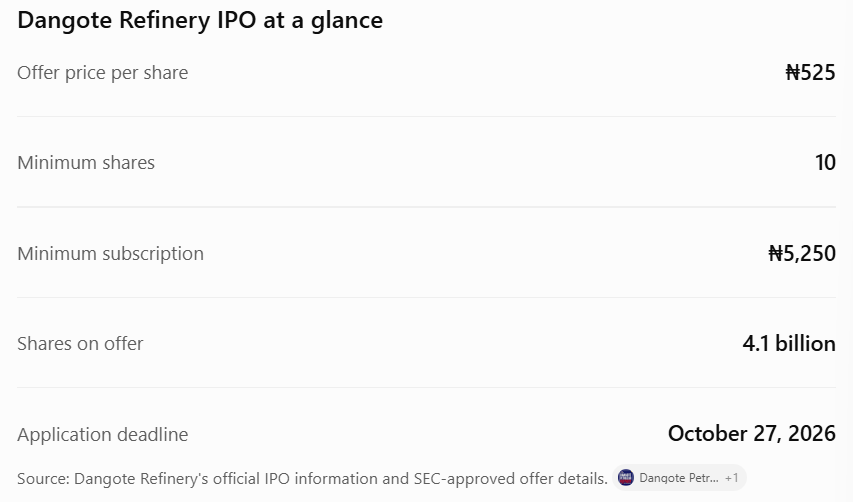
The minimum investment makes the offer accessible to people who cannot afford to buy large blocks of shares. It also allows investors to participate without committing millions of naira.
Still, accessibility should not be confused with affordability. ₦5,250 may be a manageable amount for one person and a significant expense for another. Investors should consider their own finances rather than borrow money or use funds meant for essential expenses simply to participate before the deadline.
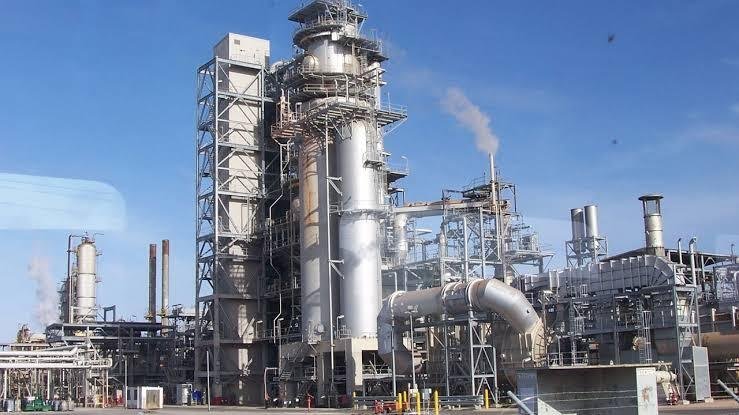
Another attraction is the refinery’s scale. The facility in Lagos has been developed to reduce dependence on imported refined petroleum products and support domestic production. Its operations could also create opportunities in logistics, manufacturing, distribution and other industries connected to the energy sector.
The long-term investment case, however, depends on whether the company can maintain strong earnings, manage operating costs and generate sufficient cash to support its plans.
Do Dangote Refinery’s Latest Financial Results Justify the Excitement?
The refinery’s financial performance is one of the strongest reasons investors are paying attention.
For the nine months ended September 30, 2026, the company reported revenue of $22.5 billion and a net profit of $4.73 billion. Revenue increased by 144 per cent compared with the corresponding period in 2025, when the company recorded revenue of approximately $9.2 billion. It also reported earnings before interest, taxes, depreciation and amortisation (EBITDA) of $5.5 billion.
The figures represent a substantial improvement from the previous year’s performance, when the refinery recorded a loss. They suggest that higher refining throughput, improved operational reliability and stronger refining margins have contributed to better results.
For investors, profitability matters because it provides evidence that the refinery is generating earnings rather than relying entirely on expectations about its future.
Yet one strong reporting period does not guarantee equally strong performance in the years ahead. Refining margins can change, crude oil prices fluctuate, and operational or regulatory challenges can affect profitability. Investors also need to understand the company’s financial obligations, future capital requirements and approach to dividends.
The IPO price of ₦525 is the price at which investors apply for shares in the offer. It is not a promise that the shares will trade above that level after listing.
That distinction is particularly important for first-time investors. A company can be strategically important and financially successful while its shares still experience price volatility. The price investors are willing to pay for a business matters just as much as the quality of the business itself.
Could the IPO Change Nigeria’s Stock Market?
The Dangote Refinery IPO could have a wider impact than raising money for one company.
Nigeria has a large population, but participation in its capital market remains limited relative to the number of people who could potentially invest. The scale of the refinery offer has drawn attention to the possibility of bringing more retail investors into the market and making equity ownership more familiar to ordinary households.
Nigeria Exchange Group chief executive Temi Popoola has said the IPO could expand the country’s active investor base by three to five times. That is an ambitious possibility, although the actual effect will depend on how many applicants become continuing investors rather than participating in only one high-profile offer.
This is where the long-term significance of the IPO will be tested.
If new investors learn how shares work, understand the risks and continue investing through regulated channels, the offer could help deepen Nigeria’s capital market. A larger pool of domestic investors could also help other businesses raise money for expansion instead of depending mainly on bank loans or foreign capital.
However, if participation is driven mainly by hype, with buyers expecting immediate profits, the impact could be less positive. Investors who experience losses without understanding why may become reluctant to invest again.
In my opinion, the refinery’s greatest contribution to the capital market could be demonstrating that Nigerians can own shares in major industrial businesses. But the opportunity should come with stronger investor education, transparent financial reporting and realistic expectations about returns.
What Could Go Wrong for Investors?
The biggest risk is assuming that the refinery’s importance to Nigeria makes its shares a guaranteed investment.
There are several factors prospective shareholders should consider.
First, earnings can change. The refinery’s latest results are encouraging, but future profits will depend on refining margins, operating efficiency, demand, competition and the cost of obtaining crude oil.
Second, there is the question of valuation. A company’s financial results must be considered alongside the price investors are paying for ownership. Even a profitable business can disappoint shareholders if its future earnings fail to justify the valuation reflected in its share price.
Third, investors need to understand the conditions of the offer, including how shares will be allotted, when successful applicants will receive them and when trading is expected to begin. The company’s published timetable is indicative and may change.
Finally, investors should not rely on promises of guaranteed profits or preferential allocations. The SEC has warned prospective investors to use only approved subscription channels and to be cautious about unsolicited messages, suspicious websites and requests for sensitive financial information.
These precautions are especially important during a last-minute rush, when scammers may try to take advantage of people who are anxious about missing the offer.
The right approach is to read the prospectus, verify the approved application channels and make a decision based on personal financial circumstances. Anyone who does not understand the offer should seek guidance from a registered stockbroker or qualified financial adviser.
What Happens After the October 27 Deadline?
The end of the subscription period does not mean that the shares immediately begin trading.
According to the revised timetable, the collation of application returns is scheduled for November 3, 2026. Submission of the basis-of-allotment proposal to the SEC is scheduled for November 10, with the regulator’s no-objection expected on November 17. The allotment announcement, settlement and commencement of trading are scheduled to follow under the published timetable. These dates remain indicative.
Investors will want to know how many applications were received, whether the offer was fully subscribed and how the available shares were allocated. The eventual listing will then provide an opportunity for market participants to assess the share price through actual trading.
The period after listing could be just as important as the subscription campaign itself. It will reveal whether investor demand remains strong when shares can be bought and sold in the market.
A rise in the share price could reward early shareholders, but a fall is also possible. Neither outcome can be guaranteed in advance.
What Does the Dangote Refinery IPO Mean for Nigeria’s Economy?
The refinery’s public offer arrives at a time when Nigeria is trying to strengthen domestic production, improve energy security and attract more investment into local businesses.
Its potential benefits extend beyond shareholders. A refinery that operates efficiently can support industrial activity, create demand for local services and reduce some of the country’s exposure to imported refined petroleum products. However, the broader economic benefits will depend on reliable operations, competitive pricing, investment in supporting infrastructure and how the business responds to changes in the energy market.
There is also an important connection to Nigeria’s wider financing challenge. Manufacturers and other businesses need capital to expand, while borrowing costs can make long-term investment difficult. A deeper capital market could give more companies access to funding from investors willing to accept business risk in exchange for potential returns.
That does not mean the Dangote Refinery IPO will solve Nigeria’s industrial financing problems. One offering cannot replace the need for broader reforms, stronger investor protection and more opportunities for businesses to raise capital.
Still, it could demonstrate what becomes possible when a major Nigerian company opens its ownership to a wider pool of investors.
Where to Find Official IPO Information
Prospective investors can review the offer details and published timetable through the official Dangote Refinery IPO website and consult the Securities and Exchange Commission’s IPO notice.
Applications should be made only through approved receiving agents or electronic application channels. The offer website provides information and directs investors to the appropriate channels; it does not itself process subscriptions.
Final Thoughts: Is the Rush Worth It?
The Dangote Refinery IPO is a significant moment for Nigeria’s capital market, combining strong reported financial results with an opportunity for ordinary investors to own part of a major industrial business.
The final hours may bring more applications, but the number of people rushing to buy shares should not be the only measure of success. What matters is whether the refinery continues to perform well, whether shareholders receive transparent information and whether new investors become more confident and informed participants in the market.
My view is that the offer deserves attention, but not blind enthusiasm. A company’s importance to the economy is a reason to study its business, not a reason to ignore investment risks.
For investors considering the IPO, the deadline is October 27, 2026. The decision, however, should be based on the offer documents, the potential risks and personal financial circumstances, not the fear of missing out.

One thought on “Dangote Refinery IPO: Why the Final Hours Matter More Than the Hype”