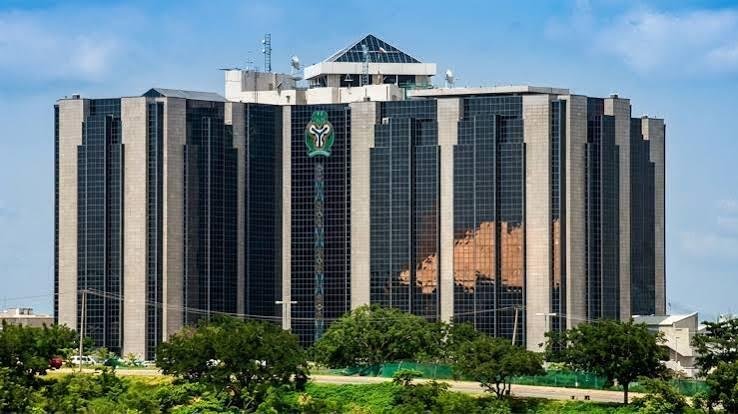
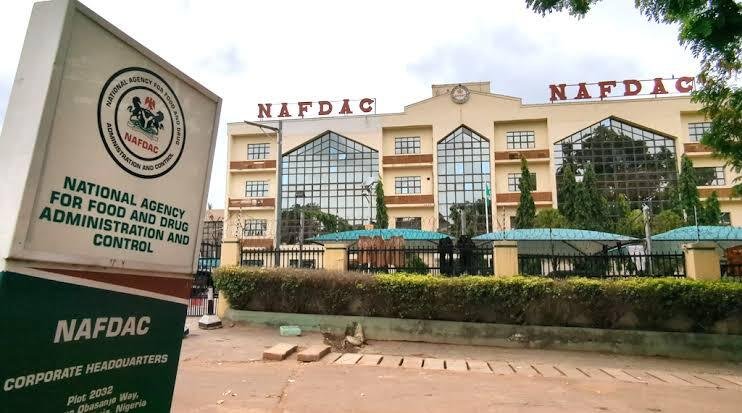
A disagreement between the National Agency for Food and Drug Administration and Control (NAFDAC) and the Edo State Consumer Protection Committee has raised an important question about consumer safety in Nigeria: can state officials seize products and declare them counterfeit without the approval of the country’s main regulatory agency?
The dispute followed an enforcement operation in Benin City, Edo State, where officials of the consumer protection committee were seen in a viral video inspecting and removing products from Market Square supermarket. The operation attracted attention after some products were described as fake or improperly registered.
However, NAFDAC has now challenged the committee’s approach, warning that access to its product verification platforms does not give state officials the authority to independently declare regulated products counterfeit, adulterated or unsafe.
In a statement issued on Tuesday, November 24, 2026, NAFDAC Director-General, Professor Mojisola Adeyeye, also clarified the registration status of Arden Table Water, a product at the centre of the wider disagreement.
The controversy goes beyond one supermarket or one water manufacturer. It exposes a problem that could affect manufacturers, retailers and consumers across Nigeria: what happens when two government bodies disagree over who has the authority to protect the public?
Why Is NAFDAC Challenging the Edo Consumer Protection Committee?
NAFDAC’s disagreement with the Edo State Consumer Protection Committee centres on how regulated products are inspected, verified and declared unsafe.
According to the agency, it received reports that the committee had been seizing regulated products, sealing business premises, imposing fines and publicly describing some goods as fake, counterfeit or adulterated.
NAFDAC also raised concerns about the committee’s reported use of its product authentication platforms, including the NAFDAC Automated Product Administration and Monitoring System (NAPAMS), QR code scanner and SMS verification service.
The agency explained that these platforms help users check product registration information. However, they do not automatically give users the legal or technical authority to make final decisions about product authenticity and safety.
This distinction is important because a failed QR code scan does not necessarily mean that a product is fake. Similarly, missing information or differences in registration records may require further investigation before a product can be declared unsafe.
NAFDAC insists that suspected irregularities should be reported to the agency for proper assessment, which may include laboratory analysis.
Its position is that food, drugs and other regulated products must be handled according to established federal regulatory procedures.
The agency is not rejecting consumer protection activities. Rather, it wants state committees to work within clearly defined legal boundaries.
The Arden Table Water Controversy: What Did NAFDAC Discover?
One of the most important parts of the disagreement concerns Arden Table Water, manufactured by Chepfets Mega Investment Nigeria Limited in Benin City.
NAFDAC expressed concern over reports that the Edo committee had shut down the manufacturer’s operations, imposed a fine and made an arrest without first obtaining clarification from the agency about the product’s registration status.
The agency subsequently provided details about the registration of the manufacturer’s sachet and bottled water.
According to its November 24 statement, Arden sachet water has a valid NAFDAC registration number, D1-3016L.
However, the bottled water, registered under number D1-3065, is undergoing renewal procedures.
NAFDAC explained that the absence of an updated status on its NAPAMS platform does not automatically mean that a product is unsafe, ineffective or substandard.
This is an important distinction that consumers and business owners should understand.
A product registration renewal and a finding that a product is contaminated are two different matters. One concerns regulatory documentation, while the other concerns product safety and quality.
However, manufacturers also have responsibilities. NAFDAC advised businesses with active registration licences to begin renewal procedures at least six months before their licences expire.
This would give the agency sufficient time to process applications and reduce unnecessary registration complications.
Edo Committee Rejects NAFDAC’s Position
The Edo State Consumer Protection Committee has defended its activities, arguing that it has a responsibility to protect residents from unsafe products and unfair business practices.
Its chairman, Osaro Iyamu, rejected the suggestion that the committee was acting illegally or pretending to operate as NAFDAC.
In a response reported by the News Agency of Nigeria, Iyamu said the committee was established by Governor Monday Okpebholo as part of his administration’s SHINE Agenda.
He maintained that its activities were intended to complement the work of existing regulatory institutions rather than take over their responsibilities.
Iyamu also disputed aspects of NAFDAC’s account of the enforcement operation, including the location of the activities involving Arden Table Water.
He argued that the committee operated around Owoseni Street in the New Benin area of Benin City, rather than in Asaba, Delta State.
The chairman further claimed that the committee uncovered negligence by the company’s management during its inspection and argued that the ongoing renewal of the bottled water registration did not excuse the alleged violations.
However, these claims do not settle the technical question of whether the products were counterfeit or unsafe. That determination requires the appropriate regulatory process.
The disagreement therefore remains unresolved, with both institutions defending their respective responsibilities.
Can State Governments Independently Declare Products Counterfeit?
This is arguably the biggest issue raised by the controversy.
Consumer protection is important at every level of government. State authorities are often closer to local markets and may be better positioned to identify complaints about expired goods, poor business practices and potentially dangerous products.
However, being responsible for consumer protection does not automatically mean having the authority to exercise every federal regulatory function.
NAFDAC maintains that the regulation of food, drugs, medicines and related products falls under the Federal Government’s responsibilities.
The agency was established to regulate the manufacture, importation, exportation, distribution, advertisement and sale of products under its control.
This includes packaged water, pharmaceuticals, cosmetics, medical devices and food products.
There is also a technical reason for having a central regulatory authority. Determining whether a product is contaminated, adulterated or falsely labelled may require specialised equipment, laboratory testing and trained personnel.
A committee member checking a registration number cannot necessarily establish whether the contents of a bottle are safe for consumption.
In my opinion, this is where the Edo dispute deserves serious attention. Consumer protection should not become a competition between government agencies. The objective should be to protect Nigerians without exposing legitimate businesses to arbitrary enforcement or allowing unsafe products to remain in circulation.
The best approach would be a clear working arrangement in which state committees identify suspicious products, document their findings and refer them to NAFDAC for the necessary investigation.
What Does This Mean for Supermarkets and Manufacturers?
The disagreement could have consequences beyond the businesses directly involved.
Supermarkets and retailers depend on accurate product information when deciding which goods to stock. If regulatory status is misunderstood, businesses could face unnecessary disruption, financial losses and reputational damage.
Manufacturers also need predictable procedures. A public declaration that a product is counterfeit can damage consumer confidence even before an investigation is completed.
At the same time, businesses cannot use disagreements between government agencies as an excuse to ignore registration requirements or sell unsafe products.
They must maintain valid licences, provide accurate product information and cooperate with authorised inspections.
For supermarkets, one practical lesson is to maintain proper documentation for products supplied by manufacturers and distributors. This includes registration information, supplier records and relevant invoices.
For consumers, the lesson is slightly different: do not assume that every product removed during a raid has been scientifically confirmed as dangerous.
A seizure or an inspection is not necessarily the same as a final regulatory finding.
Consumers deserve accurate information, particularly when decisions concern products they eat, drink or use every day.
How Nigerians Can Verify NAFDAC Registration Before Buying Products
NAFDAC has encouraged consumers, manufacturers, traders, distributors and healthcare providers to report suspicious products through its official channels.
Consumers can use the agency’s registration verification resources to check available product details.
The official NAFDAC registration portal is:
However, verification should not end with scanning a QR code or checking a registration number.
Consumers should also examine packaging, manufacturing and expiry dates, product seals and other available information.
If a registration number cannot be verified or the details do not match, the safest option is to contact NAFDAC for clarification rather than immediately concluding that the product is counterfeit.
The agency provides the following complaint channels:
- Telephone: +234 (0) 700-1-623322
- Telephone: +234 (0) 800-1-623322
- Email: reforms@nafdac.gov.ng
- Website: https://www.nafdac.gov.ng/
Suspected counterfeit or substandard products can be reported through these official channels for investigation.
What Happens Next in the NAFDAC and Edo Dispute?
NAFDAC says it has started investigating the circumstances surrounding the enforcement activities.
The investigation will also examine the reported involvement of its Zonal Enforcement Team in Asaba and whether any formal working relationship or authorisation existed between the agency and the Edo committee.
The agency plans to engage relevant authorities to clarify the committee’s statutory responsibilities and the boundaries of its activities.
It has also appealed to Governor Monday Okpebholo to review the reported actions and ensure that future enforcement activities involving regulated products are properly coordinated.
The outcome could determine how consumer protection activities are conducted in Edo State going forward.
More importantly, it could provide an example for other states considering similar consumer protection initiatives.
Protecting Consumers Should Never Become a Government Turf War
Nigeria needs stronger consumer protection. Counterfeit medicines, contaminated food, expired products and improperly registered goods are serious threats that should not be ignored.
The Edo State Consumer Protection Committee deserves to take consumer complaints seriously, just as NAFDAC deserves to maintain the technical and regulatory standards required to protect public health.
But neither objective should come at the expense of proper procedures.
A business should not be publicly branded as a producer of counterfeit goods simply because a registration record cannot immediately be verified. Equally, a manufacturer should not be allowed to escape legitimate scrutiny because it has a pending renewal application.
The Arden Table Water controversy shows why accurate verification and proper communication matter