










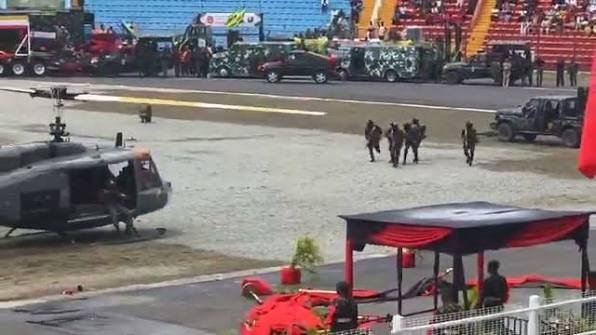
The grand finale of the 163rd Nigerian Army Day Celebration (NADCEL 2026) in Port Harcourt ended with an eye-catching aerial rescue demonstration that quickly became one of the most talked-about moments of the event.
During the July 6 celebration, attended by Vice President Kashim Shettima, senior military officials and thousands of spectators, the Nigerian Army Aviation Corps showcased a rapid combat rescue exercise using a Bell UH-1H Huey helicopter. The aircraft executed a steep approach before making a controlled tail-skid landing, allowing troops to swiftly extract simulated casualties in a scenario designed to mirror battlefield conditions.
Videos of the display rapidly spread across social media, where reactions ranged from admiration to humour. Some users jokingly compared the helicopter’s landing to parking a Hilux pickup or enduring a rough commercial bus ride. Others questioned why similar rapid-response capabilities are not more frequently seen during civilian emergencies, citing past incidents such as school rescue operations in Oyo State.
Military aviation observers, however, defended the demonstration, explaining that the aggressive landing technique is a standard tactical manoeuvre used in combat rescue missions. According to experts, the steep descent and tail-skid landing help reduce the aircraft’s exposure to hostile fire while enabling troops to load or evacuate personnel within seconds in dangerous environments.
Media outlets and defence enthusiasts praised the exercise for highlighting the Nigerian Army Aviation Corps’ growing operational capabilities, particularly its precision flying, coordination between air and ground units, and improved tactical readiness. The demonstration also underscored the Army’s investment in aviation assets since the activation of its aviation wing, with the Bell UH-1H Huey serving as a key platform for transport, surveillance and combat support missions.
While online debate continues, the display succeeded in showcasing the military’s evolving air mobility capabilities and sparked wider conversations about the role of such assets in both combat operations and humanitarian rescue missions.




One thought on “Nigerian Army’s Helicopter Rescue Drill Sparks Online Debate After Spectacular NADCEL Finale”