







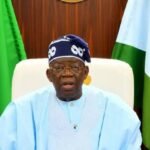
President Bola Tinubu’s recent decision to increase the salaries of serving military personnel was meant to strengthen troop welfare and recognise the demands placed on the armed forces. But just as the government celebrates the pay increase, retired military personnel are on the streets demanding to know why they were left behind.
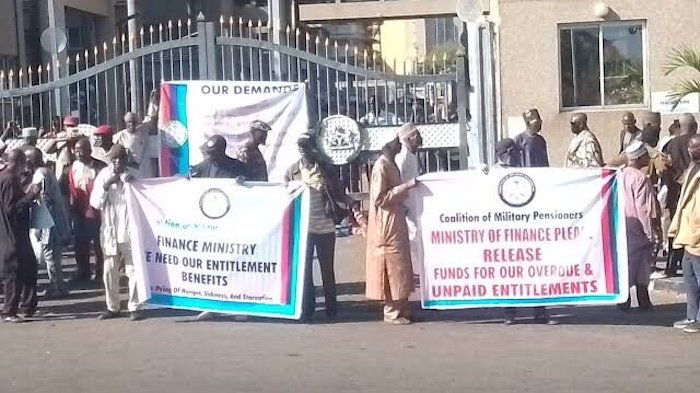
Military retirees gathered in Abuja on Wednesday to protest the failure to implement what they call consequential adjustments to their pensions following salary increases for serving personnel. Heavy security was deployed around the Ministry of Defence, with police, soldiers, immigration officials and other agencies stationed around the area.
That creates an awkward situation for the Tinubu administration. The government is saying it is improving military welfare, while the people who spent decades in the same institution are arguing that the improvement does not follow them into retirement.
Why Are Retired Soldiers Angry?
The retirees are not necessarily protesting the salary increase for serving soldiers. Their argument is that when the pay of serving personnel is increased, the pensions of retired personnel of corresponding ranks should also receive an adjustment.
Retired Colonel Innocent Azubike said the President approved a new military pay structure in November 2025 and that it was expected to come with a corresponding pension adjustment. According to the retirees, that adjustment has not been implemented despite repeated discussions with authorities.
So, from their perspective, the problem is not that soldiers are being paid more. It is that the government appears to be creating two different welfare systems for people who served under the same military structure.
The Timing Makes the Protest More Important
The protest comes at a particularly sensitive moment. The government has recently approved a new salary structure for serving Armed Forces personnel, with increases reportedly ranging from 30% for senior officers to 80% for some junior ranks, taking effect from September 1.
That means the gap between serving personnel and retirees could become even more noticeable if pension adjustments are not implemented. For a government that wants better morale within the military, this could become more than a pension dispute.
Current soldiers are watching how the state treats those who have already left the service. If retirees believe that their years of service have been forgotten, it could affect confidence in the government’s broader welfare promises.
Why the Heavy Security Is Also Significant
There is another uncomfortable part of this story. The retirees are former military personnel themselves, yet the government responded to their planned demonstration with a major security presence.
Reports said at least two armoured personnel carriers and more than 15 vehicles from security agencies were deployed around the Defence Ministry.
That creates a striking picture: former soldiers demanding benefits from the institution they once served, while armed security personnel are positioned to control their protest.
The government now has an opportunity to prevent this from becoming a prolonged confrontation. Tinubu’s military pay increase may be a positive step, but the pension dispute shows that improving military welfare cannot stop with those currently wearing the uniform.
If the government wants the pay rise to send a message that military service is valued, it also has to show that message applies after the uniform comes off.

One thought on “Military Pension Protest Raises an Awkward Question About Tinubu’s Pay Rise”