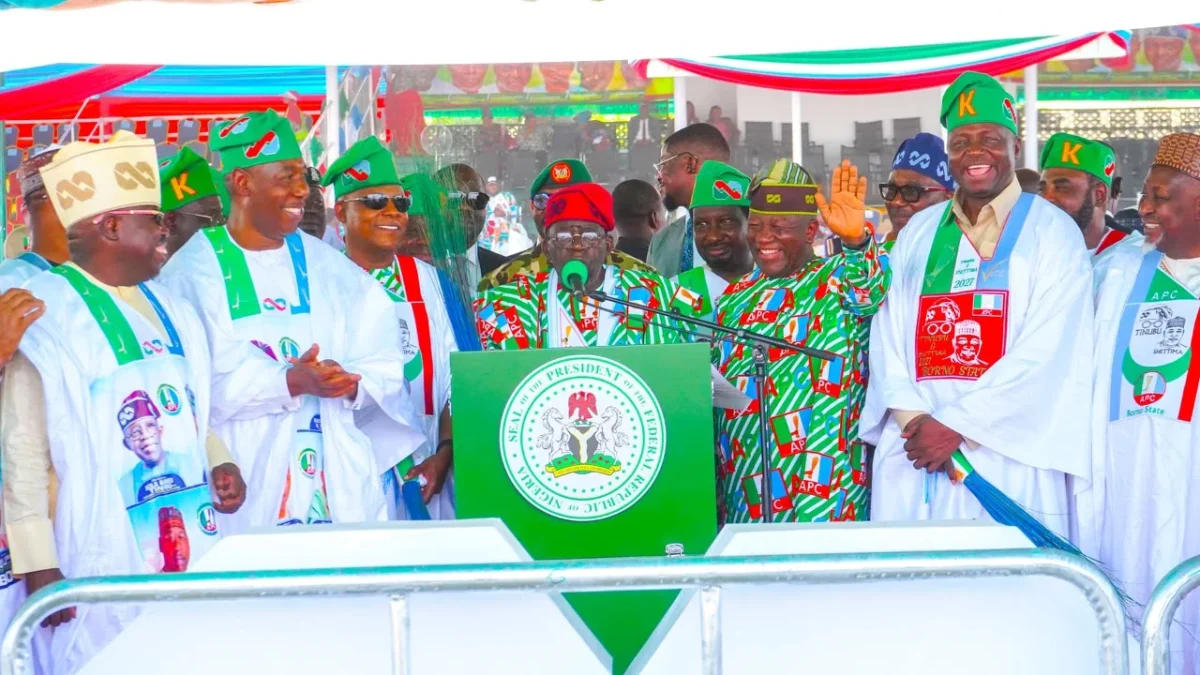
President Bola Tinubu has renewed his defence of Nigeria’s petrol subsidy removal, insisting that he has no regrets about ending the policy in May 2023. His position is clear: Nigeria could not continue borrowing to keep petrol prices artificially low while public finances remained under pressure.
Finance Minister Taiwo Oyedele has also warned against reversing the reform, arguing that a return to fuel subsidies could weaken investor confidence and put further pressure on the naira. However, the debate is no longer just about whether the government should bring back the subsidy. It is also about what Nigerians have gained from its removal and whether the benefits are reaching ordinary households.
The government has reasons to defend the policy, but the public has equally important reasons to demand results. With another election approaching in January 2027, the question is whether Nigeria’s economic reforms can deliver enough visible relief to sustain public confidence.
Why Tinubu Refuses to Reverse Petrol Subsidy Removal
Speaking at a City Boy Movement gathering in Abuja on October 19, Tinubu said Nigeria could not continue paying for petrol subsidies when the country was already struggling with financial obligations. He compared reversing the policy to asking Moses to return to Egypt, using the biblical story to explain why he believes the country must continue moving forward.
Tinubu announced the removal of the petrol subsidy during his inauguration on May 29, 2023. The decision immediately increased the cost of fuel and triggered higher transport and operating costs for households and businesses.
The government’s argument is that the old subsidy system placed an unsustainable burden on public finances. Money used to keep petrol prices low could otherwise have supported infrastructure, education, healthcare and other public services. The government also argues that the system created opportunities for smuggling and other forms of abuse.
There is a reasonable economic argument behind this position. When a government spends a large share of its available resources supporting one product, it has less money to address other national needs. Borrowing to maintain such a system can also create additional interest payments and leave future administrations with fewer choices.
However, ending a subsidy does not automatically make an economy stronger. The outcome depends on how the government manages the additional resources, whether other costs come under control and how quickly households can adjust to higher prices.
That is where the debate over Nigeria petrol subsidy removal becomes more complicated. The policy has changed, but Nigerians are still waiting to see whether its long-term benefits will outweigh the financial pressure they have experienced.
Where Have the Petrol Subsidy Savings Gone?
One of the biggest questions surrounding the reform is how the government has used the money released by ending the subsidy.
In July 2026, Oyedele said the combined reforms involving petrol and foreign exchange had generated substantial resources, but that much of the money had gone towards existing obligations. These included debt servicing, higher public-sector wages, infrastructure and student support programmes.
The minister explained that the government inherited financial pressures that did not disappear when the subsidy ended. Debt still had to be repaid, public workers needed to be paid, and existing government commitments still required funding.
This helps explain why subsidy removal has not automatically translated into lower taxes, cheaper transport or more money in people’s pockets. The resources released by the reform have to compete with other demands on public finances.
Yet the explanation also raises another question: how can Nigerians judge whether the money is being used effectively?
The government needs to provide clear, accessible information showing how the additional resources are distributed and what they have achieved. Nigerians should be able to identify completed roads, improved public services, funded social programmes and other measurable results rather than relying only on broad statements about economic recovery.
The distinction matters because money becoming available to government is not the same as citizens receiving benefits. A policy can improve public finances without immediately improving living standards. It can also fail to deliver its promised gains if the resources are poorly managed.
For the subsidy reform to earn public confidence, the government must show both sides of the equation: the financial pressure Nigeria avoided and the improvements citizens can now see.
What the Latest Inflation Figures Tell Us
Nigeria’s economic indicators offer a mixed picture. The National Bureau of Statistics reported that annual inflation fell to 14.63 per cent in September 2026, down from 15.39 per cent in August. However, food inflation remained high at 19.59 per cent.
The decline in headline inflation is encouraging because it suggests that the rate at which prices are rising has slowed. But it does not mean that prices have returned to their previous levels or that life has become affordable for most households.
For example, if the price of a bag of rice rises sharply and inflation subsequently slows, the bag does not automatically become cheaper. Its price may continue rising, only at a slower rate. Families still need enough income to meet the cost of food, transport, rent, electricity and other essentials.
Fuel prices affect this situation in several ways. Commercial drivers pay more to operate their vehicles, businesses face higher distribution costs, and some households spend more on petrol to power generators where electricity supply is unreliable. These costs can eventually affect the prices of goods and services across the economy.
This explains why the public’s experience can differ from the headline inflation figure. An inflation rate of 14.63 per cent may represent progress compared with a higher previous reading, but it does not tell the full story of what families spend each month.
The government must therefore look beyond the direction of inflation and pay attention to household purchasing power. A stronger economy should eventually mean that workers can afford more with their earnings, not simply that prices are rising more slowly.
Could Bringing Back the Subsidy Hurt the Naira?
Oyedele has warned that reversing the petrol subsidy removal could damage investor confidence and trigger capital flight. He suggested that the naira could weaken to between ₦3,000 and ₦4,000 per dollar under a severe reversal scenario. That is a warning about a possible outcome, not a confirmed forecast.
The concern is that investors make decisions based partly on whether they believe a government’s economic policies will remain consistent. If Nigeria abandons a major reform without a credible alternative, investors may become less confident about the country’s fiscal position and future policy direction.
A weaker naira could make imported goods and production inputs more expensive. Businesses that depend on imported machinery, medicines, raw materials or other supplies could face higher costs, which may eventually be passed on to consumers.
However, it is important not to treat the minister’s warning as proof that every form of subsidy support would automatically produce the same result. The effect would depend on how a new policy was designed, how much it cost, how it was funded and whether the government could manage the additional burden.
The same scrutiny should apply to the current policy. Maintaining investor confidence is important, but it should not become a substitute for measuring the reform’s impact on poverty, employment and living standards.
Nigeria needs policies that can attract investment while improving the conditions that allow citizens and businesses to participate in economic growth. Neither objective should be treated as optional.
Is the Government Offering Enough Relief to Nigerians?
The pressure on households has become difficult to ignore, and the government has introduced temporary measures to reduce some of the burden.
In October, the Federal Government announced that the Nigerian National Petroleum Company Limited would forgo its retail profit margin for 30 days, selling petrol at cost at participating NNPC retail stations. The government presented the measure as temporary relief rather than a return to the old subsidy system.
The difference is important. Under a conventional subsidy, the government absorbs part of the cost of fuel. Under the announced NNPC arrangement, the company gives up its retail margin for a limited period. The latter may provide some relief, but it does not guarantee a lasting reduction in petrol prices across the country.
A temporary discount can help motorists and commercial transport operators, but it cannot resolve the wider cost-of-living crisis on its own. Households also need reliable electricity, affordable food, better transport options and opportunities to earn more.
The International Monetary Fund has similarly argued that governments should protect vulnerable households through targeted assistance rather than relying on blanket fuel subsidies. Its position is that broad subsidies can be expensive and may benefit higher-income consumers disproportionately because they generally consume more fuel.
Targeted support could include direct cash assistance for eligible low-income households, transport support, improved public services and programmes that help people find work or build sustainable incomes. However, such programmes must reach the people they are designed to help, and the amount provided must be meaningful against actual living costs.
This is where implementation becomes critical. A targeted programme that excludes eligible households or provides too little support may fail to protect people from the effects of higher fuel prices. The government must demonstrate that its alternatives are accessible, adequately funded and transparent.
What Should Nigerians Expect Before the 2027 Election?
The subsidy debate is likely to remain an important political issue as Nigeria approaches the January 2027 presidential election. Tinubu is defending his economic record, while political opponents are challenging the effects of his reforms and proposing alternative approaches.
For voters, the most useful question is not simply which politician supports or opposes subsidy removal. It is which policies can provide lasting economic relief without creating another unsustainable financial burden.
Any proposal to restore a subsidy should explain how much it would cost, where the funding would come from, who would benefit and how abuse would be prevented. Likewise, the government must explain how it will ensure that the savings and other resources generated by its reforms produce measurable public benefits.
Voters should also pay attention to employment, real wages, food prices, electricity costs, public transport and access to healthcare and education. These indicators can help show whether economic growth is improving daily life rather than remaining a figure in government reports.
The government has a case to make about fiscal stability and the risks of returning to the old system. But it must also answer questions about the pace of relief and the transparency of public spending.
The Real Test Is Whether Reform Improves Living Standards
Tinubu’s refusal to restore the petrol subsidy reflects his administration’s commitment to maintaining its economic reform programme. The government argues that the old arrangement was too expensive to sustain, and its concerns about public finances and investor confidence deserve serious consideration.
Still, the success of Nigeria petrol subsidy removal cannot be judged by the decision itself. It must be judged by what happens next. If inflation slows but food remains unaffordable, if government revenues rise but public services remain weak, or if investors gain confidence while workers lose purchasing power, many Nigerians will continue to question the benefits.
The government should publish clear accounts of how reform resources are used, strengthen targeted support and focus on the conditions that help businesses create jobs and households earn more. These steps would give the public a stronger basis for judging the policy than repeated assurances that the economy is moving in the right direction.
Nigeria does not have to choose between fiscal responsibility and protecting vulnerable citizens. The challenge is to maintain a sustainable budget while making sure the people bearing the cost of reform are not left without support.
Tinubu may have no regrets about removing the subsidy, but the lasting judgement of the policy will depend on whether Nigerians can eventually see the benefits in their homes, workplaces and communities.