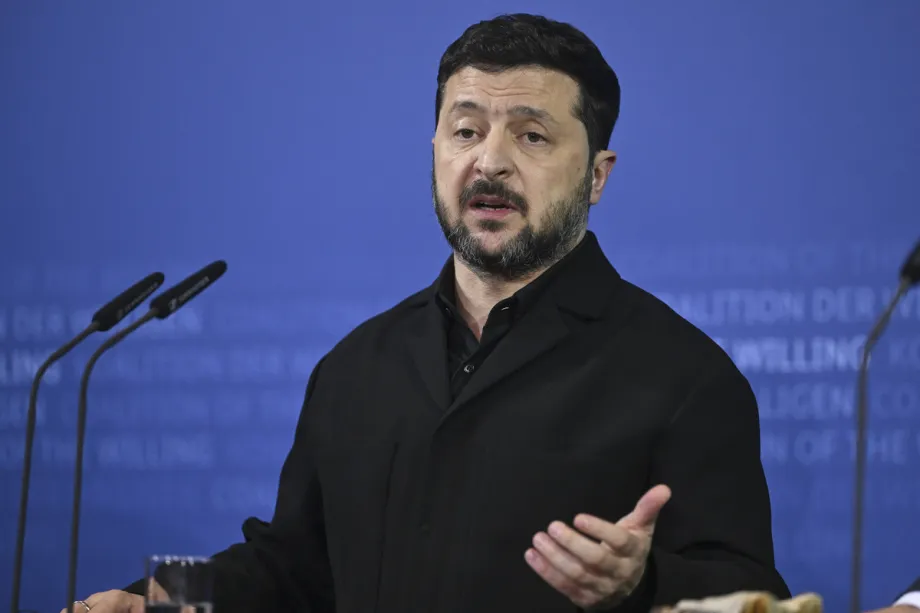

Israeli Prime Minister Benjamin Netanyahu has warned that Israel’s enemies will face harsher military strikes if they threaten the country, renewing attention on the relationship between national security and politics ahead of Israel’s October 27, 2026 parliamentary election.
During a visit to an Israeli air force base on Monday, October 19, Netanyahu praised military personnel and declared that the country was ready to strike its enemies whenever necessary. He promised that any adversary who tested Israel would suffer harder blows than before.
The warning comes amid continued regional tensions and an election that could determine whether Netanyahu remains prime minister. His government has presented military readiness as a central part of its approach to national security, while opposition figures have questioned his leadership and the way security concerns are being communicated to the public.
The timing raises an important issue: how can a government reassure citizens about genuine security threats without allowing military messaging to become entangled with an election campaign?
What Netanyahu Said at the Air Force Base
Netanyahu’s October 19 video focused on Israel’s military readiness and the ability of its air force to respond quickly to threats. He praised pilots, ground crews, the Israel Defense Forces and government officials for what he described as recent achievements.
He also delivered a direct warning to Israel’s adversaries, saying they should not test the country’s resolve because they would face more severe strikes than they had experienced previously. His message presented the air force as a key part of Israel’s ability to deter attacks and respond when necessary.
However, Netanyahu did not publicly identify a specific imminent attack in the latest statement. His remarks were framed as a warning about Israel’s readiness and willingness to act rather than an announcement of a new military operation.
That distinction matters. A declaration that a military is prepared to respond is not the same as confirmation that an attack is about to happen. Without further information, it would be premature to treat the warning as evidence that a particular strike or regional escalation is imminent.
The statement nevertheless carries weight because Israel remains involved in a wider regional security crisis, with tensions involving Iran, Palestinian armed groups and Hezbollah in Lebanon. Any new military action could affect regional stability, diplomatic efforts and the safety of civilians.
Why the October 27 Election Changes the Context
Israel’s parliamentary election is scheduled for October 27, just eight days after Netanyahu’s latest visit to the air force base. The vote will be an important test of his leadership following years of conflict and political controversy.
Netanyahu has long presented himself as a leader capable of protecting Israel against external threats. His supporters point to military operations and security decisions as evidence of his determination to defend the country. His critics, however, argue that his record must also be judged against the failures and consequences that occurred during his time in office.
The election carries particular significance because it is the first national vote since the Hamas-led attacks of October 7, 2023, which exposed serious security failures and led to a prolonged regional conflict. The attacks and the wars that followed have shaped public debate about the government’s preparedness, military strategy and political accountability.
For Netanyahu, the challenge is not simply to demonstrate military strength. He must also convince voters that his leadership can provide long-term security and prevent future attacks.
Opposition parties are seeking to persuade voters that Israel needs a different approach. Their arguments include questions about the government’s handling of security threats, the demands placed on military personnel and the wider costs of prolonged conflict.
The latest warning therefore arrives at a politically sensitive moment. Its significance lies not only in what Netanyahu said about the air force, but also in how security is likely to feature in voters’ assessment of his leadership.
An Earlier Military Video Already Caused Controversy
The October 19 visit follows a separate controversy over a video Netanyahu recorded at the Tel Nof air base in September. In that earlier video, he warned that Israel’s enemies might attempt to attack before the election.
The Central Elections Committee subsequently ordered Netanyahu to remove that video from his personal social media accounts. The committee’s chairman said the clip contained elements of election propaganda, distinguishing between official communications issued on behalf of the state and messages published on behalf of a political candidate.
The ruling did not establish that every security statement made by Netanyahu was politically motivated. It did, however, highlight the importance of separating the responsibilities of a sitting prime minister from the activities of an election candidate.
The earlier video also prompted criticism from opposition leader Yair Lapid, who argued that security threats should be handled professionally and responsibly rather than used to alarm the public. Lapid questioned the decision to film the message at a military base and demanded a briefing on the threat Netanyahu had described.
Netanyahu’s latest visit has renewed the debate because it again combines military imagery with a warning to Israel’s adversaries shortly before election day.
There is an important distinction between the two events. The September video prompted a specific election-related ruling, while the October 19 statement is a new message about military readiness. The earlier ruling should not automatically be treated as a legal finding about the latest video.
Still, the episode demonstrates why official communications during an election period can attract close scrutiny. Military bases and senior officers represent state institutions, while a prime minister is also a political leader seeking public support.
What the Opposition Says About the Security Message
Netanyahu’s critics have questioned whether his warnings provide enough specific information for the public to understand the threat. In the earlier dispute, Lapid said he had received a security briefing but argued that there was no reason to create unnecessary panic.
Other political opponents have challenged the use of military settings for messages that coincide with campaigning. Their concern is that security imagery could influence public opinion by presenting the incumbent as the only leader capable of defending the country.
These criticisms should be understood as opposition arguments rather than proof of Netanyahu’s intentions. A prime minister has a responsibility to communicate security risks, and a warning can serve a legitimate purpose if authorities believe it helps prepare the public or deter potential attackers.
At the same time, citizens have a legitimate interest in knowing whether warnings are based on a specific intelligence assessment or form part of a general message about readiness. Clear information can reassure the public without overstating what is known.
The challenge is especially difficult during an election. A government may need to discuss sensitive security matters, but revealing intelligence could compromise operations. The answer is not necessarily to disclose every detail, but to communicate carefully and ensure that official security information is not confused with campaign messaging.
Could the Warning Affect Israel’s Election?
The security debate is likely to remain important as voters decide which parties should form the next government. However, Netanyahu’s latest statement alone does not establish whether his party will gain or lose support.
Israel’s system also makes the election more complex than a direct contest for the premiership. Voters elect members of the Knesset, and a government is formed through coalition negotiations. A party can win a large share of seats without securing enough support to govern alone.
That means Netanyahu’s political future will depend on the distribution of parliamentary seats and the ability of competing blocs to assemble a coalition. His Likud party faces rivals who have criticised his handling of security and governance, while other parties are competing over military service, economic pressure and the direction of the country.
Security messaging may influence how voters judge the candidates, but it is only one factor. The public may also consider the October 7 security failures, the consequences of the regional wars, the cost of living and the country’s international relationships.
The outcome will therefore depend on more than one speech or video. Netanyahu’s warning is part of a wider campaign in which questions about security, accountability and leadership are closely connected.
What the Warning Means for Regional Stability
Netanyahu’s promise of harsher strikes also has implications beyond Israel’s domestic politics. Regional governments and armed groups will be watching how Israel responds to potential attacks and whether its military posture changes in the days ahead.
A forceful warning can be intended to deter an adversary by signalling that an attack would bring a serious response. In theory, credible deterrence can reduce the incentive to launch an attack. However, threats can also contribute to escalation if another side interprets them as preparation for offensive action.
The risk is especially serious in a region where several conflicts and rivalries overlap. Renewed Israeli strikes could affect diplomatic negotiations, increase pressure on neighbouring countries and expose civilians to further violence.
For that reason, Netanyahu’s statement should not be treated as confirmation that a new operation is planned. The public information available from the visit establishes that he emphasised readiness and threatened a stronger response, but it does not establish a specific timetable for military action.
The coming days will be important in determining whether the warning remains a message of deterrence or is followed by developments that change the security situation.
Analysis: Security Must Be Clear, Not Just Forceful
Netanyahu’s air force base visit brings together two issues that will shape Israel’s immediate future: the government’s responsibility to protect the country and the public’s right to assess its leadership during an election.
The prime minister is entitled to communicate Israel’s military readiness, particularly when officials believe threats remain. But the strength of a warning should not be confused with evidence that a particular threat is imminent, nor should a promise of harsher strikes be taken as proof that those strikes will take place.
The earlier election committee ruling shows why the setting and purpose of official communications matter. When military facilities appear in election-period videos, authorities and voters may reasonably ask whether the message is serving a public security purpose, a campaign purpose or a mixture of both.
That question should be examined through documented facts, the content of the statements and the responses from relevant institutions, rather than assumptions about Netanyahu’s motives.
Ultimately, Israel’s security will be judged by more than the force of its warnings. Voters will also consider whether the government can prevent attacks, make sound decisions and provide a credible plan for the country’s future.
With the October 27 election approaching, Netanyahu’s message is likely to remain part of that debate. The central issue is whether the government can demonstrate both military readiness and responsible leadership at a time when the public is weighing the consequences of years of conflict.