









Nigeria’s latest petrol price increase has revived an uncomfortable question for an oil-producing country: why does fuel remain so expensive for Nigerian workers even as domestic refining capacity expands?
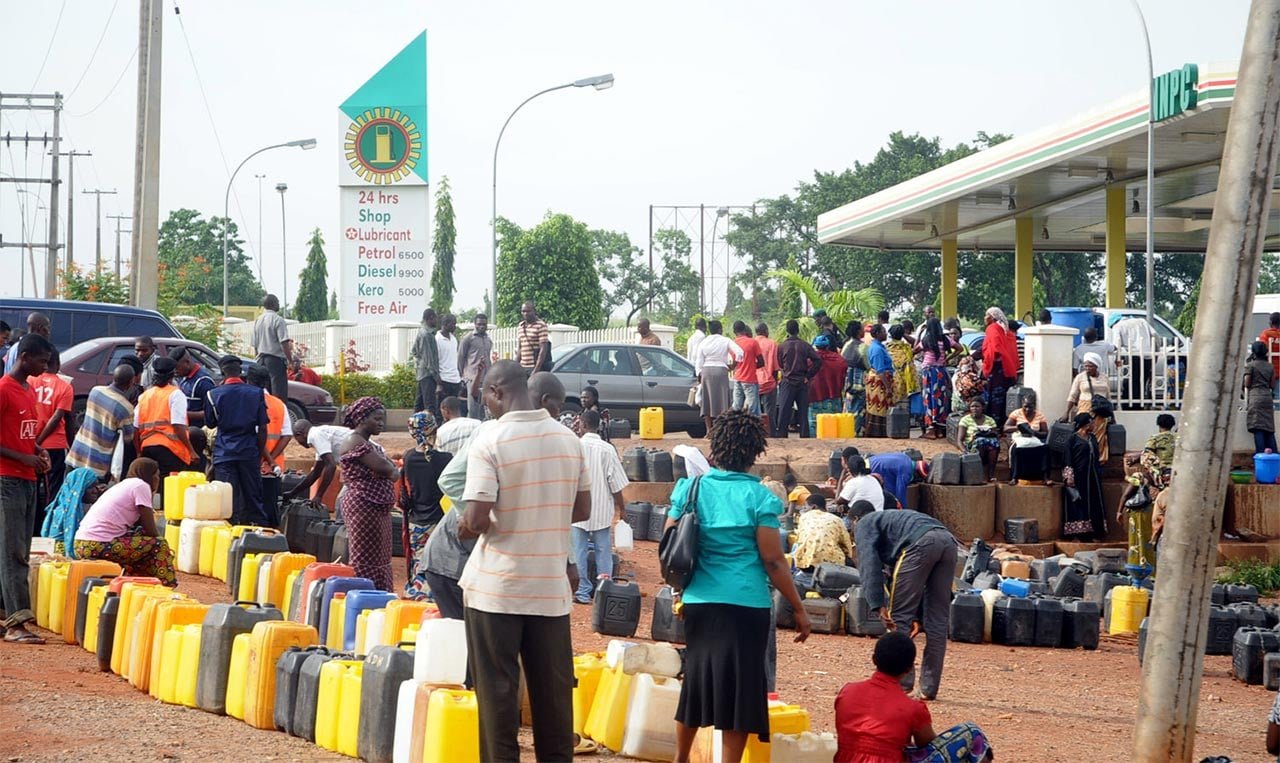
Petrol is now selling at around ₦1,400 per litre in Lagos and Abuja, with prices reaching about ₦1,500 in parts of northern Nigeria, according to recent market checks. Diesel has also moved above ₦2,000 per litre in some markets.
The latest increase has come after several price adjustments by the Dangote Petroleum Refinery. Its petrol gantry price rose from ₦1,165 per litre on August 21 to ₦1,185 on August 21, ₦1,200 on August 26, ₦1,265 on August 29 and then ₦1,350 on September 12. That final increase represented a ₦85 jump and took the refinery’s wholesale price up by ₦185, or about 15.9%, in 22 days.
The immediate reason is closely linked to the international oil market. Rising crude prices caused by the wider Middle East conflict have increased the cost of crude and refined petroleum products, despite Nigeria now having a large domestic refinery capable of producing significant volumes of fuel.
But the deeper story is about how Nigeria’s fuel market works after subsidy removal, and whether local refining can eventually give consumers the protection many expected.
Why Fuel Prices Are Rising Again
The latest increase is not simply a story about filling stations deciding to charge motorists more.
Nigeria’s downstream petroleum market is now heavily influenced by market prices, meaning changes in the international cost of crude can eventually reach Nigerian consumers. That exposure has become clearer in recent weeks.
The Middle East conflict has disrupted oil and refined-product markets, pushing crude prices above $100 per barrel at points and creating wider concerns about global fuel supply. Nigeria, despite being one of Africa’s major oil producers, remains vulnerable because the price of crude used by domestic refiners is connected to the same international market.
This is where the Dangote refinery changes the story, but does not completely remove the problem. The refinery has been operating at up to 700,000 barrels per day, according to Reuters, while also exporting significant quantities of refined products to international markets.
That means Nigeria now has a much stronger domestic refining base than it did when the country depended heavily on imported petrol. However, producing fuel locally does not automatically mean the fuel will be priced independently of global crude costs.
The Number Nigerians are Feeling
At a pump price of ₦1,400 per litre, a motorist spending ₦14,000 gets only 10 litres of petrol. A worker earning the national minimum wage of ₦70,000 would need to spend 20% of one month’s gross minimum wage to buy 10 litres.
At ₦1,500 per litre, that same 10 litres costs ₦15,000, or about 21.4% of ₦70,000. That is before transport, food, rent, electricity, school costs or any other household expenses are considered.
Nigeria’s ₦70,000 national minimum wage was signed into law in July 2024 after negotiations between the Federal Government and organised labour. This helps explain why a fuel-price increase can feel much larger to households than the naira increase at the pump suggests.
The Viral Nigeria vs Saudi Arabia, Libya and Iran Comparison
Posts circulating online have compared Nigeria’s petrol price and minimum wage with figures from Iran, Libya and Saudi Arabia. One widely shared comparison listed petrol at roughly ₦38 per litre in Iran, ₦32 in Libya and around ₦823 to ₦850 in Saudi Arabia, against Nigeria’s ₦1,300 to ₦1,500 range.
The same post compared minimum wages and argued that Nigerian workers have far less petrol purchasing power than workers in those countries. The comparison captures a real concern about purchasing power, but the figures need context before being treated as a direct measure of living standards.
Fuel prices in countries such as Iran and Libya are heavily influenced by government subsidies and domestic pricing policies. Iran, for example, continues to provide subsidised petrol quotas, even though it has begun raising prices for motorists who consume more than 110 litres per month.
Libya’s legal framework also sets a national minimum wage of 1,000 Libyan dinars, while its fuel market has historically been heavily subsidised.
Saudi Arabia presents a different case. The Saudi Human Resources Development Fund uses a 4,000-riyal minimum wage threshold for Saudi workers in the relevant employment-support framework. At a September 22 exchange rate of roughly ₦365 per Saudi riyal, 4,000 riyals would be about ₦1.46 million.
That conversion, however, should not be interpreted as meaning every Saudi worker earns ₦1.46 million as a universal minimum wage. The rules are more specific than the viral social-media comparison suggests.
The same caution applies to Iran. The Iranian rial has a highly unusual exchange-rate structure, and converting subsidised domestic fuel prices into naira can produce figures that look dramatic without explaining the subsidy system behind them.
So the strongest lesson from the comparison is not simply that another oil producer sells cheaper petrol. It is that oil-producing countries make very different choices about how much of the cost of fuel is paid by consumers and how much is absorbed by government policy.
Nigeria Chose a Different Model
Nigeria’s current situation is closely connected to the removal of petrol subsidies. Before the reform, the government absorbed a large part of the cost of keeping petrol prices below market levels. That reduced the amount consumers paid at the pump but also created a large fiscal burden and contributed to concerns about government spending, petrol smuggling and the sustainability of the subsidy system.
The Tinubu administration removed the petrol subsidy in 2023 and allowed market forces to play a much greater role in determining prices. Supporters of the reform have argued that removing the subsidy would free government resources for other uses and encourage investment in domestic refining.
Investors have also welcomed the broader move toward market-based pricing. Reuters notes that the reform has been viewed positively by investors even as the higher pump prices have increased pressure on households.
The problem for consumers is that the benefits of the new system take time to appear, while the higher prices are immediate. That creates a difficult gap between the long-term economic argument for reform and the short-term reality faced by households.
The Dangote Refinery Was Expected to Change the Equation
This is perhaps the most interesting part of the current fuel debate. For years, one of Nigeria’s biggest arguments for expanding local refining was that domestic production could reduce the country’s dependence on imported petroleum products.
The Dangote refinery has already changed Nigeria’s fuel supply structure. It has reduced the country’s reliance on imported petrol and become a major supplier of refined products. It has also become an important exporter of products such as jet fuel and diesel.
Yet the latest petrol-price increases show that local refining does not automatically create cheap petrol.
The refinery still has to obtain crude, and crude has an international opportunity cost. If global oil prices rise sharply, the economics of refining can change even when the refinery itself is located in Lagos.
This explains the apparent contradiction Nigerians are seeing. Nigeria can have a refinery operating at large scale and still experience higher petrol prices when global crude prices rise.
The difference is that domestic refining can change other parts of the equation, including import dependence, foreign-exchange exposure, shipping costs and supply reliability.
That may make the system more resilient over time, but it does not guarantee that petrol prices will remain low.
Why the Global Oil Shock Matters in Nigeria
The current increase is also a reminder that Nigeria’s economy remains deeply connected to global energy markets.
The Middle East crisis has affected crude oil supplies, shipping routes and refined-product markets around the world. The Strait of Hormuz, in particular, has become a major source of concern for global energy markets.
Reuters reported that the latest oil shock has pushed petrol prices in Nigeria to record levels despite the Dangote refinery operating at full capacity.
That is significant because it shows the limits of domestic refining as a shield against international energy shocks.
Nigeria produces crude oil, but it also depends heavily on oil revenue. So the same rise in international oil prices that hurts motorists can increase government oil revenues. That creates a complicated economic trade-off.
Higher Petrol Prices Do Not Stop at the Filling Station
For ordinary Nigerians, the most important consequence is not the price written on the pump. It is everything that happens after that.
Petrol is used directly by motorists, generators, transport operators and many small businesses. When the price rises, transport operators face higher running costs. Businesses that use generators face higher operating expenses. Logistics companies face higher delivery costs.
Those costs can eventually appear in the prices of food, medicine, clothing, building materials and other goods. The Nigeria Labour Congress has already warned about this chain reaction.
In a September 17 statement, the NLC said higher petrol prices would worsen the cost of transportation and eventually affect food, rent, school fees and other essential expenses. It called for emergency wage support, more national fuel storage and the sale of crude oil to local refineries in naira as possible measures to reduce the pressure.
That argument puts the focus on a bigger issue than petrol alone. The question is increasingly about how Nigerian wages respond when energy costs move sharply upward.
The ₦70,000 Minimum Wage Problem
Nigeria’s minimum wage was increased from ₦30,000 to ₦70,000 in 2024, representing a 133% nominal increase.
But the value of a wage cannot be judged by the number printed on a payslip. It has to be measured against what the income can actually buy.
A worker earning ₦70,000 could theoretically buy 50 litres of petrol at ₦1,400 per litre if every naira of that salary went toward fuel. At ₦1,500, the same salary buys about 46.7 litres.
Of course, workers do not spend their entire salary on petrol. That is precisely the point. The calculation simply illustrates how quickly fuel prices can consume a significant share of a low-income worker’s income.
For workers who commute daily, the effect is also indirect because they pay for fuel through higher transport fares rather than at the filling station.
What Happens If Oil Prices Stay High?
The next stage of Nigeria’s fuel story will depend heavily on how long the global oil shock lasts.
If international crude prices fall, pressure on domestic petrol prices could ease. Recent depot data already shows some movement in wholesale petrol prices, although retail prices remain much higher in many locations. As of September 22, one market tracker put the median petrol depot price at about ₦1,327 per litre, with pump prices varying by location and marketer.
But if global oil prices remain elevated, Nigerian households could face another period of higher transport and living costs. The government therefore faces pressure to decide how much relief it can provide without returning to the old subsidy structure.
The NLC has proposed wage awards and targeted support rather than simply leaving households to absorb the entire shock.
Meanwhile, the government has an interest in allowing the market-based system to function because returning to broad subsidies could recreate the fiscal problems that policymakers have spent years trying to address.
The Real Test for Nigeria’s Refining Strategy
The latest fuel-price increase does not necessarily mean domestic refining has failed. It shows that the purpose of domestic refining needs to be understood more carefully.
A refinery can reduce imports without making crude oil cheap. It can improve supply security without eliminating global price exposure. It can create jobs, exports and industrial capacity while consumers still face high pump prices.
The longer-term question is whether Nigeria can build a petroleum market in which more of the value created by its oil resources remains inside the country while households become less vulnerable to international price shocks.
That involves more than one refinery. It involves crude supply arrangements, refinery capacity, fuel storage, transportation infrastructure, competition among marketers, exchange-rate stability and household incomes.
It also involves deciding how much protection should be provided to vulnerable consumers during major global energy shocks.
Why the Fuel Debate Is Becoming an Income Debate
The comparison with Saudi Arabia, Libya and Iran has gained attention because Nigerians are not only asking why petrol costs so much.
They are asking what their income can buy after the petrol price has been paid. That is a different question.
Nigeria’s ₦70,000 minimum wage was negotiated before the current fuel-price environment. Since then, households have had to adjust to changing food prices, transportation costs and energy expenses.
The latest fuel increase therefore puts pressure on the entire relationship between wages and living costs. The debate is likely to continue as long as petrol prices remain high.
For the government, the challenge is balancing the economic case for market-based fuel pricing with the social pressure created when households cannot adjust their incomes at the same speed.
For businesses, the issue is whether higher energy costs can be absorbed without further price increases or job cuts. For workers, the calculation is much simpler: how far can today’s income go?
And for Nigeria’s refining strategy, the current crisis offers a clear test. Can a country with much greater domestic refining capacity become less vulnerable to global fuel shocks, or will international oil prices continue to determine what Nigerians pay at the pump?
That question will matter long after the latest price increase has stopped making headlines.



One thought on “Nigeria Fuel Prices Hit ₦1,400+: Why Petrol Is Still So Expensive Compared With Other Oil-Producing Countries”