








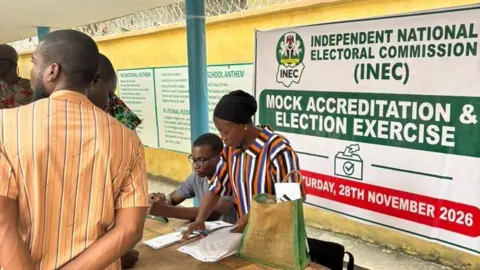
Nigeria’s preparations for the 2027 general elections have entered a critical stage, with the Independent National Electoral Commission (INEC) conducting a nationwide test of its election technology on Saturday, November 28, 2026. The exercise is intended to establish whether the commission can avoid the technical and operational failures that damaged confidence in the 2023 presidential election.
Across 17,676 selected polling units in the 36 states and the Federal Capital Territory (FCT), INEC tested its upgraded Bimodal Voter Accreditation System (BVAS), the INEC Result Viewing Portal (IReV) and new safeguards for electronic result transmission.
The exercise ran from 8:30 a.m. to 2:30 p.m., covering two polling units in each of Nigeria’s 8,838 Registration Areas. It simulated voter accreditation, vote counting and the uploading of polling-unit results.
INEC Chairman Professor Joash Amupitan has repeatedly assured Nigerians that the commission is taking steps to prevent a repeat of the problems experienced during the previous general election.
However, the nationwide test has raised a bigger question: can improved election technology restore public confidence in a system that many Nigerians still believe needs stronger transparency and accountability?
The exercise is important, but its success should not be measured simply by whether BVAS machines switch on or simulated results appear on IReV. What matters is whether the technology, election officials, security agencies and political stakeholders can work together when millions of Nigerians head to the polls.
Why INEC Cannot Afford Another 2023 Election Technology Failure
The 2023 general election remains an important reference point for Nigeria’s preparations ahead of 2027.
INEC introduced BVAS and electronic result viewing as part of efforts to improve voter accreditation, reduce electoral malpractice and make election results more accessible to the public.
However, the presidential election exposed serious weaknesses in the electronic transmission process.
Many Nigerians expected polling-unit results to appear promptly on IReV, but technical difficulties and delays created confusion and raised questions about the commission’s preparedness.
The controversy became one of the biggest sources of public dissatisfaction following the election.
For INEC, the challenge is therefore not simply to introduce improved technology. It must demonstrate that the systems can perform reliably under pressure and that election results are handled transparently.
Amupitan acknowledged the damage caused by the 2023 election, describing the resulting loss of public confidence as a major problem that the commission has yet to fully overcome.
He has identified insecurity, logistics and result management as three major priorities ahead of the next general election.
The chairman also explained that INEC decided to upgrade its existing technology rather than introduce an entirely new system because of the limited time remaining before the 2027 polls.
This is a practical decision, but it also means that the commission must prove that its improvements can address the weaknesses associated with the previous system.
BVAS Upgrade: Why INEC Reduced the Number of Voters per Machine
One of the important changes ahead of the 2027 elections concerns the number of registered voters assigned to each BVAS device.
INEC has reduced the maximum number of voters assigned to one machine from 1,250 to 850.
This represents a reduction of 400 voters, or 32 per cent, in the maximum workload assigned to each device.
The decision is intended to reduce pressure on the machines and improve the speed and reliability of voter accreditation.
Under the new arrangement, polling units with more than 850 registered voters will receive additional BVAS devices.
INEC has also procured approximately 57,000 new BVAS machines and is working on improvements to how the devices are stored and maintained.
The storage issue is particularly important because the commission previously identified extreme heat and storage conditions as factors associated with BVAS malfunctions during the 2023 elections.
The commission is also developing climate-controlled storage facilities across the states to improve equipment preservation.
These measures could reduce technical problems during accreditation, particularly in areas where large numbers of voters arrive within a short period.
However, the real test will come when the machines are used during actual elections, when network connectivity, power supply, human errors and crowd management can create additional difficulties.
A successful mock exercise is encouraging, but it does not automatically guarantee that every device will perform perfectly on election day.
IReV Gets New Safeguards Against Over-Voting and Result Upload Errors
Another major part of INEC’s preparations concerns the electronic transmission and viewing of polling-unit results.
The commission has introduced additional safeguards to its IReV system and a new electronic polling-unit result sheet known as Form eEC8A.
The new form includes validation rules designed to identify arithmetic inconsistencies, inaccurate figures and indications of over-voting before results are uploaded.
This is significant because problems with result management were among the major controversies surrounding the 2023 elections.
Amupitan explained that INEC’s review of the previous election identified serious weaknesses at collation centres, rather than simply at polling units.
The new safeguards are intended to prevent inaccurate results from progressing through the electronic result management process.
The commission has also strengthened security around IReV to reduce the risk of cyber disruptions and unauthorised interference.
These improvements could make result management more transparent, but Nigerians will still need access to accurate information and reliable digital platforms.
There is also an important distinction between uploading results and declaring election winners. IReV provides public access to polling-unit result images, while the formal collation and declaration process follows the relevant electoral procedures.
The commission must ensure that Nigerians understand this process to avoid confusion when results begin appearing online.
Low Turnout and Slow BVAS Processing Raise Fresh Questions
Although the nationwide exercise was designed to test technology, participation and public awareness have also become important issues.
Reports from BBC News Pidgin’s live coverage indicated generally low turnout in parts of the Federal Capital Territory and some other locations, although participation reportedly improved in areas of Lagos and Kano.
Some polling centres also experienced delayed starts, while isolated complaints emerged about slow BVAS processing in Kano.
These observations deserve attention because election technology cannot operate independently of the people expected to use it.
If voters do not know about a mock exercise, they are less likely to participate. If election officials are unfamiliar with the equipment, even an upgraded machine can become a source of delays.
INEC must therefore improve public sensitisation before the actual elections.
Nigerians need clear information about polling locations, accreditation procedures, voter requirements and how electronic results can be accessed.
This is particularly important because the commission is relying on public confidence to rebuild trust after the 2023 experience.
A technology upgrade without adequate public education risks creating a situation where the equipment improves but the wider electoral process continues to experience avoidable problems.
Civil Society Observers Want More Transparency From INEC
The concerns surrounding public awareness and transparency have also attracted attention from election monitoring organisations.
The Nigeria Civil Society Situation Room welcomed the mock exercise but questioned whether INEC had provided enough time and information for stakeholders to prepare.
In its preliminary statement issued on November 27, the organisation noted that although INEC announced the exercise on November 12, the list of selected polling units was not published until November 23.
It argued that the limited notice affected the ability of citizens, political parties and civil society organisations to prepare for meaningful observation.
The organisation also raised concerns about difficulties accessing the list of selected polling units on INEC’s website.
This is an important warning because the commission is asking Nigerians to trust its digital infrastructure while some citizens are reportedly experiencing difficulties accessing basic electoral information.
The Situation Room has called on INEC to publish a comprehensive assessment of the exercise, including technical failures, operational challenges and corrective measures.
Meanwhile, Yiaga Africa announced the deployment of 347 trained citizen observers across the country to monitor the exercise.
The organisation also planned to use its Process and Results Verification for Transparency methodology and Election Results Analysis Dashboard to independently assess the accreditation and electronic result-upload process.
A team of 60 data clerks was expected to support the receipt, processing and analysis of polling-unit results.
Independent monitoring is particularly valuable because INEC should not be the only institution evaluating the performance of its own technology.
The findings of observers can help Nigerians understand what worked, what failed and what needs to change before January.
2027 Elections: Political Tension Makes INEC’s Responsibility Even Greater
The technological preparations are taking place alongside increasing political activity across the country.
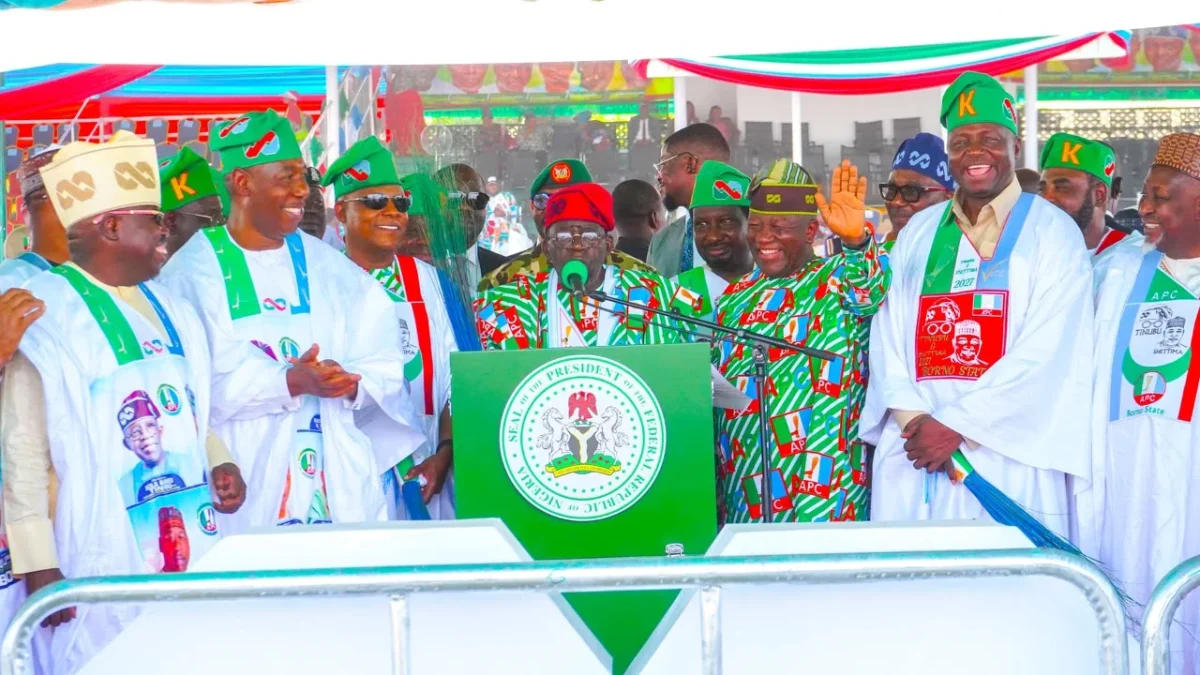
President Bola Tinubu has continued his political engagements ahead of the 2027 presidential election, while opposition parties are also preparing their campaigns.
Recent political developments have included reported attacks on opposition supporters in Edo and Delta states and disagreements over political nominations.
Security concerns are particularly important because election technology cannot prevent violence, intimidation or the destruction of electoral materials.
The National Security Adviser, Nuhu Ribadu, and INEC’s chairman have both warned against pre-election violence and inflammatory political behaviour.
These warnings highlight the fact that credible elections require much more than functioning machines.
Political parties must respect electoral rules, security agencies must remain impartial and election officials must be protected from intimidation.
INEC must also demonstrate that complaints are investigated fairly and that electoral procedures are applied consistently across the country.
Without these conditions, even a technically successful election could struggle to earn public acceptance.
What Nigerians Should Expect Before the January 2027 Elections
The 2027 presidential and National Assembly elections are scheduled for January 16, 2027, while governorship and State Houses of Assembly elections are scheduled for February 6, 2027.
That leaves INEC with a limited period to address the weaknesses identified during its nationwide mock exercise.
The next important step should be a transparent report explaining how the BVAS machines performed, whether simulated results were uploaded successfully and what happened in centres that experienced delays.
The commission should also publish clear timelines for fixing technical problems and provide opportunities for independent observers to assess the improvements.
More importantly, Nigerians should not have to wait until election day to discover whether the technology works.
The coming weeks should involve further public education, equipment checks, security preparations and engagement with political parties and civil society organisations.
In my opinion, the biggest mistake INEC could make would be to treat the successful completion of this exercise as proof that the 2027 elections are already secure.
A mock exercise is designed to expose weaknesses before they become national problems. Any failure discovered during the process should be treated as an opportunity to improve, not something to hide.
Nigeria does not need another election in which citizens spend more time questioning the credibility of the process than discussing the choices available to them.
The 2023 experience has already shown how quickly confidence can disappear when electoral technology fails to meet public expectations.
Amupitan has promised improvements, and the latest exercise is a necessary step towards delivering them.
But Nigerians should judge INEC by what happens next, not simply by the assurances made today.
The real test of INEC’s 2027 election technology will not be how well it performs during a six-hour simulation. It will be whether millions of Nigerians can vote, have their votes accurately recorded and see the results transparently when the country goes to the polls.