







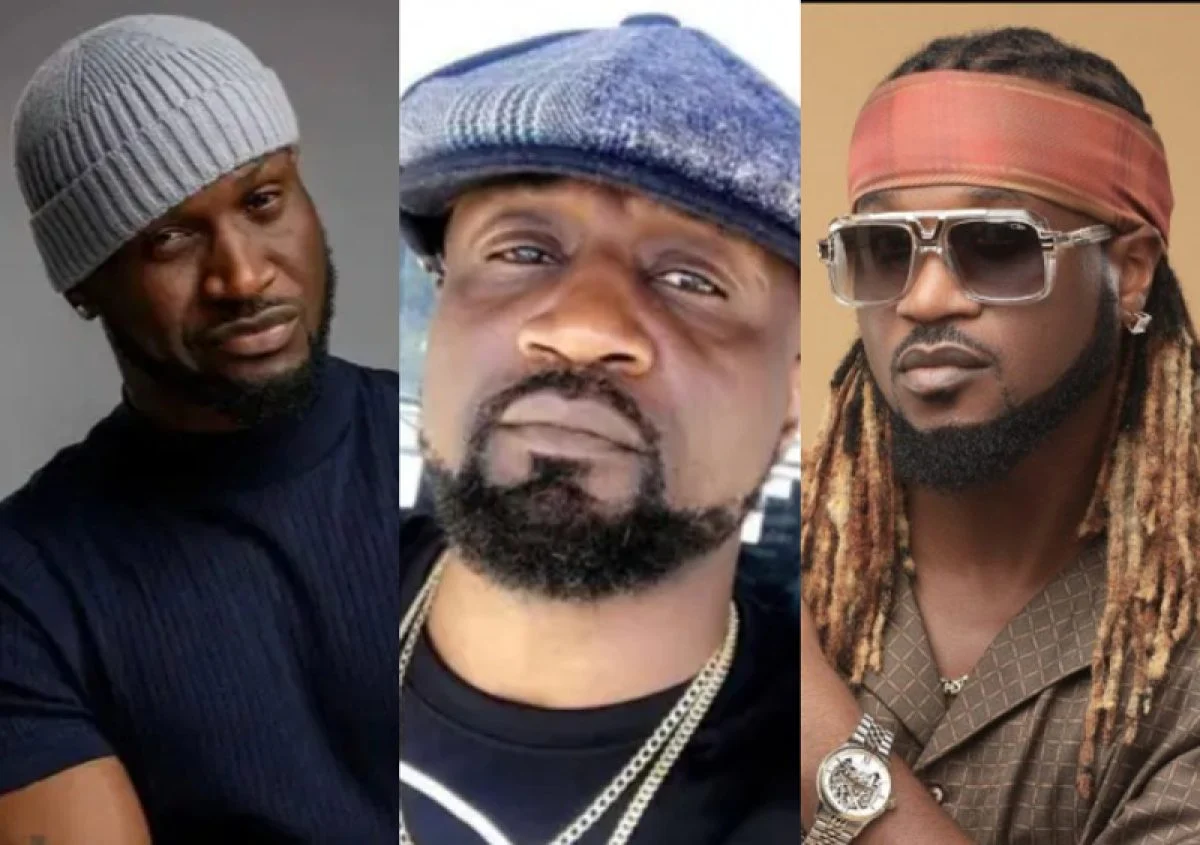
Singer Peter Okoye has admitted receiving about $800,000 in P-Square royalties from French music rights organisation SACEM between 2016 and 2026, but told a Federal High Court in Lagos that he did not give any of the money to his elder brother and former P-Square manager, Jude Okoye.
Peter made the disclosure on Monday, September 21, 2026, while giving evidence virtually before Justice Alexander Owoeye. He was being cross-examined by Clement Onwuewunor, SAN, counsel to Jude, who is facing trial alongside Northside Music Limited over allegations brought by the Economic and Financial Crimes Commission (EFCC). Jude and the company have pleaded not guilty.
The $800,000 Question
The latest hearing shifted attention from the broader fraud allegations to a more specific question: who was actually entitled to the money generated by P-Square’s music?
Peter confirmed that SACEM paid him approximately $800,000 for about 10 P-Square songs. He also confirmed that he did not give Jude any portion of the money.
His explanation was that the royalties belonged to him and his twin brother, Paul Okoye, because they were the artists behind P-Square.
Peter also said he did not inform Jude about the payments, telling the court that the money was for the artists.
Why Jude’s Role Matters
The testimony becomes more complicated because Jude was involved in P-Square’s business operations and had signed the SACEM agreement, according to the evidence presented in court.
Peter maintained that the agreement was signed on behalf of “the team” and insisted that Jude was not a member of P-Square. He said he and Paul composed, wrote and produced the group’s songs, although he acknowledged that Jude directed some of their music videos.
Peter also told the court that he had previously paid Jude a quarter of his SACEM share but denied that Jude was entitled to continuing quarterly payments after the brothers reconciled in 2022.
This distinction could become important because music royalties are not automatically divided according to who managed an artist. SACEM says royalty allocation depends on the rights attached to a work, including authorship, composition and publishing arrangements, while some mechanical rights are divided according to contractual agreements.
The Royalty Records Are Also Part of the Fight
Peter’s testimony also addressed the records behind P-Square’s earnings. He acknowledged that Jude had sent him royalty information in 2022 covering payments from 2016 to 2022, including records connected with Lex Records. Peter said he wanted the information because there was interest from people in buying the P-Square music catalogue.
That detail gives the dispute a wider business dimension. The case is not only about money that was allegedly received. It also raises questions about who controlled the group’s financial records, who had access to royalty information and how ownership of a successful music catalogue was understood within the family business.
What Happens Next?
Jude Okoye and Northside Music Limited are facing a seven-count case involving allegations of about ₦1.3 billion and $1 million brought by the EFCC. The defendants have pleaded not guilty, and the allegations have not been established by the court.
The latest testimony does not by itself determine whether Jude was legally entitled to any part of the SACEM payments. That question will depend on the evidence, contracts and the court’s eventual findings.
Further proceedings have been adjourned to December 8 and 9, 2026. For the Nigerian music industry, however, the hearing is already highlighting an important issue: successful artists can generate international royalties for years, but disagreements over contracts, management roles and ownership can turn those earnings into major legal disputes.
One thought on “Peter Okoye Admits Receiving $800,000 in P-Square Royalties as Jude Okoye Trial Turns to Music Ownership”