










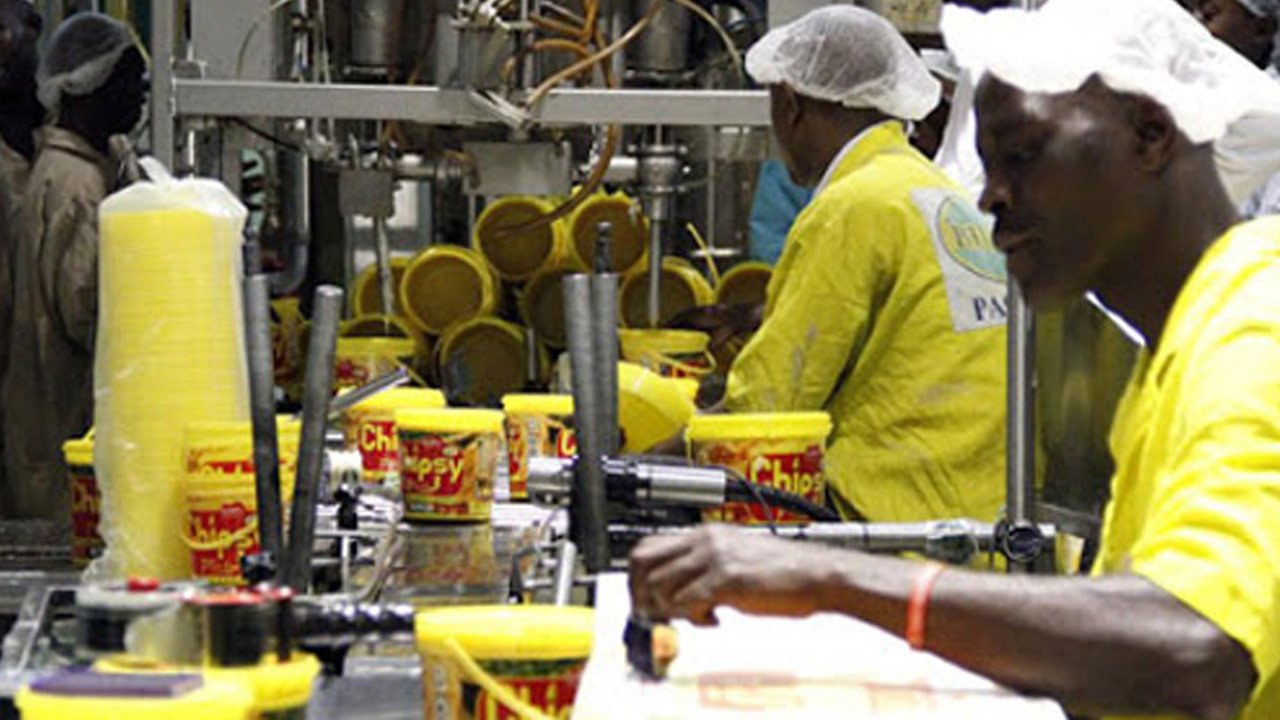
Nigeria’s headline GDP growth may be improving, but the country’s manufacturing sector slowdown is raising a different question: can economic growth continue without stronger industrial production?
The Manufacturers Association of Nigeria (MAN) has warned that the country’s industrial sector is losing momentum, with real industrial growth falling from 7.46% in Q2 2025 to 3.96% in Q2 2026. That came even as Nigeria’s overall GDP grew by 4.43% in the second quarter.
The gap points to a major problem for policymakers. Growth in services can lift headline GDP, but it does not necessarily solve the cost and capacity problems facing factories.
Why GDP Growth Is Not Reaching Factories
The latest Nigeria manufacturing output slowdown shows that economic growth is becoming increasingly uneven.
MAN Director-General Segun Ajayi-Kadir has argued that Nigeria’s industrial sector is facing structural pressures from high energy costs, logistics problems, exchange-rate costs, expensive raw materials and regulatory charges. The broader industrial sector accounted for 17.23% of GDP, while services made up 56.62%, according to figures cited by MAN.
Energy is one of the biggest pressures. Recent industry reports indicate that diesel and other alternative energy sources can now consume more than half of some manufacturers’ operating costs, particularly for factories that depend heavily on generators because of unreliable grid supply.
That creates a difficult cycle. When production becomes more expensive, manufacturers have to either raise prices, accept smaller margins or reduce output. Weak consumer purchasing power makes it harder to simply pass every additional cost to customers.
The Manufacturing Problem Could Affect More Than Factories
The high production costs facing Nigerian manufacturers are also a wider employment and investment issue.
Manufacturers have warned that sustained cost pressures can force companies to reduce production shifts, delay expansion and become more cautious about hiring and investment. MAN has also raised concerns about multiple taxation, inconsistent policies and regulatory friction.
This matters because manufacturing provides a link between investment, jobs, local raw materials and consumer goods. If factories reduce capacity, Nigeria could become more dependent on imported products at a time when businesses are already dealing with foreign exchange pressures.
The situation also complicates efforts to make Nigerian companies more competitive under the African Continental Free Trade Area. Higher energy and logistics costs can make locally produced goods more expensive than products manufactured in countries with cheaper and more reliable infrastructure.
What Manufacturers Want to Change
MAN has repeatedly called for more reliable electricity, better infrastructure, tax harmonisation, improved access to finance and a more predictable regulatory environment.
The association’s latest warning therefore goes beyond one quarter of weak industrial growth. The bigger issue is whether Nigeria’s economic reforms can eventually translate into lower operating costs for businesses that physically produce goods.
For now, the figures show an economy that is growing, but with manufacturing struggling to keep pace. The next few quarters will reveal whether the slowdown is temporary or becomes a deeper challenge for Nigeria’s industrial base.

2 thoughts on “Nigeria Manufacturing Output Slows as Rising Factory Costs Put Industrial Growth Under Pressure”