








The Federal Government has launched the Ijebu-Ode Ibadan road reconstruction and dualisation while also moving to address the worsening condition of the Benin-Agbor-Asaba road.
The two developments highlight a wider push by the government to deal with some of Nigeria’s most important road corridors, but they also raise a familiar question: can the Federal Government move from announcing road projects to completing them without years of delays?
56.5km Ijebu-Ode Ibadan Road Gets Underway
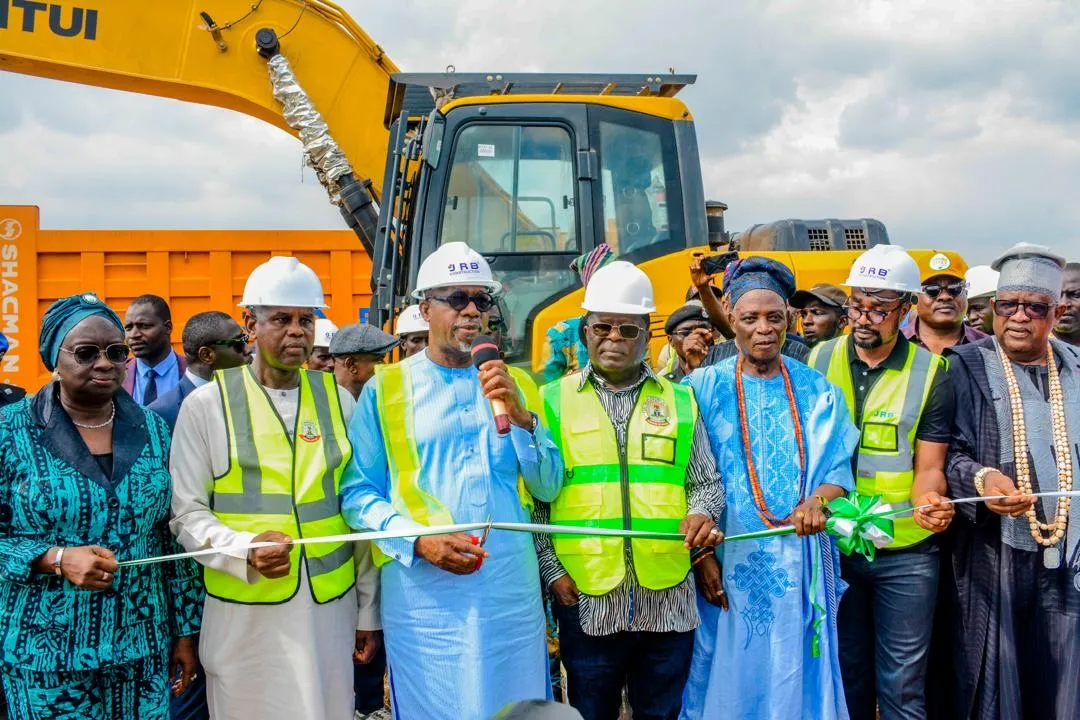
The government has officially flagged off the reconstruction and dualisation of the 56.5-kilometre Ijebu-Ode Ibadan road, a route connecting communities and businesses across Ogun and Oyo states. This comes after President Bola Tinubu flagged off the Northern Superhighway.
Works Minister David Umahi described the project as an economic intervention for the Lagos-Ogun-Oyo corridor. The government expects the completed road to reduce travel time, improve security and make it easier for farmers and traders to move goods between the states.
The project was awarded to JRB Construction Limited after approval by the Federal Executive Council. Its importance goes beyond motorists because the route connects areas with significant agricultural and commercial activity.
For businesses that depend on road transport, however, the real benefit will only come when construction is completed and the road becomes reliably usable.
Benin-Agbor-Asaba Road Faces a Different Problem
While construction is beginning on one major route, the government is dealing with an existing road project that has gone badly wrong.
Umahi said a concessionaire working on the Benin-Agbor-Asaba road removed more than 30 kilometres of asphalt before abandoning the site. The situation has reportedly contributed to severe traffic problems on the corridor, which connects parts of the South-South, South-East and South-West.
President Bola Tinubu has directed urgent intervention, with Umahi engaging the concessionaire, independent engineers, lawyers and the Edo State Government. The immediate goal is to reduce the suffering of motorists, while a longer-term solution is worked out for the damaged sections.
The Bigger Test for Nigeria’s Road Projects
The contrast between the two projects is what makes the development significant. The Ijebu-Ode Ibadan road reconstruction represents a new infrastructure commitment, while the Benin-Agbor-Asaba situation shows what can happen when a major road project becomes stalled.
Umahi has also ordered attention on the Ifaki-Kabba road linking Ekiti and Kogi states, with another team sent to assess the situation and report back to the Federal Government.
For Nigerians, the important measure will therefore not simply be the number of roads flagged off. It will be whether these projects are completed, maintained and protected from the delays that have affected major federal roads in the past.
If the government delivers on both the new construction and the emergency repairs, the economic impact could extend far beyond shorter journeys, helping businesses move goods more efficiently across several regions.