








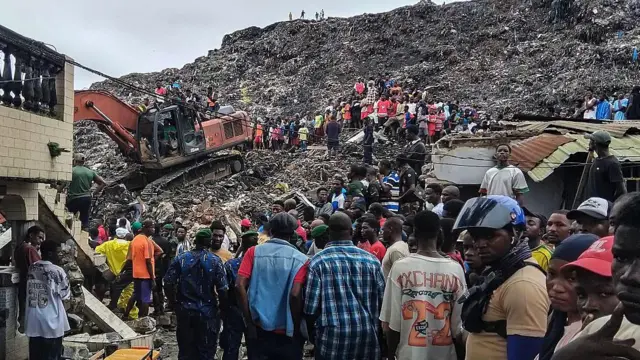
At least 31 people have died after a massive Guinea landfill collapse buried homes and makeshift shelters in the capital, Conakry.
The disaster happened early Sunday at the Dar Es Salam landfill in the city’s Gbessia commune after heavy overnight rain caused a huge mound of rubbish to collapse. At least 22 people were also injured, including six seriously.
Rescue teams have been using excavators to search through the waste for survivors and recover bodies as heavy rain continues to make the operation difficult.
The Landfill was Already Considered Dangerous
The Conakry landfill disaster has raised difficult questions because authorities were already aware of the risks at the site.
The government had announced plans to close the landfill and move waste elsewhere shortly before the collapse. Officials had also ordered people living close to the site to leave because of concerns about landslides during the rainy season.
Despite those warnings, many families remained in the area, leaving them directly exposed when the waste mound gave way. Residents have since accused authorities of failing to act quickly enough. One community leader told AFP that young people had previously raised concerns about the condition of the dump and called for action.
Heavy Rain Turned a Warning Into a Disaster
The Guinea landslide struck at around 2 a.m., when many residents were asleep. Heavy rainfall washed over the massive mound of refuse, sending tonnes of waste into nearby homes and shelters. Rescue workers, security personnel and local residents rushed to the site, but a second collapse reportedly occurred as people attempted to help those trapped.
The human cost has been devastating. Residents told reporters that entire families were lost, including one woman who said all five of her children died. The government has moved affected families into temporary shelters and warned people living in other dangerous areas to evacuate. About 358 people were reportedly sheltering at a school, while dozens of households remained considered at risk.
A Warning for Other Crowded African Cities
The Dar Es Salam landfill tragedy is also exposing a wider problem.
As African cities grow, poor waste management, informal housing and extreme rainfall can combine to create deadly risks. The tragedy is especially painful because the landfill was already scheduled for closure due to safety concerns.
Authorities will now face pressure to move residents away from dangerous areas, improve waste management and ensure that the planned replacement site is safer. For the families still waiting for news of loved ones, however, the immediate priority remains the rescue operation and recovery of those still missing.