






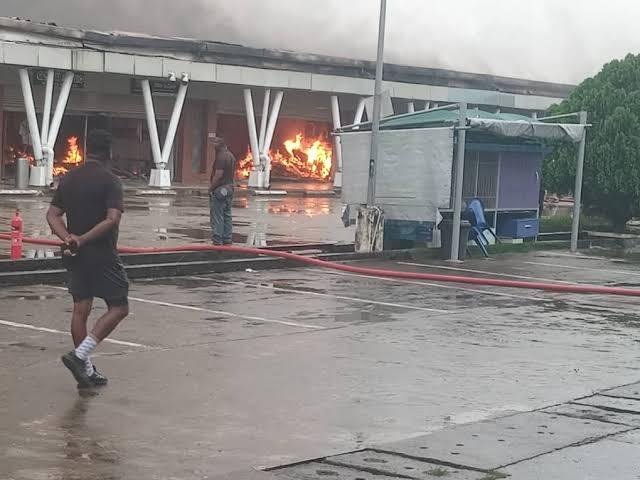
The fire that ravaged shops at the popular SPAR Mall area in Calabar has once again exposed a problem that goes beyond one destroyed building: Nigeria’s slow fire service response.
Multiple shops, including two boutiques and a pharmacy, were reportedly gutted by the blaze, destroying goods worth millions of naira. No deaths were reported, but shop owners are now facing the painful task of rebuilding businesses that may have taken years to establish.
The cause of the Calabar fire has not been established. Possible sources being discussed include electrical faults, cooking or baking activities, but investigators will have to determine what actually started the blaze. What residents are already questioning, however, is how quickly help arrived.
The Calabar Fire Is Another Reminder
Complaints about slow fire service response in Nigeria are not new. Research published in 2025 found that Nigerian firefighters face major operational problems, including outdated equipment, inadequate infrastructure and too few personnel. Firefighters interviewed for the study also described the difficulty of responding effectively with limited resources.
Other reports have highlighted similar problems across different states. In Bauchi, for example, the state fire service was previously reported to have only two functional fire trucks serving the state capital, with funding and diesel costs affecting response times. This means the frustration heard after the Calabar fire is part of a much bigger national problem.
Every Minute Matters
Fire is different from many other emergencies because the damage can multiply rapidly. A delay of several minutes can mean the difference between containing a fire in one shop and watching it spread across an entire market. That is why having a fire station is not enough. Nigeria needs stations positioned close enough to high-risk areas, functioning trucks, reliable water supplies, trained personnel and clear routes that emergency vehicles can actually use.
A 2025 study of Nigeria’s fire service found that some communities had no established fire station at all, while firefighters also reported problems with old and poorly maintained equipment.
The problem is therefore not simply that firefighters need to “arrive faster”. The entire emergency response system needs to be designed around speed.
Can Nigeria Build a Faster Fire Response System?
The answer will require more than buying new trucks whenever a major fire makes headlines.
Governments need to know how long it takes emergency teams to receive a distress call, leave their station and reach different parts of a city. Those response times should be measured publicly, reviewed regularly and used to determine where new stations and equipment are needed.
Fire services also need reliable water sources and better coordination with police, traffic authorities and emergency agencies. Research has repeatedly identified poor coordination, infrastructure and logistics as barriers to effective emergency response in Nigeria.
The Calabar fire should therefore not end with investigations into what caused the blaze.