





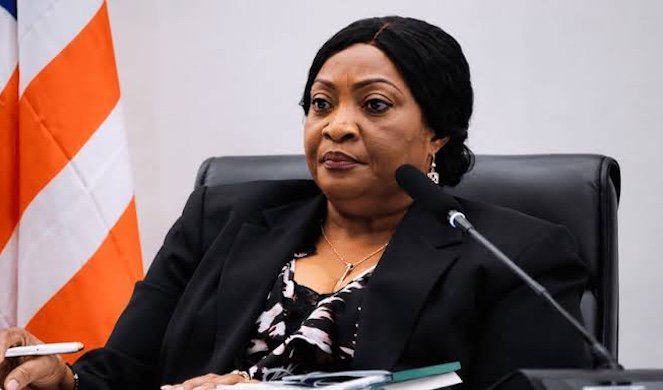
Liberia has charged former Vice President Jewel Howard-Taylor with drug trafficking and money laundering, turning a major cocaine investigation into one of the country’s most politically sensitive criminal cases.
The Justice Ministry announced the charges on Thursday, August 20, 2026, after Howard-Taylor was arrested at Roberts International Airport while attempting to leave the country. She was taken to police headquarters as investigators expanded their probe into an alleged international drug network.
Howard-Taylor served as Liberia’s vice president from 2018 to 2024 under former President George Weah. Her involvement in the case makes the investigation significant beyond the alleged offences themselves. It puts a former senior government official at the centre of a case involving a huge international narcotics operation.
From a Cocaine Seizure to a Political Shock
The case began with the seizure of cocaine estimated to be worth $317 million. Liberian authorities believe the drugs were connected to a wider transnational trafficking network. Three foreign nationals, including a Ukrainian and two Croatians, have also been accused of organising the operation and are facing charges in absentia.
The investigation now appears to be moving beyond the people physically handling the drugs to those authorities believe may have helped facilitate the operation.
That is where the Howard-Taylor case becomes particularly important. The charges against her include unlicensed drug importation, sale and distribution, criminal solicitation, facilitation, conspiracy and money laundering. The allegations have not been proven in court, and she is entitled to due process.
Why Her Arrest Matters for Liberia
Liberia sits on an important route between West Africa, Europe and the Americas, making the region attractive to international drug trafficking networks.
A case involving hundreds of millions of dollars worth of cocaine therefore raises concerns about how deeply international criminal organisations may have penetrated the country’s systems.
But it also presents Liberia’s government with an opportunity to demonstrate whether its anti-drug campaign can reach powerful people. Justice Minister Natu Oswald Tweh has stressed that no one is above the law. That statement will now be tested.
If prosecutors can successfully pursue the case regardless of Howard-Taylor’s former political position, it could strengthen public confidence in Liberia’s institutions. If the investigation collapses because of political pressure, questions about selective justice could follow.
The Bigger Fight Is Against the Network
The most important question may not ultimately be what happens to one former vice president. Authorities need to determine who financed the operation, where the drugs came from, how they entered Liberia, who was supposed to receive them and whether other officials or businesses helped the network operate.
A $317 million cocaine seizure suggests an operation much bigger than a single arrest. Liberia’s real challenge now is to dismantle the network behind the drugs, not simply prosecute the most high-profile person caught in the investigation.