






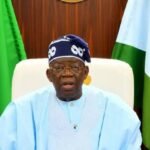

President Bola Tinubu has again promised that Nigeria’s state-owned refineries will return to operation, saying the government is carrying out a “structural and economic reset” to ensure the facilities must become productive and profitable.
That distinction is important because Nigeria has already celebrated refinery “revivals” that did not last. Port Harcourt restarted in November 2024, while Warri resumed operations in December that year. But both later suffered shutdowns, with Port Harcourt stopping in May 2025 for maintenance and Warri shutting down again in January 2025 over safety concerns. Kaduna has remained under rehabilitation.
So the real question isn’t whether the government can get these plants running for a few weeks. Can it keep them running commercially for years?
Nigeria’s three major state-owned refineries have a combined nameplate capacity of about 445,000 barrels per day. On paper, that is significant. In reality, decades of poor maintenance, operational problems and unreliable crude supply have left the facilities far below their potential.
And there is a painful history behind the scepticism. A National Assembly document noted that more than $18 billion had been spent on turnaround maintenance of the state-owned refineries over two decades, while questions remained over what Nigerians actually received for that investment.
That is why Tinubu’s emphasis on profitability may be more important than the promise of another restart. If the refineries simply begin producing again but require another huge government-funded rehabilitation every few years, Nigeria hasn’t really solved the problem.
The government now has to prove that the “structural reset” means something different from the cycle Nigerians already know: announce rehabilitation → spend billions → announce restart → production problems → shutdown → another rehabilitation.
There is also a new reality in Nigeria’s refining industry. Private refining capacity has expanded dramatically, particularly with the Dangote refinery, meaning the state-owned plants are no longer the country’s only realistic route to domestic fuel production. In fact, the Nigeria Revenue Service chairman recently argued that the government refineries are no longer critical to energy security because of the growth of private refining.
That makes the economics even more important. If Port Harcourt, Warri and Kaduna eventually return, Nigerians should judge the success not by another commissioning ceremony, but by sustained production, lower operating costs, transparent finances and fewer taxpayer-funded bailouts. Until then, this remains another promise Nigerians will be watching closely.