








Governor Ademola Adeleke’s warning to President Bola Tinubu ahead of Osun’s August 15 governorship election shows how quickly the contest is becoming a test of confidence in Nigeria’s electoral system.
Speaking at a campaign rally, Adeleke called on Tinubu to ensure the election is free and fair and warned against a repeat of the political violence associated with the old Western Region crisis. He also alleged that APC-linked actors were behind attacks in which seven Accord members were killed and others injured, allegations that reflect the increasingly hostile atmosphere surrounding the campaign.
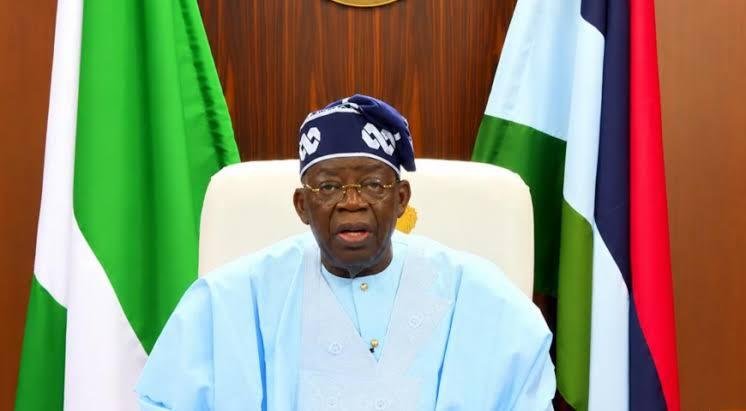
The interesting part is that Adeleke is not simply campaigning against his opponent, APC candidate Munirudeen Bola Oyebamiji. He is putting the President himself at the center of the election narrative.
By directly addressing Tinubu, Adeleke is essentially asking the President to prove that his administration can separate the machinery of government from the interests of the ruling party. That makes the August 15 poll bigger than an Osun contest because whatever happens will inevitably feed into the national debate about how credible Nigeria’s elections are ahead of 2027.
There is also a strategic reason for Adeleke to make this argument now. He is the incumbent and has publicly expressed confidence that he will win if the election is genuinely free and fair.
His campaign has also been gathering political momentum, with the Osun PDP adopting his Accord Party candidacy and reports of defections from other parties into his camp. At the same time, the APC is aggressively organising at polling-unit level, meaning the contest is developing into a serious battle over both voter support and election-day machinery.
That makes the violence allegations particularly important. If political parties begin the final stretch of an election convinced that the other side intends to manipulate the process, every unusual development on election day can become a trigger for confrontation.
Adeleke’s reference to the 1983 crisis is therefore deliberately powerful. He is reminding voters of a period when disputes over elections in the old Western Region contributed to serious political instability, while also warning security agencies that they will be judged on whether they protect voters rather than political interests.
Tinubu now has a political problem of his own. APC’s Oyebamiji has been presented as the party’s candidate, and he has previously rejected claims that Tinubu was backing Adeleke, insisting that he remains the President’s candidate.
If Tinubu intervenes too visibly on either side, the opposition can interpret it as evidence that the federal government is interfering. If he stays completely silent, Adeleke can continue asking why the President has not publicly guaranteed a clean election.
The real test will therefore come on election day. A peaceful election with transparent counting would weaken the accusations of impending rigging and give whoever wins a stronger mandate.
Any serious violence, voter intimidation or credible allegations of manipulation would do the opposite and turn Osun into another example of why Nigerians remain deeply suspicious of the electoral process.
For Adeleke, this is also a gamble. By making rigging and political violence central to his campaign message, he is raising expectations that his supporters will accept the result only if the process looks unquestionably credible.
If he loses a transparent election, the argument becomes difficult to sustain. If he wins after raising these concerns, however, he can portray the result as proof that the voters defeated attempts to interfere with their choice.
With less than two weeks to the vote, Osun is no longer just asking who will become governor. It is asking whether Nigeria’s political actors can compete fiercely without turning an election into another security crisis. That is the standard Tinubu, Adeleke and every other political actor in the state should now be held to.