








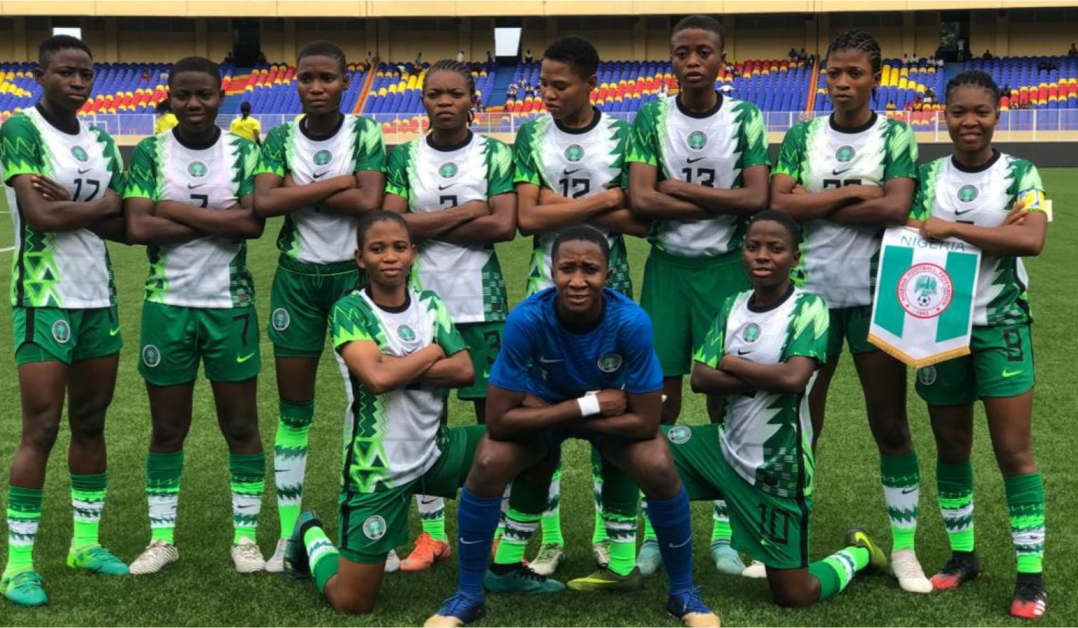
Nigeria is making another move to attract major international football competitions, but its latest ambition could mean more than simply bringing another tournament to the country. The National Sports Commission (NSC) has formally communicated Nigeria’s interest in hosting the inaugural Under-17 Women’s Africa Cup of Nations (WAFCON), a new continental competition designed to create more opportunities for young female footballers.
NSC Director-General Bukola Olopade confirmed the development on Friday, November 27, 2026, explaining that Nigeria had informed the Confederation of African Football (CAF) of its desire to host the historic tournament.
The move comes days after FIFA President Gianni Infantino questioned Nigeria’s readiness to host the men’s FIFA World Cup, suggesting that the country should first demonstrate its organisational capacity by staging smaller international competitions.
For Nigeria, the proposed U-17 WAFCON could therefore become an important opportunity to prove that it can successfully organise continental football events.
However, there is another reason the development deserves attention. The government wants to move beyond producing talented footballers and become a country that generates economic opportunities from hosting international sporting competitions.
Whether Nigeria can turn that ambition into reality will depend on more than football enthusiasm. Infrastructure, security, accommodation, transportation and tournament organisation will all matter.
Why Nigeria Wants to Host the First U-17 WAFCON
Olopade explained that Nigeria had communicated its interest to CAF through the confederation’s Secretary-General, Samson Adamu, during the recent CAF General Assembly in Abuja.
His comments reflect the government’s broader ambition to make sports a stronger contributor to the Nigerian economy.
Rather than simply sending athletes to international competitions, the NSC wants Nigeria to attract tournaments that bring visitors, commercial partnerships and investment into the country.
Olopade described the ambition as a transition from a consuming sports economy to a productive one.
The distinction is important.
A country that only participates in sporting competitions spends money preparing athletes, travelling and competing. A country that successfully hosts international events can generate additional economic activity through hotels, transportation, hospitality, broadcasting, advertising and tourism.
For Nigeria, hosting the first U-17 WAFCON could provide an opportunity to demonstrate how football can create economic benefits beyond the actual matches.
It could also strengthen the country’s relationship with CAF and position Nigeria for consideration when larger continental competitions become available.
However, expressing interest is only the beginning. Nigeria must still compete for the hosting rights and demonstrate that its proposed facilities and organisational plans meet CAF’s requirements.
Infantino’s World Cup Comments May Have Accelerated Nigeria’s Ambition
The timing of Nigeria’s hosting interest is particularly interesting because it follows comments by FIFA President Gianni Infantino about the country’s readiness to host the men’s FIFA World Cup.
During an interview with Arise News on November 23, Infantino acknowledged Nigeria’s football culture, resources and ambition but said the country was not currently ready to organise a tournament of that magnitude.
He pointed to infrastructure as a major requirement, particularly stadiums, hotels, airports and transportation networks.
His message was not that Nigeria could never host the World Cup. Rather, he suggested that the country needed to demonstrate its readiness through smaller international competitions before considering an event involving dozens of national teams and millions of visitors.
Nigeria’s interest in the inaugural U-17 WAFCON fits into that recommendation.
Although a youth women’s continental championship is considerably smaller than the men’s World Cup, it would still require Nigeria to coordinate teams, officials, accommodation, security, transportation, broadcasting and match facilities.
Successfully delivering such an event could help strengthen the country’s case for future hosting opportunities.
In my opinion, Infantino’s comments should be treated as a challenge rather than an insult. Nigeria has enormous football potential, but passion and population alone cannot qualify a country to host major international competitions.
The government must demonstrate that its sporting infrastructure can meet international standards.
The U-17 WAFCON could be an opportunity to begin proving that.
CAF’s New Tournament Could Change the Future of African Women’s Football
Nigeria’s hosting ambition also comes at an important time for women’s football across Africa.
On November 21, 2026, CAF’s Executive Committee approved the introduction of the Under-17 Women’s Africa Cup of Nations during its meeting in Abuja, chaired by CAF President Patrice Motsepe.
The decision creates another international competition for young female footballers across the continent.
Until now, opportunities for African girls to compete at major international youth tournaments have been more limited than those available to their male counterparts.
Introducing a dedicated U-17 continental championship could help address that gap by giving emerging players more competitive experience.
It would also create a stronger pathway for young footballers hoping to progress into senior national teams.
For countries such as Nigeria, which have a strong tradition of producing talented female footballers, the competition could become an important development platform.
The tournament could encourage greater investment in youth academies, grassroots football, coaching and scouting.
It may also create more opportunities for young players to attract attention from professional clubs and international scouts.
However, the success of the competition will depend on whether national football associations invest in their women’s youth teams rather than treating participation as an occasional international assignment.
CAF has taken an important first step by approving the tournament. The next challenge is ensuring that the competition becomes a consistent and properly supported part of African football.
Nigeria Has Hosted Major Sporting Events Before, But Can It Do It Again?
Nigeria is not completely new to hosting international sporting competitions.
The country co-hosted the Africa Cup of Nations with Ghana in 2000, welcoming some of the continent’s biggest national teams.
Nigeria also hosted the FIFA Under-17 World Cup in 2009, giving the country experience in organising an international football competition involving young players.
These events demonstrate that Nigeria has previously possessed the capacity to attract and accommodate international sporting delegations.
However, past achievements do not automatically guarantee present readiness.
Infrastructure has to be maintained, stadium facilities must meet current standards and organisers need to provide reliable transportation, accommodation and security.
Nigeria also faces competition from other African countries interested in attracting international tournaments.
The country’s recent unsuccessful attempt to secure the hosting rights for the 2027 Africa Cup of Nations, which went to the joint bid from Kenya, Tanzania and Uganda, shows that enthusiasm alone is not enough.
A successful bid requires a convincing presentation of facilities, government support, financial commitments and operational planning.
For the proposed U-17 WAFCON, Nigeria must demonstrate that it can deliver all these requirements.
The Economic Benefits Could Extend Beyond Football
One of Olopade’s most interesting arguments concerns the economic opportunities associated with hosting international competitions.
A successful U-17 WAFCON could benefit businesses that might otherwise have little connection to professional football.
Hotels and short-stay accommodation providers could receive bookings from visiting teams, officials, supporters and media organisations.
Airlines, transport companies, restaurants and event-service businesses could also benefit from increased activity.
There could be opportunities for local vendors, sports equipment suppliers, security companies and media organisations.
The tournament could additionally give Nigeria international exposure, potentially encouraging future tourism and sporting partnerships.
However, these benefits should not be exaggerated.
Hosting a tournament also comes with costs, including stadium preparation, security, logistics, accommodation arrangements and event administration.
If government spending is poorly managed or facilities are not properly utilised afterwards, the economic returns could be disappointing.
This is why Nigeria should approach the bid with a clear financial and operational plan.
The objective should not simply be to host another international competition. It should be to ensure that the event leaves behind useful facilities, stronger sporting institutions and opportunities for local businesses.
What Nigeria Must Do to Win the Hosting Rights
Nigeria has expressed its interest, but CAF still has to determine which country will host the inaugural competition.
The next stage will require the relevant authorities to develop a credible hosting proposal and demonstrate that the country can satisfy CAF’s requirements.
Stadium availability will be particularly important. The facilities must provide suitable playing surfaces, training grounds, changing rooms and other essential match-day infrastructure.
Accommodation and transportation will also require attention, especially if several participating countries and their supporters are expected.
Security arrangements must be strong enough to protect players, officials, supporters and visitors throughout the competition.
The government will also need to coordinate with the Nigeria Football Federation, state authorities and private-sector partners.
Nigeria could use the experience gained from the 2009 FIFA U-17 World Cup and the 2000 AFCON to strengthen its proposal.
But it must also demonstrate that the country has improved its sporting infrastructure and event-management capacity since those competitions.
A successful bid would represent an important achievement for Nigerian football administration.
It would also provide a platform for young female players to compete in front of home supporters.
Is the U-17 WAFCON the Beginning of a Bigger Sports Ambition?
Nigeria’s interest in hosting the inaugural U-17 WAFCON represents a potentially important step towards expanding its role in international sports.
The country has a large population, a passionate football audience and a history of producing talented players. What it needs now is a more consistent ability to turn those advantages into successful sporting projects.
The proposed tournament could help demonstrate that Nigeria is capable of organising competitions beyond its traditional participation in international football.
It could also create opportunities for young female players who need more competitive platforms to develop their careers.
However, the government should avoid measuring success only by whether CAF awards Nigeria the hosting rights.
The real achievement would be building facilities, strengthening institutions and creating an environment where women’s football can grow even after the competition ends.
Nigeria has already made its interest known. The next question is whether it can present a bid strong enough to convince CAF.
If successful, the inaugural U-17 WAFCON could become more than another football tournament. It could be an important test of Nigeria’s ambitions to become a leading destination for international sports.