








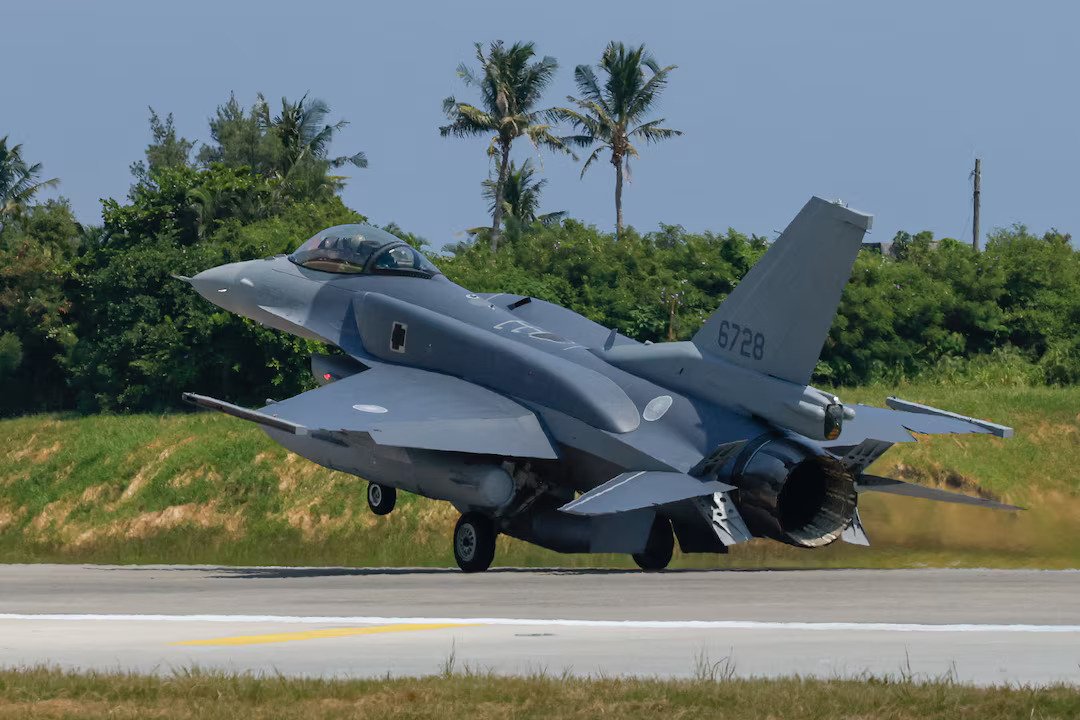
Taiwan has received its first two US-made F-16V Block 70 fighter jets, marking a major step in a long-delayed Taiwan F-16V fighter jet delivery programme. The aircraft arrived at Chihhang Air Base in Taitung on Friday, October 2, as Taipei continues to strengthen its air defence capabilities amid tensions with China.
First Taiwan F-16V Fighter Jets Arrive
The two aircraft are the first of 66 F-16V Block 70 jets Taiwan purchased from the United States under an estimated $8 billion deal approved in 2019. The programme, known as “Peace Phoenix Soaring”, was originally expected to begin deliveries earlier, but production, supply-chain and technical issues pushed the schedule back.
Taiwan’s Defence Minister Wellington Koo said more aircraft are expected to arrive before the end of the year. Once all 66 jets are delivered, Taiwan’s F-16 fleet will expand significantly, alongside 139 older F-16A/B aircraft that have already been upgraded to the F-16V configuration.
Why The F-16V Upgrade Matters
The Taiwan F-16V fighter jets are designed to give the island more advanced detection, electronic warfare and combat capabilities. The Block 70 aircraft feature an AESA radar and Viper Shield electronic warfare system, while improvements to fuel capacity and weapons carriage give them greater operational flexibility.
The new aircraft will be based at Chihhang Air Base, which is expected to become an important combat facility for Taiwan’s eastern region. Taiwan’s defence authorities say the location could help respond to potential Chinese naval and aerial manoeuvres around the island.
China Tensions Add Strategic Importance
The arrival comes as Taiwan and China tensions remain a major security issue in East Asia. Beijing claims Taiwan as part of China and has consistently opposed US arms sales to the island, while Taiwan maintains that it has the right to strengthen its own defence capabilities.
The United States does not formally recognise Taiwan as a sovereign state but maintains unofficial relations with Taipei and has continued to provide military equipment under its longstanding policy. Recent US-Taiwan discussions have also focused on the delivery of previously approved weapons, despite continuing disagreements with Beijing.
What Happens Next?
The immediate focus will be on completing the remaining deliveries and integrating the aircraft into Taiwan’s existing defence structure. The first two jets are therefore more than an equipment delivery. They represent the beginning of a wider expansion of Taiwan’s modern fighter fleet after years of delays.
For Taiwan, the next stage will be turning the new aircraft, training and supporting infrastructure into a fully operational capability. For the wider region, the delivery adds another element to the growing military balance across the Taiwan Strait.