





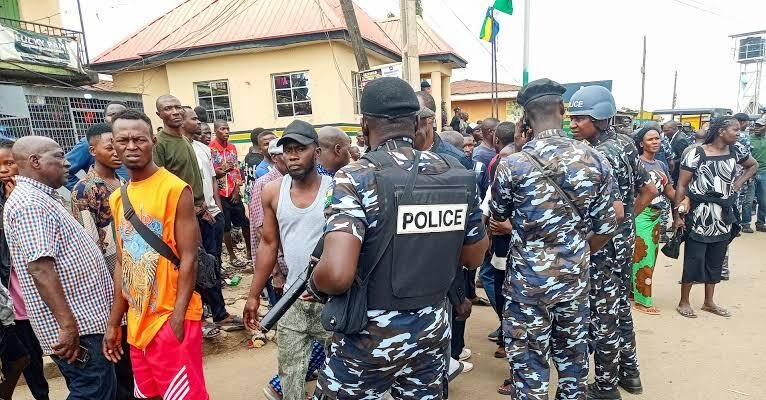
Plateau State is facing another wave of deadly attacks after a senior police officer attached to Operation Rainbow was killed in an ambush while responding to a security incident along the Barkin Ladi-Bokkos road.
The September 22 attack came only a day after the Plateau State Government imposed a dusk-to-dawn curfew in Barkin Ladi, Bokkos and Mangu Local Government Areas following renewed violence. The curfew restricts movement from 6pm to 6am and also includes a ban on motorcycles in the affected areas.
The latest killings have raised a difficult question for residents: can restricting civilian movement reduce violence if armed attackers can still operate and even target security teams?
Operation Rainbow Officer Killed on the Way to Help
Chief Superintendent of Police Dennis David Babale, the Deputy Commander of Operation Rainbow, was reportedly travelling along the Bokkos-Barkin Ladi road at about 4pm on Tuesday when the security team came under attack.
Reports say the team was responding to a distress call concerning an attack on a community when gunmen opened fire on their vehicle. Babale sustained gunshot injuries and was taken to General Hospital, Barkin Ladi, where he later died. Troops subsequently launched a manhunt for the attackers.
Three civilians were also reportedly killed separately at Rakok, also known as Kafi Abu, in Barkin Ladi Local Government Area. Community sources said the attack happened during the day, reinforcing concerns that the violence is no longer limited to the hours when residents are traditionally considered most vulnerable.
Why the Plateau Curfew Is Under Pressure
Governor Caleb Mutfwang announced the curfew on September 21, saying it would give security agencies the opportunity to stabilise the affected areas, protect lives and prevent further breakdown of law and order.
However, the Plateau security crisis continued almost immediately after the order took effect. This is significant because curfews depend heavily on enforcement and intelligence. They can reduce movement and make it easier for security forces to identify unusual activity, but they do not by themselves identify armed groups, prevent ambushes or secure rural roads.
Channels Television reported that community representatives have called for stronger patrols, rapid response and intelligence-led operations, arguing that restricting residents’ movement will not be enough if attackers can continue to strike.
A Wider Pattern of Violence
The latest Barkin Ladi and Bokkos attacks are not happening in isolation. Premium Times reported last week that at least 10 people had been killed in separate attacks across Plateau during the preceding week, while security forces arrested 22 suspects.
The renewed violence has also created a cycle in which attacks can trigger reprisals and further insecurity. That makes rapid identification of attackers and protection of vulnerable communities particularly important.
For residents, the immediate concern is whether the new security measures will produce a sustained reduction in attacks rather than simply restrict movement for law-abiding citizens.
For security agencies, the killing of an Operation Rainbow commander while responding to a distress call adds another challenge. It shows that the people expected to protect vulnerable communities are themselves exposed to serious risks on the roads.
The coming days will therefore be important. Security agencies are conducting manhunts for the attackers, while the state government continues to enforce the curfew. How quickly authorities identify those responsible and whether attacks decline will determine whether the latest measures restore confidence in the affected communities.