





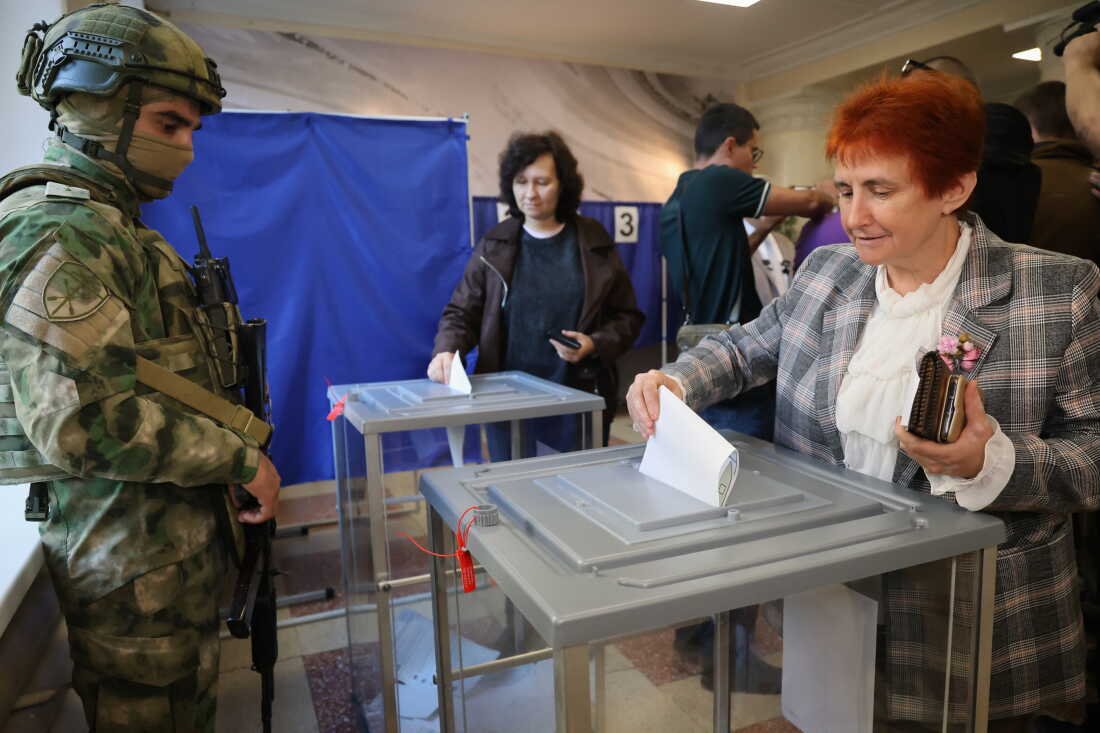
Russia’s latest parliamentary election has created a sharp divide between Moscow’s official results and the European Union’s response. While Russia’s Central Election Commission says President Vladimir Putin’s United Russia party has won 355 of the 450 seats in the State Duma, the EU has rejected the election process and said it will not recognise voting conducted in Russian-occupied parts of Ukraine.
The election was held from September 18 to 20, 2026, and was the first Russian parliamentary vote since the full-scale invasion of Ukraine in 2022.
United Russia Secures a Constitutional Majority
With more than 95% of votes counted, United Russia had received 57.83% of the vote, according to Russia’s Central Election Commission. The result gives the party 355 seats in the State Duma, allowing it to retain its constitutional majority. In 2021, United Russia received 49.8% of the vote.
The result means Putin’s government will continue to have strong parliamentary backing as Russia remains engaged in the war in Ukraine. Putin had presented the election as an indication of public support for his government and its wartime policies.
Why the EU Rejected the Russian Election
The European Union’s objection focuses heavily on the conditions under which the election took place and the organisation of voting in territories occupied by Russia.
EU foreign policy chief Kaja Kallas said on September 21 that the bloc would not recognise the elections held in occupied Ukrainian territories. The EU also said it plans measures against people involved in organising the voting there.
The EU has also raised concerns about the political environment inside Russia. According to the bloc, anti-war candidates were restricted or excluded, while international election monitors from the Organisation for Security and Co-operation in Europe were not invited.
Russia’s authorities, however, have presented the election as legitimate and reported a decisive victory for United Russia. The country’s election commission has also rejected allegations of widespread manipulation. Reuters reported that opposition activists in exile alleged irregularities, while the Kremlin-backed process continued.
What the Result Means for Putin’s Government
The immediate effect is political continuity. With 355 seats, United Russia retains the parliamentary numbers needed for a constitutional majority, giving the Kremlin substantial room to pass legislation without depending on smaller parties.
The election also gives Moscow a domestic political result it can point to while the war continues. At the same time, the EU’s rejection means the vote is likely to become another point of disagreement between Russia and European governments.
The contrast is particularly significant because this was the first parliamentary election since Russia’s full-scale invasion of Ukraine. The result therefore carries significance beyond the composition of the Duma, as both Moscow and its critics are interpreting the election as a reflection of Russia’s political direction during wartime.