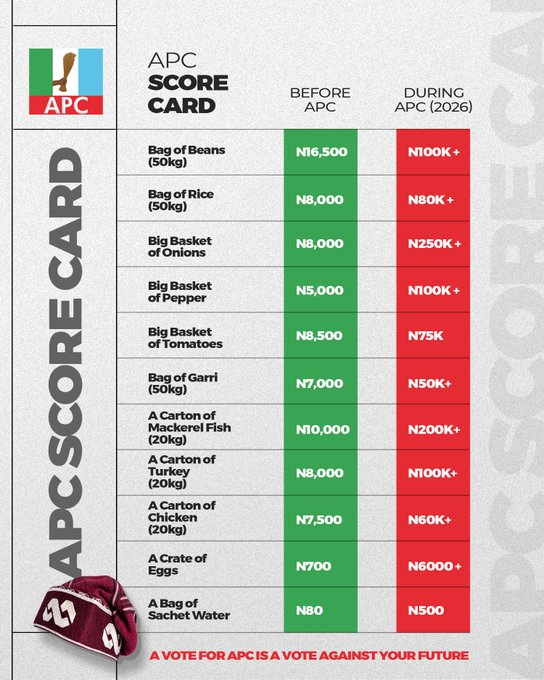








Graphics circulating online comparing Nigeria’s prices in 2015 with current costs have renewed debate over the Nigeria cost of living under APC. The APC scorecard highlights dramatic increases in food, petrol and other household expenses, while also showing how the value of workers’ wages has changed.
The comparisons are becoming politically important as Nigerians judge the APC economic performance from 2015 to 2026 ahead of another election cycle.
Food and Fuel Tell the Story
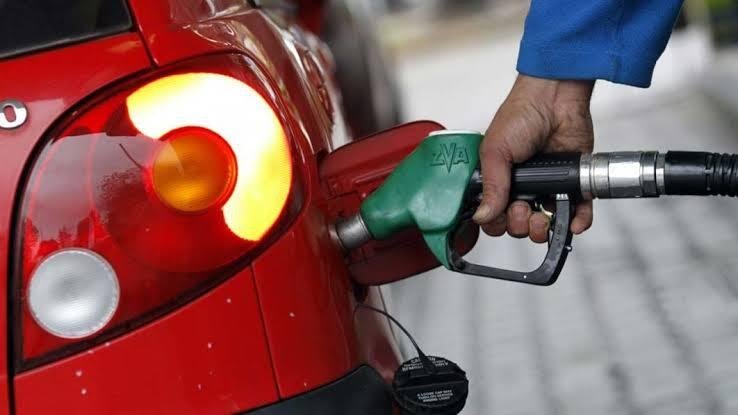
The widely shared scorecard compares the price of a 50kg bag of beans, petrol and the naira-dollar exchange rate between 2015 and today. It puts beans at about ₦16,500 in the earlier period compared with more than ₦100,000 now, while petrol is compared at ₦87 per litre against current prices above ₦1,000.
Some of the exact figures in the graphic should be treated as political scorecard estimates rather than official like-for-like statistics. However, the broader rise in Nigeria food prices since 2015 is supported by official data.
The National Bureau of Statistics currently puts headline inflation at 15.43%, with food inflation at 20.31%. Petrol prices are also substantially higher than their pre-2015 levels.
Minimum Wage Rose, But Purchasing Power Fell
The minimum wage comparison makes the political argument more complicated. Nigeria’s minimum wage rose from ₦18,000 in 2015 to ₦70,000 today. That is a major increase in naira terms. However, the Nigeria minimum wage purchasing power story looks very different once currency depreciation and higher living costs are considered.
The naira has also weakened sharply against the dollar. Government figures put the official exchange rate at around ₦1,358 to the dollar in August 2026, compared with roughly ₦460 in May 2023.
Labour has already warned that the ₦70,000 minimum wage is being eroded by rising food, transport, housing and healthcare costs and has called for another review.
Why the Scorecard Matters Politically
This is where the Tinubu cost of living crisis debate becomes more complicated. The Federal Government can point to falling inflation and improvements in foreign exchange conditions, while households can point to how much more they now spend to eat, travel and run their homes.
Both can be true at the same time. Lower inflation means prices are rising more slowly. It does not mean prices have returned to their old levels.
That difference could become central to the political debate ahead of 2027. For many voters, the most important measure of economic performance may not be the inflation rate or foreign reserves, but whether their income can buy more or less than it did before.
The APC scorecard graphics are therefore tapping into a much bigger question: has economic reform improved Nigerians’ purchasing power, or has the adjustment cost fallen too heavily on households?