










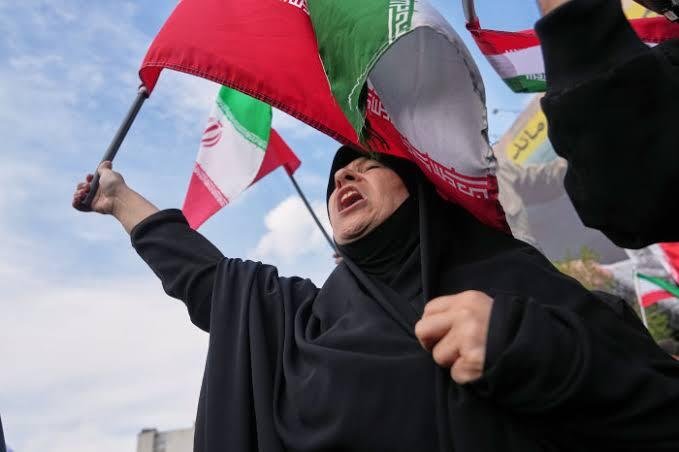
Six months into the war between Iran and the US-Israel alliance, Tehran is presenting the conflict as a victory, but the claim says more about Iran’s political strategy than it proves about the battlefield.
Major General Ahmad Vahidi, commander of Iran’s Islamic Revolutionary Guard Corps (IRGC), said Iran had defeated what he described as the world’s most powerful military forces after months of fighting. His comments came as Iran marked six months since the February 28 conflict began.
But there is an obvious problem with declaring victory while the conflict remains unresolved. Iran has suffered major losses, including the death of Supreme Leader Ali Khamenei and senior military figures during the initial US-Israeli strikes. At the same time, Tehran has survived the attacks, retained its political system and continued to exercise significant leverage over the Strait of Hormuz. Recent analysis from the Financial Times describes Iran as using control of the waterway as a strategic and economic bargaining tool.
So both sides can point to something. Washington and Israel can argue that their military campaign inflicted enormous damage on Iran’s leadership and infrastructure. Tehran can argue that Iran was not defeated, its government survived, and the country still has the ability to impose costs on its opponents and disrupt one of the world’s most important shipping routes. That is why Vahidi’s statement should probably be viewed as war messaging rather than an independently verifiable military scorecard.
And Iran’s leadership appears to be preparing its population for a prolonged confrontation rather than announcing an end to the conflict. Vahidi has been placed at the centre of a reshaped Iranian military command under Supreme Leader Mojtaba Khamenei, with the new leadership emphasising both deterrence and offensive capability.
Iranian Foreign Ministry spokesman Esmaeil Baqaei also entered the information war from another direction, quoting Fyodor Dostoevsky’s The Brothers Karamazov to accuse the US of becoming trapped by its own lies.
“The man who lies to himself and listens to his own lie comes to such a pass that he cannot distinguish the truth within him, or around him, and so loses all respect for himself and for others.”
The literary jab is clever, but the broader message is familiar: both Tehran and Washington are trying to convince the world that the other side is losing. And that is what makes the word victory so dangerous in this conflict.
If neither side believes it has lost, there is little incentive to compromise. Iran’s declaration could therefore signal that Tehran intends to negotiate from a position of claimed strength, particularly over Hormuz, rather than accept the narrative that the US and Israel won the war.


2 thoughts on “Iran Says It Won the War. But What Does “Victory” Actually Mean?”