









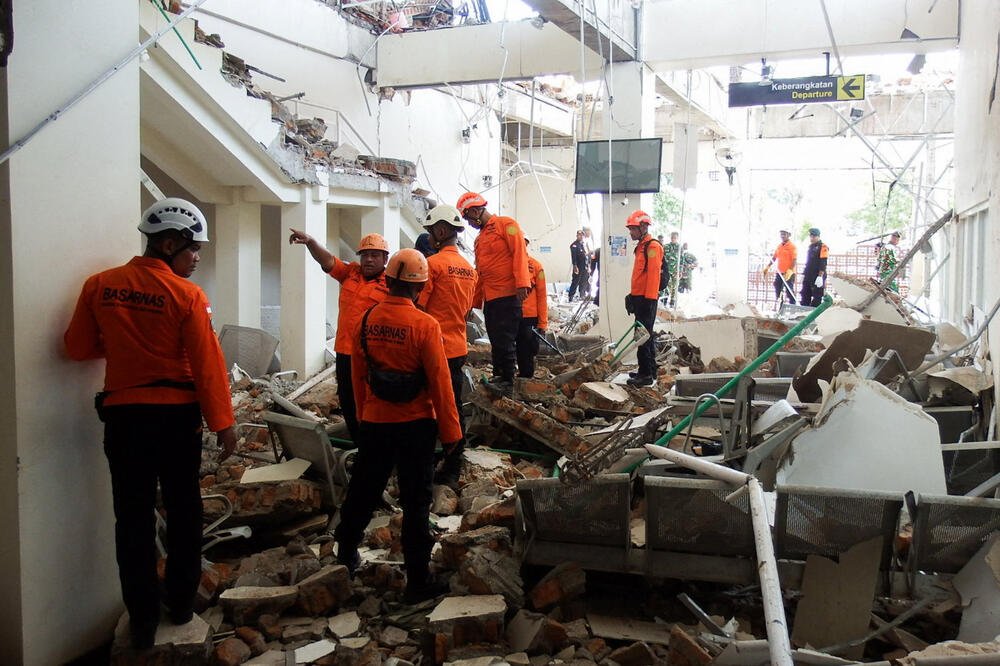
Indonesia is facing a growing rescue and humanitarian crisis after a powerful 7.7-magnitude earthquake struck Flores Island, with the death toll rising to at least 68 and more than 200 people injured. The bigger challenge now is not only finding survivors, but reaching communities that have been cut off by landslides, damaged roads and communication failures.
The earthquake struck early Saturday in East Nusa Tenggara province at a shallow depth of about 10 kilometres. Its impact was severe because the epicentre was close enough to populated areas to cause major structural damage. More than 1,300 homes have been damaged, while thousands of people have been forced into temporary shelters.
The Rescue Operation Is Getting Harder
The most urgent problem is access. Landslides have blocked roads across parts of Flores, while some remote communities remain difficult to reach. Power and communication problems have also slowed efforts to understand the full scale of the damage.
That means the official death toll could still rise as rescue teams reach areas that have been isolated since the earthquake. Authorities have deployed thousands of military and police personnel, aircraft and emergency teams to support rescue and relief operations. But getting supplies to communities on an island with damaged roads is a very different challenge from responding to an earthquake in a major city.
Thousands Are Afraid to Go Home
The earthquake has also created a second crisis: displacement. Around 5,000 people have been forced from their homes, with many choosing to sleep outdoors because of continuing aftershocks and fears that damaged buildings could collapse. Nearly 1,600 aftershocks have been recorded in the province, adding to the anxiety.
For people in affected villages, the immediate needs are basic. Food, clean water, medicine and safe shelter are becoming increasingly important as the emergency continues. Reports from some communities already describe shortages of clean water and limited access to medical care.
The Tsunami Warning Added to the Panic
The earthquake also triggered a tsunami warning, forcing coastal residents to move towards higher ground. The warning was later lifted after authorities found no major continuing tsunami threat, although waves of up to about 1.6 metres were recorded in some locations.
That warning is particularly significant in Flores because Indonesia has a long history of deadly earthquakes and tsunamis.
The country sits on the Pacific Ring of Fire, making earthquakes a regular threat. But the disaster shows that preparedness is not simply about earthquake-resistant buildings. Roads, hospitals, communications and emergency supply networks all have to survive long enough for rescuers to reach people.
What Happens Next
The next few days will be critical. Rescue teams will continue searching damaged buildings and isolated communities, while authorities try to reopen roads and deliver supplies. The government will also have to assess thousands of damaged homes and public facilities before deciding how quickly displaced residents can return.
For now, the biggest concern is that the people who need help most may be the hardest to reach. The earthquake has already killed dozens. The response now depends on how quickly Indonesia can overcome the isolation left behind by the disaster.