








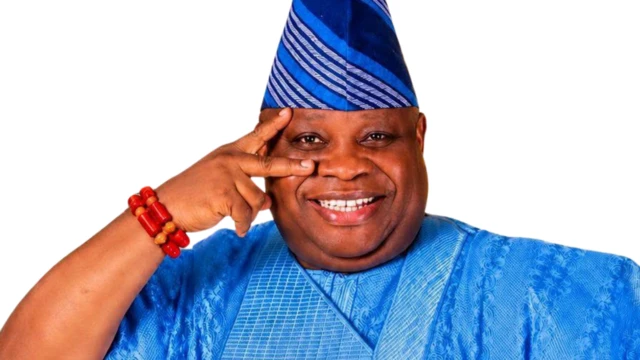
Ademola Adeleke’s re-election means Osun State will have political continuity for the next four years. But for residents, the more important question is what that continuity will actually deliver.
Adeleke defeated APC candidate Bola Oyebamiji with 511,067 votes to 444,815, winning 19 of the state’s 30 local government areas. The result gives him a stronger mandate than his first election in 2022, when he won by 28,344 votes.
That bigger margin could make his second term very different from his first.
The Excuses Get Smaller
Adeleke’s administration spent much of its first term dealing with inherited problems, including salary and pension arrears, infrastructure gaps and debt. The government says it has cleared a significant portion of inherited obligations while investing heavily in roads, healthcare, education and workers’ welfare.
Now, voters have given him another four years. That means the focus will gradually shift from what Adeleke inherited to what he builds.
The governor has already promised a second-term agenda centred on infrastructure, agriculture, healthcare, education, youth and women’s empowerment, and creating a better environment for businesses and jobs. Osun residents will now expect those promises to produce visible results.
Infrastructure Could Become the Big Test
Roads have been one of the biggest areas of Adeleke’s first-term spending. The state government says it has constructed more than 300 kilometers of roads and developed major flyovers across Osun.
The second term could therefore be less about announcing new road projects and more about completing existing ones, maintaining what has already been built and making sure infrastructure reaches communities outside the major cities.
That matters because better roads only become economic development when they reduce transport costs, improve access to markets and make it easier for businesses to operate.
Osun Needs Jobs, Not Just Projects
Perhaps the biggest challenge for the next four years is employment. Infrastructure can create temporary construction jobs, but Osun needs businesses and industries capable of providing sustainable income. The state’s own second-term agenda places agro-industrial expansion and a better business environment at the center of its plans.
That could be especially important for young people who may not benefit directly from government projects. The state has also reported a sharp rise in internally generated revenue, from ₦27.72 billion in 2023 to ₦54.7 billion in 2024, alongside reductions in domestic and external debt.
If that trend continues, the challenge will be turning stronger government finances into better public services and more private-sector activity.
The Local Government Problem Still Matters
There is also an unresolved issue that could affect development at the grassroots.
The Adeleke administration has complained about withheld local government allocations, saying the dispute has affected funding for primary healthcare, schools and council workers. The state government put the amount involved at about ₦130 billion as of January 2026.
Resolving that situation will be important because Osun’s development cannot depend entirely on decisions made in Osogbo. Adeleke has won the election. Now the political battle is largely over.
The harder task is making sure that, by the end of his second term, Osun residents can point to better jobs, stronger businesses, functioning public services and infrastructure that actually improves everyday life. This time, voters will have four more years to judge the results.