







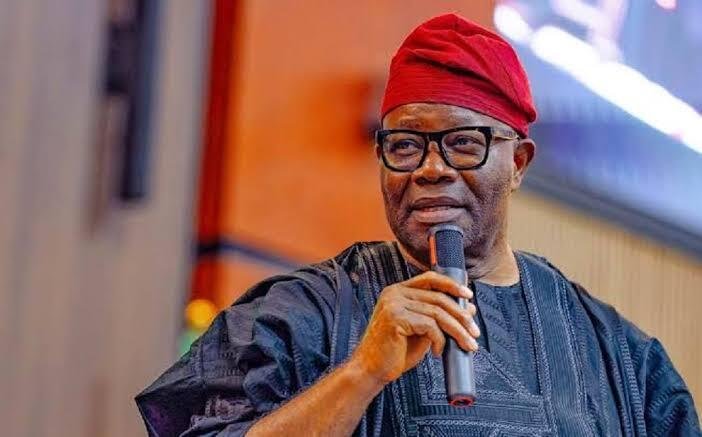
Senate President Godswill Akpabio has defended President Bola Tinubu’s extended working vacation, insisting that there is no power vacuum in Aso Rock despite the President’s prolonged absence from Nigeria.
Akpabio made the comments in Akwa Ibom on Tuesday, September 22, while commissioning projects by Governor Umo Eno. He said Tinubu remained in power and continued to direct government affairs from abroad, rejecting calls for the President to formally hand over power to Vice President Kashim Shettima.
Why Tinubu’s Vacation Became a Political Issue
Tinubu left Nigeria on August 30 for what the Presidency described as a three-week working vacation in Europe. He first travelled to London before moving to Paris, where he met French President Emmanuel Macron and businessman Vincent Bolloré. The Presidency later announced that the trip had been extended by a few days, with Tinubu expected to return at the weekend.
The timing has attracted more attention because Vice President Shettima is also outside Nigeria. Shettima left for New York on September 20 to lead Nigeria’s delegation to the 81st United Nations General Assembly, where he is scheduled to deliver Nigeria’s national statement.
That has turned what began as a presidential holiday into a debate about who exercises presidential powers when both the President and Vice President are abroad.
Akpabio Says There Is No Power Vacuum
Akpabio said he is not acting President because Tinubu remains in office. He argued that modern communications allow the President to continue giving instructions while abroad and pointed to Tinubu’s diplomatic engagements and government directives as evidence that the administration remains active.
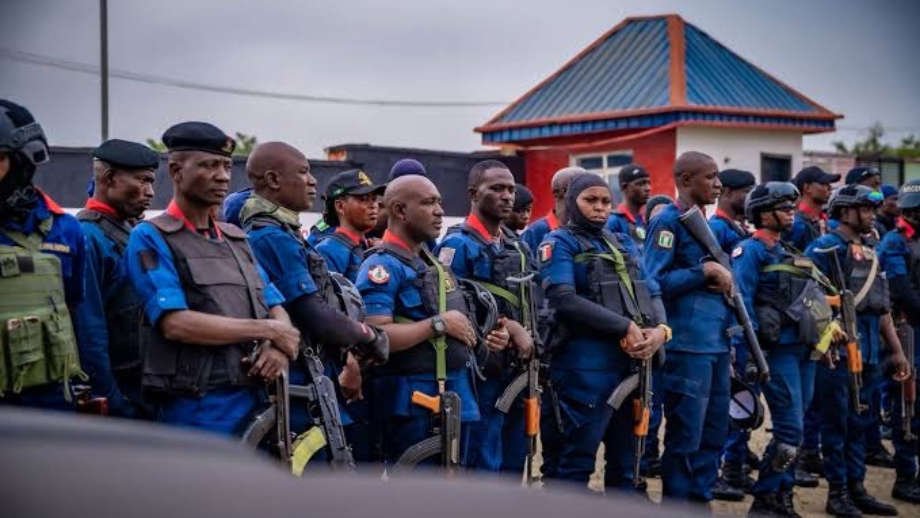
The Presidency has similarly said Tinubu has remained in contact with officials in Nigeria and continued directing government business. It cited his order for an independent investigation into the deaths of suspected illegal miners in NSCDC custody in Niger State as one decision taken while he was abroad.
The Constitutional Question Behind the Debate
The controversy is now centred on Section 145 of Nigeria’s 1999 Constitution. The provision states that when the President proceeds on vacation or is otherwise unable to discharge the functions of office, he is to transmit a written declaration to the Senate President and House Speaker.
The Vice President then performs the functions of President as Acting President. If the declaration is not transmitted within 21 days, the Constitution provides for the National Assembly to mandate the Vice President to perform those functions.
Critics, including former Vice President Atiku Abubakar and the African Democratic Congress, have questioned whether the required constitutional procedure was followed after Tinubu’s initial three-week period expired.
The Presidency has maintained that Tinubu remains in charge, while Akpabio has now publicly backed that position.
What Happens Next?
The immediate issue is likely to remain tied to Tinubu’s expected return at the weekend. His return would remove the question of his physical absence from the centre of the current debate.
Until then, however, the discussion is likely to continue around Tinubu’s extended vacation, Section 145 of the Nigerian Constitution and the role of Vice President Shettima.
The disagreement is therefore not simply about whether a president can work from abroad. It is about how the constitutional procedure for temporary presidential absence is interpreted and communicated to the public.