








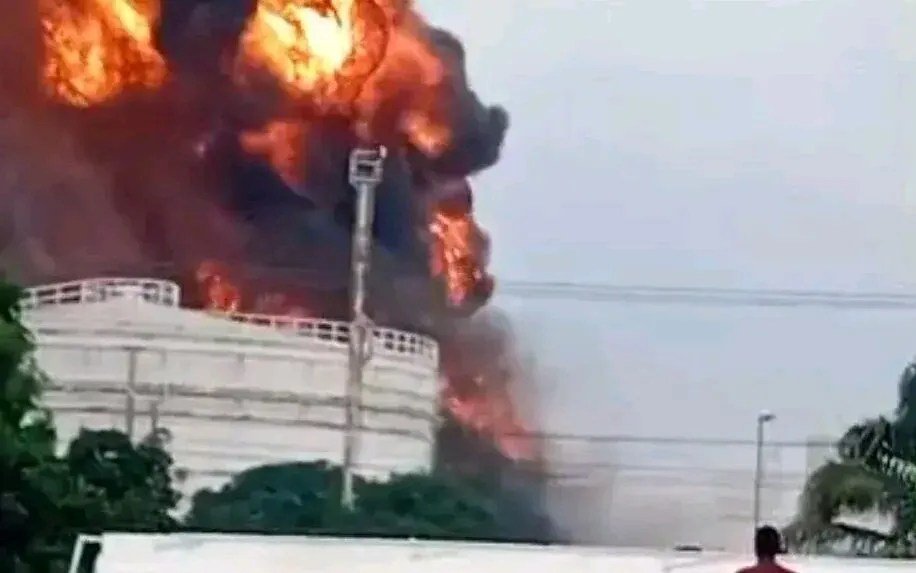
A major fire outbreak at the Bono Energy Terminal in Apapa, Lagos, was successfully contained on Friday after emergency responders prevented the blaze from spreading to nearby fuel storage facilities.
The fire erupted at about 12:04 p.m. at the Bono Energy Terminal, located within the Ibru Jetty Complex along the Apapa-Oworonshoki Expressway. According to the Lagos State Fire and Rescue Service (LSFRS), the incident involved a five-million-litre Automotive Gas Oil (AGO), commonly known as diesel, storage tank. Thick plumes of smoke were seen rising over the Apapa industrial area, causing concern among residents, motorists and workers in the busy commercial hub.
Firefighters from the Ajegunle, Sari Iganmu and Isolo Fire Stations responded within minutes, working alongside emergency teams from neighbouring oil and gas facilities, the Nigerian Ports Authority and other stakeholders. Through a coordinated response, the blaze was brought under control and completely extinguished by 1:54 p.m., less than two hours after it was reported. Officials confirmed that the prompt intervention prevented the fire from spreading to adjoining tanks and critical infrastructure.
Controller General of the Lagos State Fire and Rescue Service, Margaret Adeseye, praised the professionalism and collaboration of all responding agencies, describing the operation as a successful example of effective emergency management. She confirmed that no casualties or injuries were recorded, while the extent of material losses is still being assessed.
Authorities have launched an investigation to determine the cause of the fire, which remains unknown. The incident comes as emergency agencies continue to stress the importance of strict safety measures at fuel storage facilities, particularly in Apapa, one of Nigeria’s busiest oil and maritime logistics hubs.
Although the fire caused temporary concern and disruptions around the area, officials say the swift containment averted what could have become a much larger industrial disaster.