








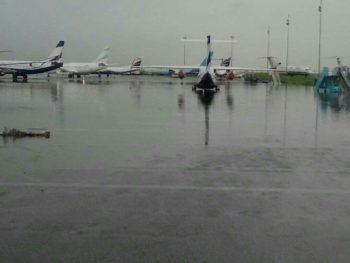
Heavy rainfall disrupted operations at Murtala Muhammed International Airport (MMIA) in Lagos on Friday morning after floodwater and an electrical fault affected parts of the terminal, forcing airport authorities to temporarily suspend activities in the impacted area.
The Federal Airports Authority of Nigeria (FAAN) said the incident was triggered by intense downpours that caused water intrusion and an electrical disruption within one section of the terminal.
Engineers were immediately deployed to restore normal operations, while passengers experienced delays as affected areas were secured. Authorities confirmed that the disruption was temporary and that airport services gradually resumed after the fault was addressed.
The incident came as fresh concerns emerged over Lagos’ electricity infrastructure following renewed anxiety surrounding the Egbin Power Station and transmission facilities serving the state. Energy experts have renewed calls for a comprehensive audit of critical power infrastructure, warning that aging equipment and repeated technical failures continue to expose Lagos to the risk of widespread blackouts.
Earlier this year, the Nigerian Independent System Operator (NISO) disclosed that a major operational failure at Egbin Power Station, combined with faults on key transmission lines, significantly reduced electricity supply into Lagos, forcing load shedding across several parts of the city. Industry analysts argue that similar vulnerabilities remain and should be urgently addressed before another major disruption occurs.
Power sector stakeholders say the government should conduct a nationwide audit of transmission substations, distribution facilities and generation assets to identify weak points before they develop into larger failures. They also stressed the need for stronger flood protection around critical infrastructure as extreme weather events become more frequent.
Although Friday’s airport flooding and the ongoing power concerns were unrelated incidents, both have renewed debate about the resilience of Nigeria’s transport and energy infrastructure.