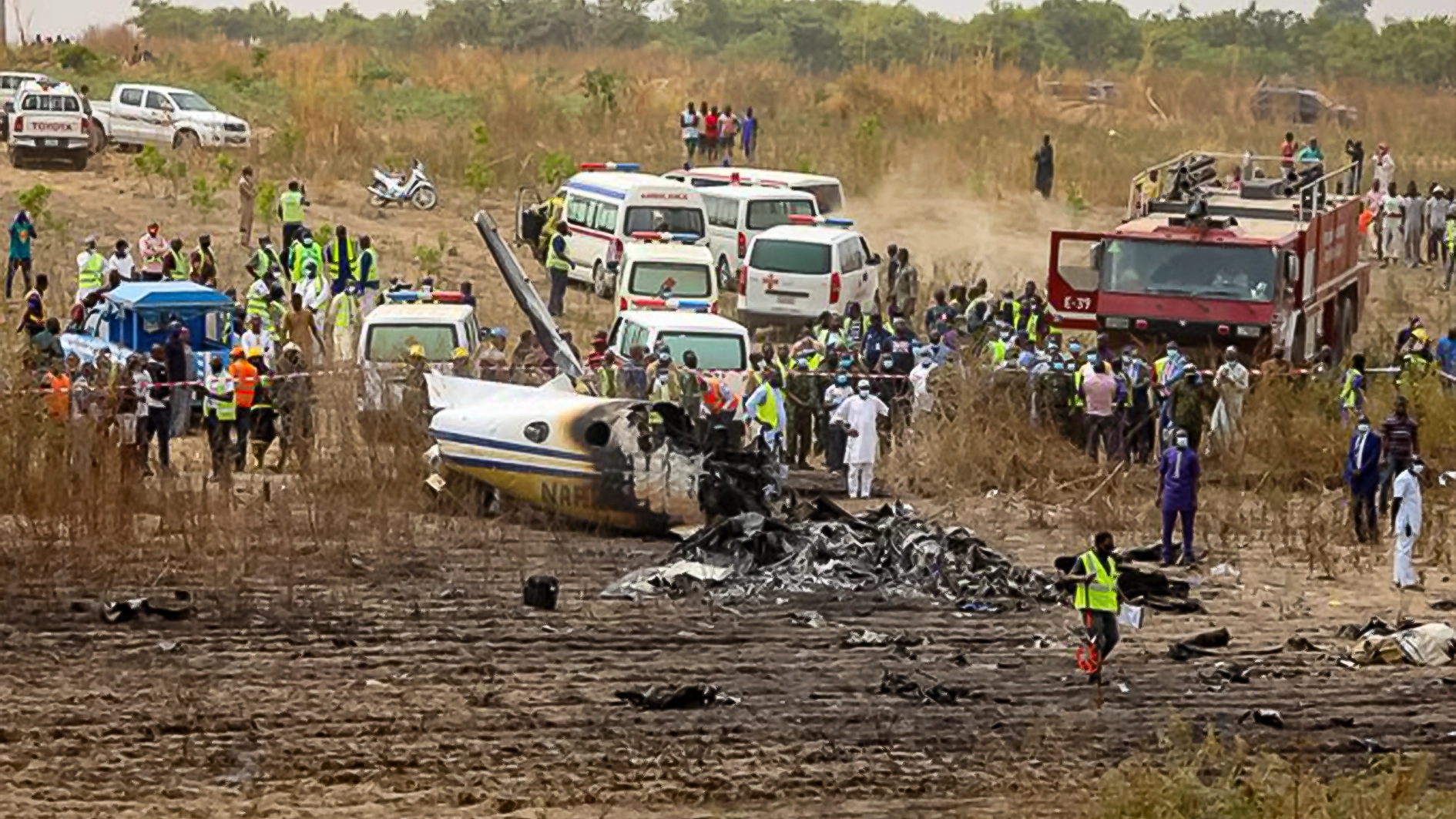
The Ondo Air Force plane crash has moved from a search-and-recovery operation to a wider investigation into military aviation safety in Nigeria. The Nigerian Air Force has activated a board of inquiry to determine what caused the ATR-42 aircraft to crash in the swampy Igbokoda area of Ondo State on Monday, October 5, 2026.
The aircraft was travelling from Benin to Lagos on a routine mission when it crashed near a naval base. President Bola Tinubu ordered a thorough investigation and declared three days of national mourning for the personnel who died.
Why The Igbokoda Crash Is Difficult To Investigate
The NAF plane crash in Ondo State has been complicated by the terrain. The aircraft came down in a swampy area near a river, making access difficult for search teams.
The Nigerian Navy and Marine Police have been involved in efforts to recover victims and wreckage. Movement around the crash site has also been restricted as authorities manage the recovery operation.
The difficult environment matters because investigators need to recover as much of the aircraft and its flight data as possible to establish what happened before the crash.
The Investigation Will Have To Answer Bigger Questions
The Ondo aircraft crash investigation is now expected to examine the aircraft, its maintenance history, flight data, crew actions and other circumstances surrounding the accident.
The Nigerian Safety Investigation Bureau has said the crash falls under military jurisdiction because the aircraft belonged to the Air Force. However, the bureau said it could provide technical assistance, including flight-data and cockpit-voice analysis, if formally invited by the military.
That could become important if authorities want the investigation to produce more than a cause of death and instead identify weaknesses that could prevent another military aviation accident.
A Wider Military Aviation Safety Problem
The Nigerian Air Force safety reforms now being discussed come against a worrying background. A Punch analysis found that Nigeria recorded at least 10 military aircraft crashes between 2021 and October 2026, involving different types of aircraft and missions. At least 68 deaths were recorded or presumed across those incidents.
That makes the Igbokoda investigation more significant than a single accident. Families of military personnel and the wider public will want to know whether the findings lead to changes in maintenance, training, aircraft monitoring and operational safety.
What To Expect From The Probe
The immediate priority remains the recovery of the victims and wreckage and support for the affected families. The Air Force has asked the public to avoid speculation while official procedures continue.
The more important test will come after the investigation. If investigators identify technical or procedural failures, Nigerians will expect the authorities to explain what went wrong and what will change.
For now, the NAF ATR-42 crash remains a national tragedy. But the investigation could also become a test of whether Nigeria can turn another painful military aviation accident into concrete safety improvements.