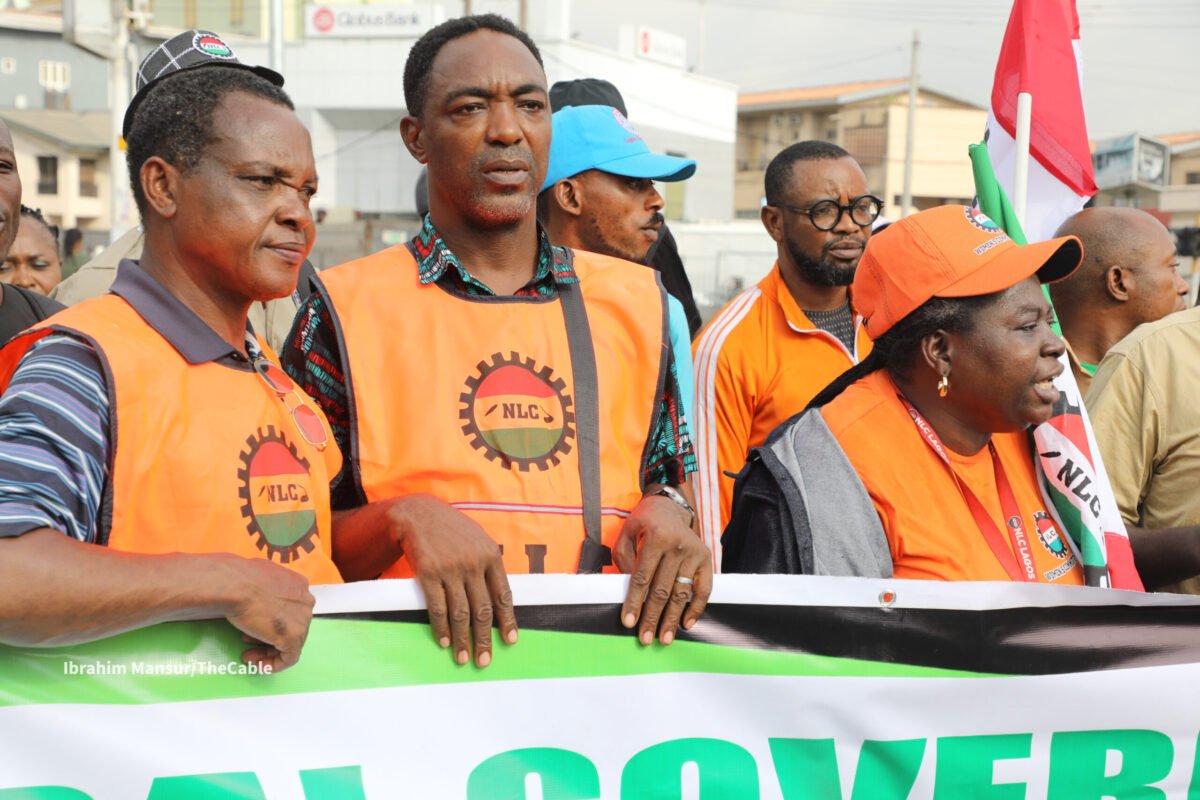
The Nigeria Labour Congress (NLC) has given the Federal Government a two-week ultimatum to begin renegotiating the national minimum wage, reduce petrol prices and implement outstanding agreements with workers. The union warned that failure to meet its demands could lead to further industrial action.
The ultimatum took effect on Friday, October 9, 2026, following a meeting of the NLC’s National Executive Council and Central Working Committee in Abuja. The deadline falls around October 23, placing pressure on the government to respond while households continue to face high food, transport and housing costs.
Why The NLC Says The Minimum Wage Is No Longer Enough
The NLC two-week ultimatum in 2026 centres on the gap between workers’ earnings and the rising cost of living.
The current national minimum wage of ₦70,000 was signed into law in July 2024. The NLC argues that naira depreciation and rising prices have reduced its purchasing power, leaving many workers struggling to afford basic needs, including food, housing, healthcare, transportation and education.
The union wants the government to begin renegotiating a new minimum wage before the end of October. It says the goal should be a living wage that reflects the current cost of living rather than an amount that has lost value as prices rise.
Why Petrol Prices Are Part Of The Dispute
The NLC’s demand for petrol price reduction in Nigeria is closely linked to its wage campaign. The union argues that expensive petrol raises transport fares and distribution costs, which then feed into the prices of food and other essential goods.
It wants petrol prices reduced to the level that prevailed when the current minimum wage was signed into law in 2024. That is a more specific demand than simply asking for a small discount at selected filling stations.
The demand comes as the Federal Government introduces a separate 30-day petrol discount at NNPC stations, with public transport operators receiving priority. The government has also proposed a ₦1,350-per-litre ceiling on petrol’s landing or ex-gantry cost. That figure is not a confirmed nationwide pump price, and the NLC is seeking broader price relief.
Other Agreements The Government Must Honour
Beyond petrol and wages, the NLC wants the government to implement agreed tax relief measures for workers and pay outstanding wage awards intended to cushion the impact of rising living costs.
It has also demanded implementation of the February 5, 2026 settlement with the Joint Health Sector Unions and Assembly of Healthcare Professionals (JOHESU), alongside outstanding demands from the Joint Public Sector Negotiating Council.
These additional issues mean the dispute is not limited to negotiating a new wage figure. The government must also address existing commitments that labour says remain unresolved. <Cite refs={[“turn330579news4″,”turn330579search11”]}/>
What Happens When The Deadline Expires?
The NLC has directed its affiliates and allies to remain prepared for further action if the government fails to respond within the two-week period. However, it has not announced a specific nationwide strike date in the ultimatum.
The coming days will test whether both sides can make progress on petrol prices, wage negotiations and outstanding agreements before the deadline. Any decision to strike would depend on the union’s relevant organs.
For Nigerian workers, the main issue is whether the talks lead to practical relief. A new wage agreement could improve earnings, but its impact would depend on how it compares with the cost of living. Likewise, a petrol price reduction would matter most if it also helps bring down transport fares and the cost of essential goods.
The ultimatum has put a clear deadline on the dispute. The next step rests with the government and whether it can reach an agreement with organised labour before the deadline passes.