









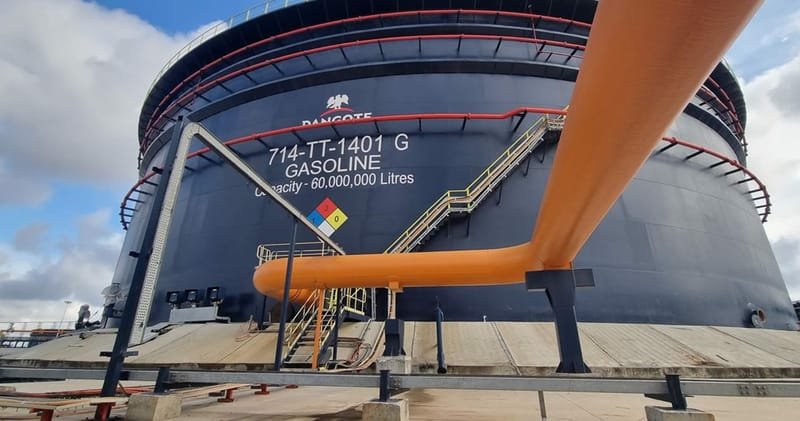
Nigeria’s petrol supply is undergoing a major shift as the Dangote Refinery supplied 71% of the country’s petrol in August 2026, pushing fuel imports sharply lower.
Data from the Nigerian Midstream and Downstream Petroleum Regulatory Authority (NMDPRA) shows that domestic petrol receipts rose 39% from 25.8 million litres per day in July to 35.9 million litres per day in August. At the same time, petrol imports fell 26%, from 19.7 million litres to 14.6 million litres per day.
The numbers point to a significant change in how Nigeria is meeting its petrol needs.
Local Refineries Now Supply More Than Imports
The Dangote Refinery supplying 71% of Nigeria’s petrol means locally sourced PMS was responsible for roughly 71% of total petrol receipts in August, while imports accounted for about 29%.
Domestic supply therefore exceeded imported petrol by 21.3 million litres per day during the month. Total petrol receipts also increased 11%, from 45.5 million litres per day in July to 50.5 million litres in August.
The turnaround is notable because Nigeria spent years relying heavily on imported refined petroleum despite being one of Africa’s biggest crude oil producers.
The Dangote Refinery produced an average of 41.94 million litres of petrol daily in August, supplying 35.87 million litres to the Nigerian market and exporting another 9.73 million litres.
Why Petrol Imports Are Falling
The drop in Nigeria petrol imports is closely connected to the increase in domestic refining. Dangote’s domestic supply rose significantly in August, giving marketers access to more locally refined petrol while reducing the amount of product needed from overseas. This is a sharp change from July, when domestic supply fell and imports increased.
The August figures also show that the change is not simply about replacing imports one-for-one. Total petrol receipts increased even as imports declined, suggesting that the rise in domestic refining more than compensated for the fall in foreign supplies.
Does This Mean Cheaper Petrol?
Not necessarily. The latest data shows a stronger domestic supply position, but Nigerians should not automatically expect the 71% Dangote petrol supply figure to translate into lower pump prices.
Recorded petrol consumption actually fell 14% in August, from 48.3 million litres per day in July to 41.5 million litres. The decline came amid higher petrol prices and weaker demand.
The bigger impact may therefore be on Nigeria’s dependence on imported fuel and exposure to international supply disruptions.
What Happens Next?
The August figures strengthen the case for Nigeria becoming more reliant on domestic refining, but consistency will be important.
In July, Dangote’s share had fallen to 56.7% as refinery utilisation dropped and imports increased. The sharp rebound to 71% in August shows how quickly the supply balance can change.
The next few months will show whether August represents a sustained shift or another swing in Nigeria’s volatile petrol supply market.