









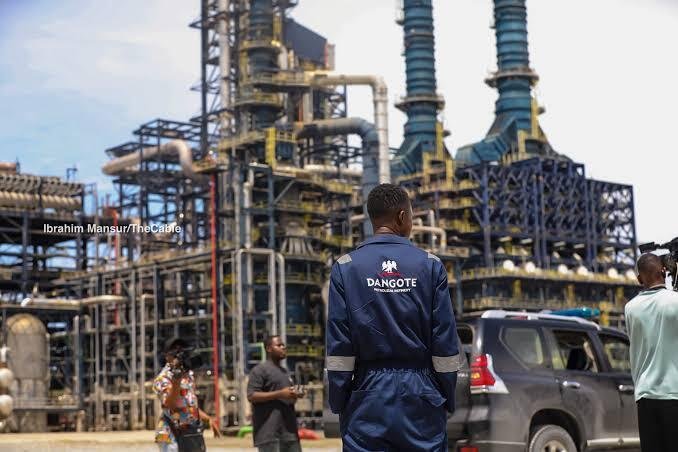
The Dangote Refinery IPO has received approval from Nigeria’s Securities and Exchange Commission, setting the stage for what could become Africa’s biggest-ever share sale. The company plans to offer 4.1 billion ordinary shares at ₦525 each, potentially raising about ₦2.15 trillion, or $1.63 billion, if fully subscribed. The order book is expected to open on September 14.
But the bigger story is not simply that investors will soon be able to buy Dangote Refinery shares at ₦525. The IPO could provide the funding needed to transform the refinery from Nigeria’s largest fuel producer into a much bigger regional energy business.
Why Dangote Is Raising the Money
The $1.6 billion Dangote Refinery IPO is designed to support an ambitious expansion. The Lagos refinery currently has a nameplate capacity of 650,000 barrels per day, and Dangote wants to increase that to 1.4 million barrels per day.
If completed, the expansion would make the refinery one of the largest in the world. The company is also pursuing a separate refinery project in Kenya, showing that its ambitions extend beyond supplying Nigeria.
This makes the IPO more than a fundraising exercise. Investors are effectively being asked to back Dangote’s plan to build a major African refining business.
Investors Face a Major Valuation Test
The Dangote Refinery IPO launch on September 14 will also test how much confidence investors have in the business.
The SEC has registered the refinery’s existing 120.13 billion shares, giving the company an implied valuation of roughly $47 billion based on the approved share structure. That is a huge valuation compared with some international refining companies.
The company will therefore need to convince investors that its future earnings and expansion potential justify the price. A 15% greenshoe option could also allow Dangote to sell additional shares if demand is strong.
Why This Matters for Nigeria
The Nigeria largest IPO could bring more ordinary and institutional investors into one of the country’s most important industrial projects.
It could also give the refinery access to fresh capital without relying entirely on debt, while allowing Nigerians and other African investors to participate in its future growth.
The immediate test, however, comes on September 14. Strong demand would signal confidence in Dangote’s expansion strategy. Weak demand could raise questions about the refinery’s valuation and the appetite for large Nigerian equity offerings.
Either way, the Dangote Refinery IPO 2026 is shaping up to be much bigger than a stock-market event. It is a test of whether African capital markets can finance the next stage of one of the continent’s biggest industrial projects.
One thought on “Dangote Refinery IPO Could Turn Nigeria’s Fuel Giant Into a Public Market Powerhouse”