










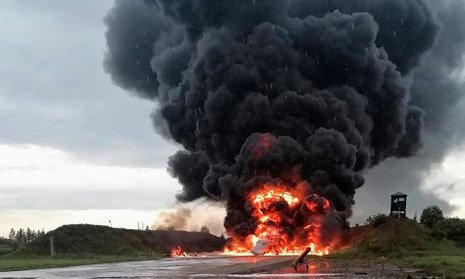
Ukraine is being pushed into a new phase of the war as Russia Ukraine drone attacks become faster, more frequent and harder to stop. Ukrainian officials say Russia launched more than 2,800 jet-powered Shahed drones during August, while Kyiv and Odesa have faced almost daily strikes.
The latest assault on Tuesday killed at least 12 people, including railway workers and an Indian citizen, as Russia carried out its sixth consecutive day of attacks.
The bigger concern is not simply the number of drones. It is the speed at which Russia is changing the technology Ukraine must defend against.
Shahed Drones Are Getting Faster
The newer Shahed drones Ukraine is facing are powered by jet engines and can travel much faster than older versions. Ukrainian officials say Russia dramatically increased their use in recent months, with jet-powered models making up a growing share of attack waves.
That creates a serious problem for Ukraine air defence. Systems designed to intercept slower drones may struggle when hundreds of targets arrive at high speed, forcing Ukraine to find cheaper and faster ways to protect its cities. Ukraine is already developing domestic interceptor drones as part of its response.
Why Kyiv and Odesa Are Under Pressure
The attacks are also increasingly hitting infrastructure that keeps Ukraine’s economy moving.
In Odesa, Russian strikes damaged port facilities and a border crossing with Romania. The region is important for Ukrainian exports, meaning repeated attacks could create problems beyond the immediate destruction.
Kyiv has also seen damage to residential areas and railway infrastructure. Six railway workers were among those killed in the latest attack, according to Ukrainian authorities.
This suggests the Russian strategy is becoming a test of Ukraine’s ability to protect both civilians and its economic infrastructure at the same time.
Europe Faces a Funding Test
The pressure is now reaching European capitals. EU defence ministers are meeting in Ireland as governments consider how to increase support for Ukraine’s air defence. Several European countries have also renewed calls to use frozen Russian assets to help finance Ukraine.
Around €210 billion in Russian central bank assets remain immobilised in the EU, although disagreements over legal and financial risks have slowed efforts to use the money.
The coming months could therefore become a race between Russia’s ability to produce more advanced drones and Ukraine’s ability to build enough affordable interceptors. For Ukraine, winning that race may be just as important as stopping the next major missile attack.


2 thoughts on “Russia-Ukraine Drone Attacks: Shahed Barrage Forces Ukraine to Rethink Air Defence”