










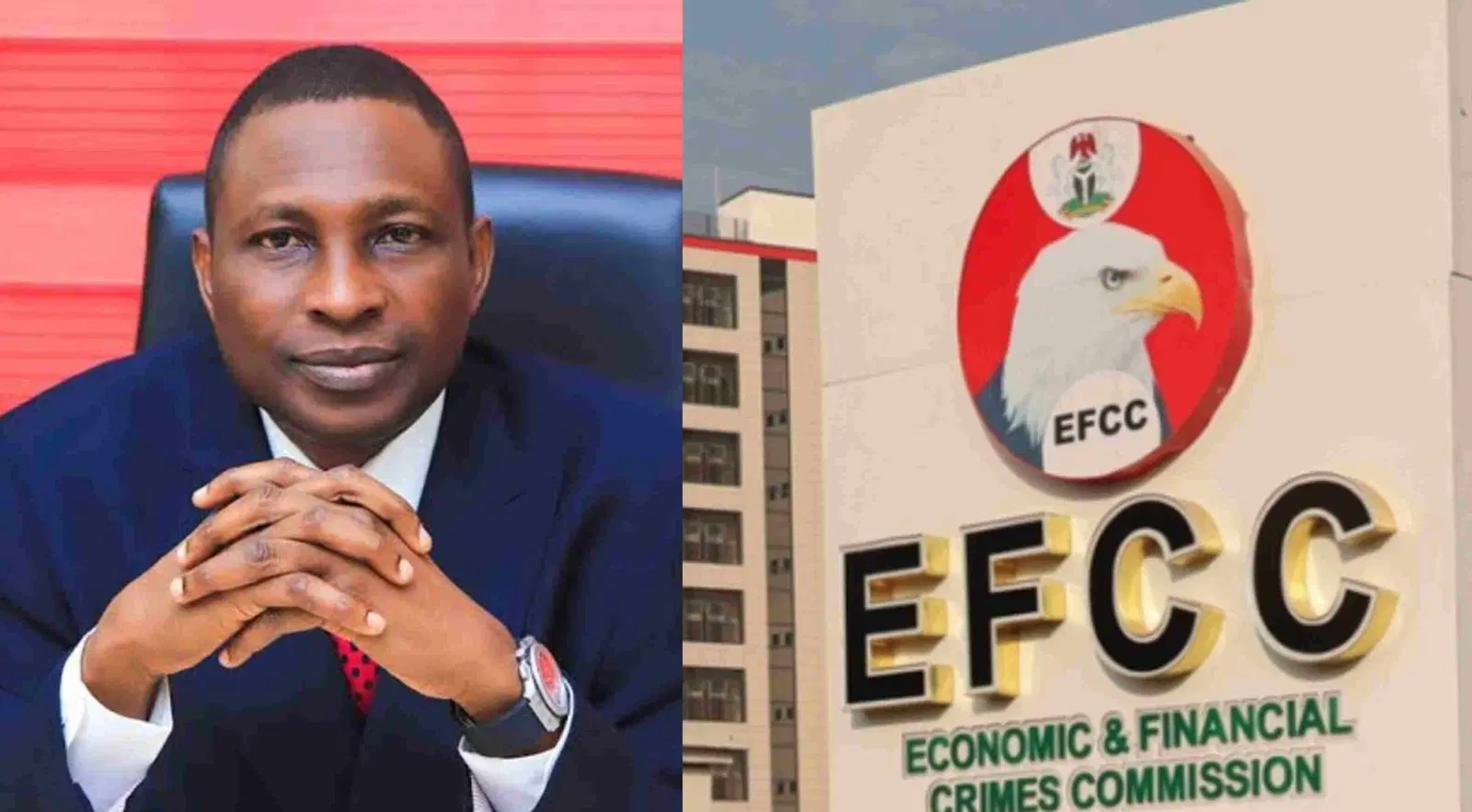
The EFCC N1.23 trillion recovery announced by the Economic and Financial Crimes Commission is drawing attention not only because of the size of the figure, but because of what happens to the money and assets after they are recovered.
EFCC Chairman Ola Olukoyede said the commission recovered N1.233 trillion, $684.48 million, £373,905.78 and €9.34 million between October 2023 and June 2026. The commission also secured 10,872 convictions during the period.
Where the EFCC Recovered Money Is Going
One important detail is that the entire EFCC recovered funds figure is not money going directly into the Federal Government’s account.
Olukoyede said N397.26 billion, about 33 per cent of the naira recovery, was recovered directly for the Federal Government. The remaining N836.34 billion was recovered on behalf of ministries, state revenue agencies, companies, individuals and foreign victims.
That distinction gives the EFCC asset recovery story a different angle. The commission is presenting recoveries as restitution, rather than simply extra government revenue.
The EFCC said N661.32 billion and $492.37 million had already been released to beneficiaries. It also pointed to tax recoveries of about N288.1 billion during the period.
From Seized Property to Public Assets
The clearest example of what asset recovery can mean beyond cash is the former NOK University in Kaduna State.
The property was forfeited and later handed over to the Federal Government. It has since been converted into the Federal University of Applied Sciences, Kachia, with 1,909 students matriculating in December 2025.
The EFCC also reported the forfeiture of 10,053 tangible assets, including properties, vehicles, land, schools, hotels, factories and other assets.
This raises the bigger question around financial crimes in Nigeria: how much social and economic value can the country create when recovered assets are put back into productive use?
10,872 Convictions Show a Wider Enforcement Push
The EFCC 10,872 convictions were recorded after 49,673 petitions were received, 39,615 cases investigated and 14,476 cases filed in court between October 2023 and July 2026.
The commission says its focus is increasingly moving towards evidence, prosecutions, asset recovery and prevention rather than arrests alone.
For Nigerians, however, the real test of the EFCC latest recovery figures will be whether recovered money reaches intended beneficiaries and recovered assets continue producing measurable public value.

One thought on “EFCC N1.23 Trillion Recovery: What Nigeria Is Doing With the Money Matters More Now”