









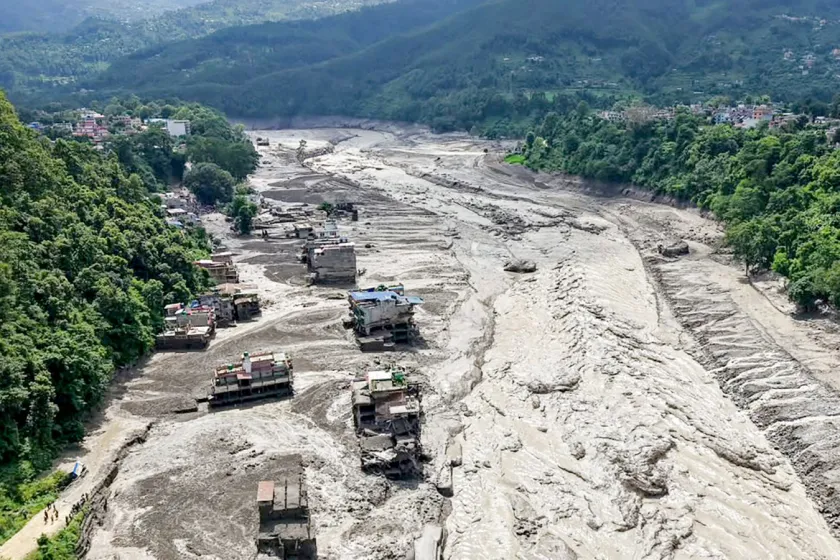
A devastating Nepal glacier collapse has triggered catastrophic flash floods along the Nepal-China border, killing at least 160 people and leaving hundreds missing. The disaster swept through villages, roads and bridges along the Bhotekoshi and Trishuli river systems, turning normally busy mountain routes into disaster zones.
The scale of the Nepal flash floods is still becoming clear, with authorities warning that the death toll could rise as rescue teams reach areas cut off by destroyed infrastructure.
Why the Nepal Glacier Collapse Was So Dangerous
The disaster was not simply a normal monsoon flood. Experts say an ice and rock collapse in the Himalayas sent a huge amount of debris into a river, creating a sudden surge of water, mud and rocks that travelled downstream at terrifying speed.
The US Geological Survey initially recorded seismic activity that appeared to be an earthquake, but later determined that the signal was generated by the glacial collapse itself. Scientists are also examining whether unusually warm conditions and rapid glacier melt contributed to the collapse.
That makes the Nepal-China border disaster particularly worrying. Mountain communities can have very little time to respond when unstable ice, rock and water suddenly move downstream.
Tourists and Pilgrims Among the Missing
The disaster has also become an international emergency because many of those missing were travelling through the region as tourists or pilgrims.
Nepal authorities reported hundreds of missing people, including large numbers of foreign nationals. Many were travelling towards Mount Kailash, a major Hindu pilgrimage destination, while others were trekking through the Himalayan region. At least 28 Nepali police officers were also reported missing.
Spiritual leader Sadhguru has said dozens of members of his pilgrimage group remain unaccounted for and that blocked roads have made it difficult for his team to reach the affected area.
Rescue Efforts Face a Race Against Time
The Nepal flood rescue operation is being complicated by destroyed roads, bridges, electricity lines and communication networks. Nepal has deployed helicopters and large numbers of security personnel, while India, China, the UN and other international partners have offered assistance.
The biggest challenge now is reaching isolated communities quickly enough to find survivors. Authorities are also watching river levels closely because blocked waterways could create further flooding.
A Warning for the Himalayan Region
Beyond the immediate rescue, the disaster is raising fresh concerns about the safety of communities living below rapidly changing glaciers.
Scientists have warned that warming temperatures are making Himalayan glaciers increasingly unstable. Similar floods have struck the region before, showing that this is not an isolated risk.
For Nepal, the immediate priority remains finding the missing. But once the rescue operation ends, questions about early warning systems, glacier monitoring and protecting mountain communities are likely to become much harder to ignore.



One thought on “Nepal Glacier Collapse Triggers Deadly Flash Floods as Rescue Teams Search for Hundreds Missing”