









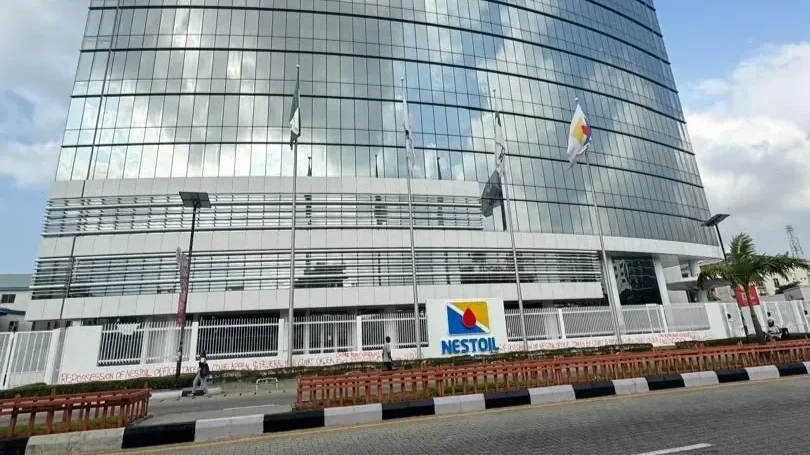
The Economic and Financial Crimes Commission has recovered $60 million from Nestoil Limited and paid the money to a consortium of creditor banks, but the bigger story is what the recovery says about Nigeria’s growing problem with large corporate debts.
The payment is the first stage of a structured repayment plan agreed between Nestoil and its lenders after a meeting chaired by EFCC Chairman Olanipekun Olukoyede. The commission said the recovery came during an ongoing investigation into alleged criminal aspects of transactions involving Nestoil and its creditors.
The creditor group includes major financial institutions such as Access Bank, Zenith Bank, UBA and First Bank, among others. The lenders have described the payment as encouraging, but it is only a small part of the much larger amount they say remains outstanding. The disputed debt has been put at more than $1.08 billion and about ₦469.43 billion.
Why This Matters for Nigerian Banks
The Nestoil dispute is important because when a large borrower struggles to repay its loans, the damage does not stop with the company and its shareholders. Banks have already provided money that could have been used to finance other businesses. When a huge facility becomes difficult to recover, lenders have to set aside money against potential losses, putting pressure on their balance sheets.
This is particularly relevant because Nigerian banks have faced significant loan impairment charges in recent years. The Nestoil case has already been linked to concerns about the impact of bad energy-sector loans on major lenders. Recovering $60 million therefore gives the banks some relief. More importantly, a successful repayment plan could prevent the dispute from becoming an even larger loss for the financial system.
The Courts Could Not Resolve the Money Problem Quickly
There is another interesting angle to this development. The Nestoil debt dispute has spent months moving through the courts, including receivership proceedings and appeals. In June, the Supreme Court set aside an appellate order connected to the asset freeze, while making clear that its ruling did not determine whether Nestoil actually owed the disputed debt.
Now, instead of waiting for years of litigation to produce a final financial outcome, the EFCC has helped bring the company and lenders to a repayment table. That does not mean the legal questions have disappeared. The EFCC is still investigating alleged criminal aspects of the transactions, and any eventual prosecution would need to establish the relevant allegations through due process.
But the $60 million payment shows that negotiated recovery can sometimes produce a financial result faster than a prolonged fight over assets.
The Real Test Is the Next Payment
The first $60 million is significant, but it should not be mistaken for a resolution. The lenders have said a substantial portion of the debt remains unpaid, while reports indicate that another $40 million could be expected in the next tranche.
That makes the next few months important. If Nestoil continues making payments, the arrangement could become a model for recovering other large corporate debts without leaving banks stuck in years of litigation. If payments stop, however, the dispute could return to the courts with even greater pressure on the company and its lenders.
For now, the $60 million is a good start. But with more than a billion dollars still in dispute, the real headline will be how much money Nigeria’s banks eventually get back.


One thought on “EFCC’s Nestoil Recovery Is About More Than Getting $60 Million Back”