









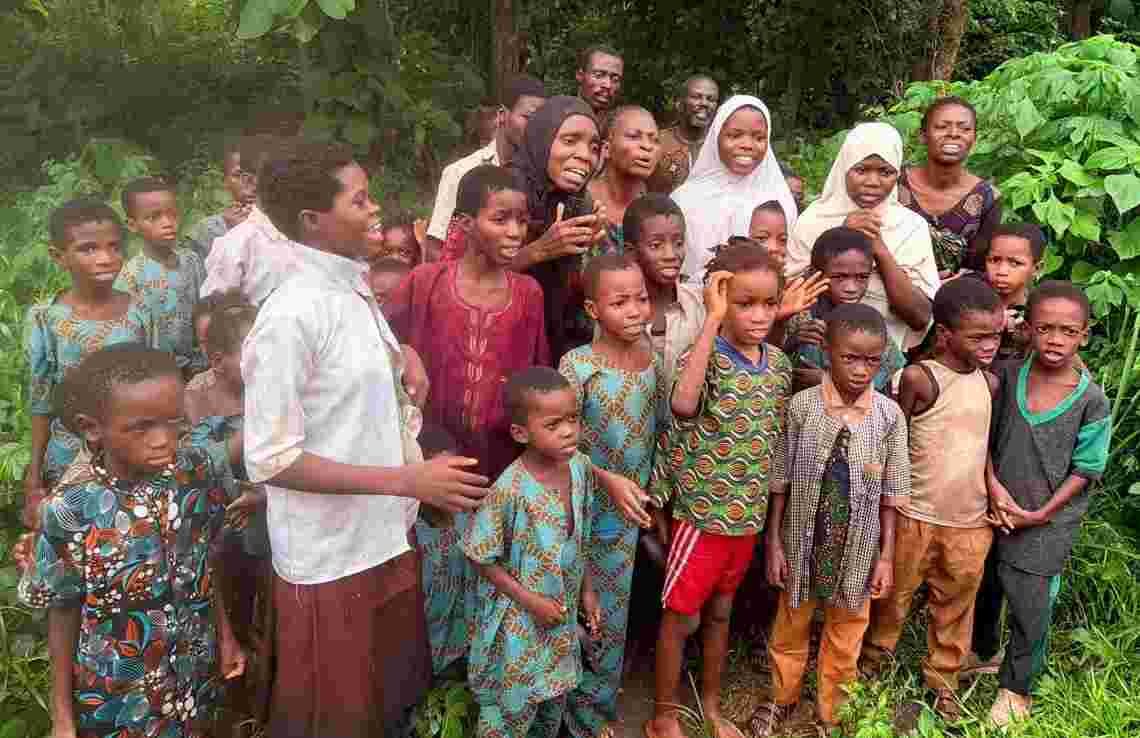
On the morning of July 10, 2026, a video circulated online. A woman, visibly shaken but upright, looked into a camera and said: “Hello sir, our father, we are grateful.” Behind her, children could be heard chanting. Some of them were eating biscuits.
Nigeria exhaled.
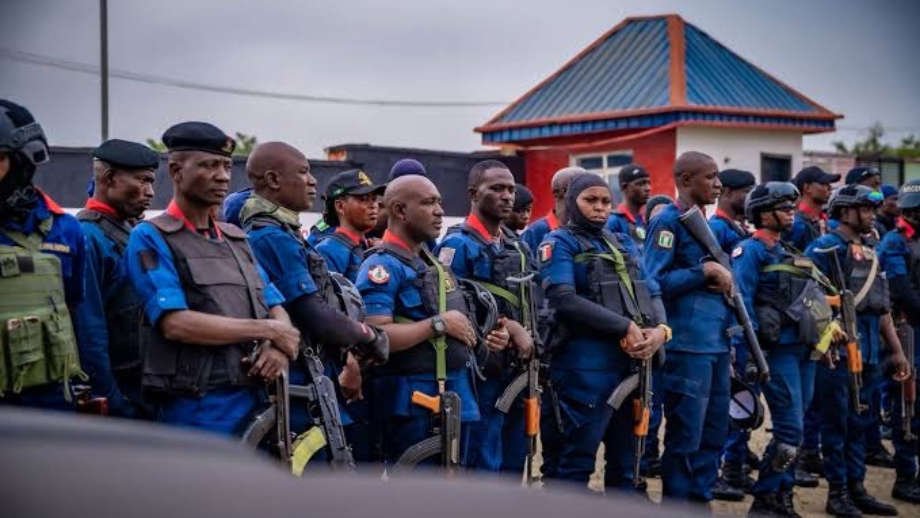
After 56 days, all the pupils and teachers kidnapped in Oriire, Oyo State, had been rescued by security agencies. The announcement came from the presidency. The celebrations came from everywhere else. Social media erupted. Politicians issued statements. The rescue trended nationally for hours.
And then, as Nigeria often does, we moved on to the next thing.
But here is what we are not talking about: for the 44 people who walked out of that forest, the rescue was not the end of anything. It was the beginning of something far harder, far longer, and far less celebrated than the 56 days that preceded it.
The Teachers Nobody Is Eulogizing Properly

Let us start with the ones who did not make it home.
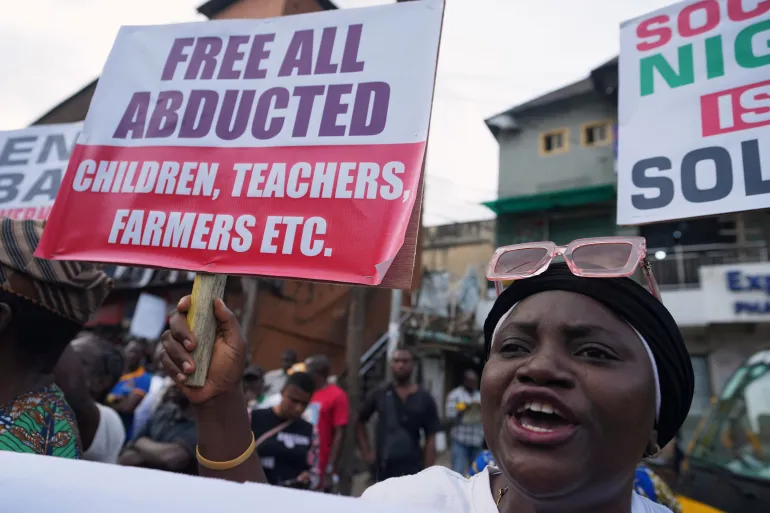
On May 17, 2026, the kidnappers released a video showing the beheading of a mathematics teacher, Michael Oyedokun, who had been abducted from Community High School, Ahoro-Esinele. He was tied. He was forced to speak. And then he was killed on camera, in a video that circulated on Nigerian social media while his family was still waiting for news.
His family asked Nigerians to stop sharing the graphic footage, saying the repeated reposting was traumatizing his children, who were sitting their exams, as well as elderly relatives. Nigeria largely ignored that request too.
Michael Oyedokun taught mathematics at a public school in rural Oyo State. Think about what that means in practical terms. Public school teachers in Nigeria typically earn between ₦30,000 and ₦120,000 monthly, depending on state and grade level. For context, that is a salary that in many states will not cover rent, transport, and feeding simultaneously. These are the people shaping the next generation of Nigerians, and this is what Nigeria pays them to do it.
Residents described Oyedokun as a committed teacher and Christian who served his community with dedication. His colleagues, the ones who survived, will return to a classroom where his desk is empty. Where a student will raise their hand for the mathematics teacher and nobody will answer.
We celebrated the rescue. We buried Michael Oyedokun’s name under the noise. That is not good enough.
The abduction targeted Baptist Nursery and Primary School, Community Grammar School, and L.A. Primary School. A teacher was killed during the assault itself, while another later died in captivity. Two educators dead. Seven abducted. Nigeria gave them a few days of national outrage and then moved on to the next trending topic.
This is the conversation we need to be having about Nigerian teachers: they are underpaid, under-protected, and when they die in service of children who are not their own, we do not even ensure their names are remembered correctly.
What 56 Days Does to a Child

Now for the children. Because the celebration of their return, as joyful as it is, is obscuring something that every parent in Nigeria needs to understand.
The victims included 39 students, with children as young as two years old among those taken. Two years old. A child who cannot yet fully form sentences, who does not understand what a terrorist is or why they were dragged from their classroom, spent 56 days in a forest with armed men.
The research on what this does to young minds is not comforting. Studies on abducted school children in Nigeria have found severe psychological trauma, including depression and PTSD, with inadequate mental health support post-release consistently identified as a major gap. Released victims have been found to have comorbidities of depression and Post Traumatic Stress Disorder, and findings show that effective coping mechanisms do not exist, leaving victims to take responsibility for their own psychological recovery.
One former Kaduna abductee described her experience this way: she was happy for the first two or three days after release, and then she was always depressed, having nightmares, scared, and those feelings seriously affected her health negatively. That account is from a study published in 2022. Nothing about Nigeria’s mental health infrastructure has changed significantly since then.
Nigeria recorded 7,568 abductions across 1,130 incidents between July 2023 and June 2024 alone. Each one of those numbers is a person. Many of them are children. And almost none of them receive adequate psychological support after their release.
Here is what I want to know, and what I think every Nigerian should be demanding an answer to: what is the actual plan for these 39 children? Not the press release plan. Not the “receiving medical attention at an undisclosed location” update. The real plan. How many trauma-trained child psychologists are being deployed to Oriire? What does the recovery program look like over the next six months? The next two years?
Because recovery from this kind of trauma does not happen in a week. It does not happen at a press conference. Research shows that kidnapped students often experience severe psychological trauma leading to decreased academic performance and increased dropout rates. These children survived something horrific. The question is whether Nigeria will show up for the part that comes after the cameras leave.
Coming Home to What?

There is one more dimension to this that nobody is addressing.
The school is currently closed for a security audit, and the government plans to install perimeter fencing and a permanent security post before students are allowed to return.
Think about what that means for a traumatized child. They come home. They try to return to normal. And when they go back to school, they walk through newly installed fencing, past uniformed security personnel, into a building that is visibly different because of what happened to them there. Every physical change to that school is a daily reminder of 56 days they are trying to forget.
Trauma-informed care teaches us that environments matter enormously in recovery. Returning a traumatized child to a militarized version of the place where they were taken is not a neutral act. It requires careful, professional management. Does Oyo State have those professionals available? Does Nigeria?
The honest answer is that we do not know, because nobody is asking.
The Country We Are

Nigeria celebrated this rescue, and we should. The operation involved multiple security and intelligence agencies, including Special Forces of the Nigerian Army, Navy and Air Force, the Nigeria Police Force, the Department of State Services, the National Intelligence Agency, Amotekun, local vigilantes and hunters. That coordination was genuinely impressive.
But a country is not defined only by how it rescues its children. It is defined by how it treats its teachers before they are martyred. By how it heals its children after they survive the unsurvivable. By whether the names of the dead are remembered longer than a news cycle.
Michael Oyedokun went to work on May 15, 2026. He taught mathematics to children who needed him. He did not come home.
The 39 children who did come home are eating biscuits in a video and chanting “thank you sir” for the cameras. But somewhere behind those eyes is 56 days that will take years to process, in a country with limited infrastructure to help them do it.
We celebrated the rescue. Now comes the real work. And Nigeria has a troubling history of showing up for the moment and disappearing for everything that follows.
Let us, this time, prove that history wrong.