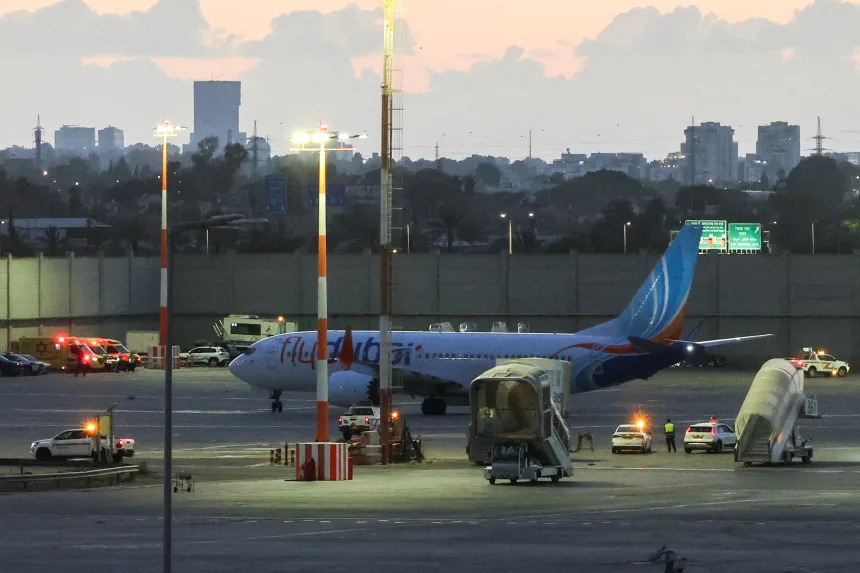
The investigation into the Flydubai hijack attempt has taken a more serious turn after Israeli officials said the co-pilot allegedly planned to crash the passenger jet into Ben Gurion Airport before he even joined the airline.
The incident happened on September 30 aboard Flydubai flight FZ1073, travelling from Dubai to Tel Aviv with more than 170 people on board. The co-pilot allegedly attacked Indian Captain Smit Machchhar in the cockpit, leaving him injured and briefly sending the aircraft into a dangerous descent.
How the Flydubai attack was stopped
The Flydubai co-pilot attack could have ended in a major disaster, but the injured captain managed to fight back and open the cockpit door.
Passengers and crew members then entered the cockpit and overpowered the attacker. Two off-duty pilots who were also on board helped take control of the aircraft before it made an emergency landing in Tabuk, Saudi Arabia.
The captain survived his injuries, while the suspected attacker was detained and later transferred to the United Arab Emirates.
The UAE has described the incident as a terrorist attack, although investigators are still examining the suspect’s motive and whether he acted alone.
The alleged plan began before he joined Flydubai
The latest development makes the case particularly troubling. According to Israeli officials cited by Reuters, the Omani co-pilot told UAE interrogators that he had planned the attack before he was employed by Flydubai. Investigators believe he specifically wanted to target a flight travelling to Israel and intended to crash the aircraft into Ben Gurion Airport.
Sources also told Reuters that he had previously operated a flight to Tel Aviv and allegedly considered carrying out a similar attack on that journey before abandoning the plan.
The claims have not yet been independently confirmed by the suspect, who remains in UAE custody, and no formal charges have publicly been announced.
What the Flydubai investigation could change
The Flydubai aviation security investigation is now raising questions about insider threats. Airports have spent decades strengthening passenger screening and cockpit security, but this incident shows that someone already inside the flight crew can present a very different security challenge.
The fact that the alleged attacker was a co-pilot has also triggered scrutiny of pilot vetting and how information about foreign crew members is shared between airlines and governments. Israel has already ordered a review of security arrangements for foreign airlines flying into the country.
Investigators in the UAE, Israel, Saudi Arabia, Oman and other countries are now examining the suspect’s background and whether anyone else was involved.
For the aviation industry, the key issue may be bigger than this one flight. The Flydubai flight FZ1073 incident could push airlines and governments to look more closely at threats that come from inside the cockpit, rather than only those trying to get through airport security.