









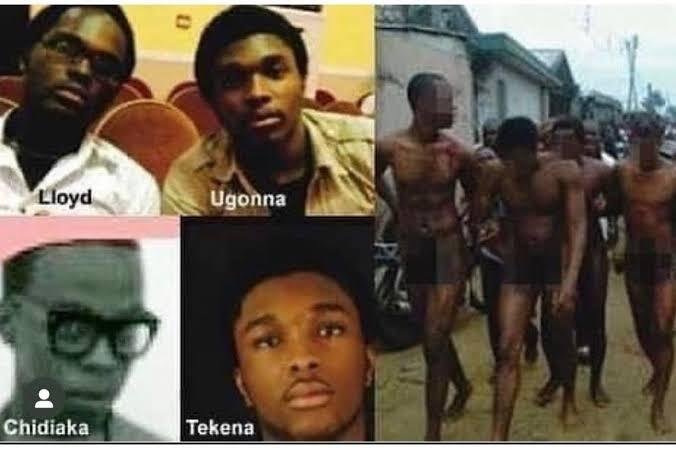
Fourteen years after four University of Port Harcourt students were killed by a mob in Aluu, Rivers State, their names remain tied to one of Nigeria’s most disturbing cases of jungle justice.
Ugonna Obuzor, Lloyd Toku, Chiadika Biringa and Tekena Elkanah were killed on October 5, 2012, after a dispute over money escalated into allegations of theft. The four were stripped, beaten and eventually set on fire by a mob.
Their deaths shocked Nigerians, particularly after photographs and videos of the attack spread widely.
How the Aluu Four Were Killed
The Aluu Four lynching of 2012 began after the students went to Aluu to collect a debt from a man identified as Coxson Lucky. After an argument, Lucky raised an alarm and the four were accused of stealing.
The accusation quickly became a mob attack. Amnesty International’s account says the students were stripped, paraded through the community and beaten before tyres were placed around them and they were set ablaze. None of the four survived.
The tragedy exposed how quickly an accusation can become a death sentence when a crowd decides that evidence and due process no longer matter.
The Case Eventually Reached Court
The legal process took years. Twelve people were initially involved in the case, although several were later discharged or acquitted.
On July 31, 2017, a Rivers State High Court sentenced three people to death for their roles in the murders. They included former police sergeant Lucky Orji, Ikechukwu Amadi and Chinasa Ogbada. Four other defendants were discharged and acquitted.
The judgment gave the victims’ families a measure of legal recognition, but it came almost five years after the killings.
Fourteen Years Later, The Bigger Question Remains
The Aluu 4 anniversary 2026 is bringing the names of the four young men back into public conversation, but the story remains relevant because mob violence has not disappeared from Nigeria.
A 2025 retrospective by Zikoko, citing Amnesty International, reported that at least 555 people were victims of mob violence in Nigeria between January 2012 and August 2023. The figure included people accused of crimes, blasphemy and other alleged offences.
That makes the Aluu Four more than a story from 2012. Their deaths remain a warning about what happens when suspicion moves faster than evidence and when people decide that an accusation is enough to justify violence.
Remembering the Four
For the families, October 5 is not simply another anniversary. They remember sons, brothers and young men whose lives ended before they had the chance to fulfil their ambitions.
For Nigeria, the memory of Ugonna, Lloyd, Chiadika and Tekena carries another responsibility: to reject the idea that a crowd can decide who deserves to live or die.
Fourteen years later, remembering Aluu 4 should mean more than reposting their photographs. It should mean remembering how quickly ordinary people can become victims when the rule of law is replaced by mob justice.