









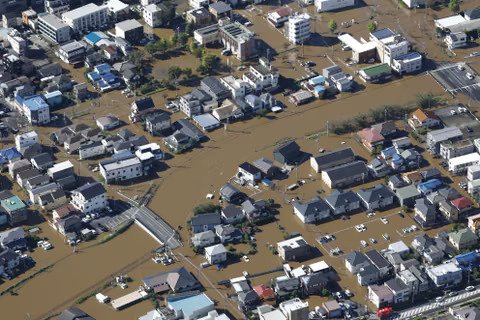
Typhoon Dujuan has left at least nine people dead and four others missing in eastern Japan after torrential rain triggered major flooding and landslides across the Tokyo region.
The storm, which moved along Japan’s Pacific coast on Monday, September 21, brought record rainfall to parts of the Kanto region before moving away from the country. By Wednesday, September 23, authorities were still searching damaged neighbourhoods as the scale of the destruction became clearer.
Record Rain Turned Flooding Into a Rescue Crisis
The biggest danger from Typhoon Dujuan was not simply the strength of its winds. The storm dumped extraordinary amounts of rain across areas around Tokyo, causing rivers and drainage systems to struggle with the volume of water.
Some areas recorded more than 800 millimetres of rainfall within 48 hours. In Chiba and Kanagawa prefectures, floodwaters and landslides damaged homes and cut off roads, while rescue teams searched buildings and vehicles for missing residents.
The latest reports put the death toll at six in Chiba and three in Kanagawa. Several of the missing people are believed to have been caught in landslides, highlighting the continuing danger even after the storm itself moved away.
Why the Danger Continued After the Typhoon Moved Away
Typhoon Dujuan had moved northeast away from Japan’s Pacific coast by Tuesday night, but that did not immediately end the emergency.
Saturated ground remained vulnerable to further landslides, while flooded areas continued to disrupt transport and other services. Earlier warnings from the Japan Meteorological Agency had specifically highlighted the risk of flooding, swollen rivers and landslides in eastern Japan.
Around 500 homes had been damaged across Chiba, Kanagawa and Ibaraki by Wednesday. Power outages also affected tens of thousands of households during the storm.
The Storm Also Disrupted Japan’s Busy Holiday Week
Dujuan arrived during Japan’s Silver Week holiday period, when travel and tourism activity was particularly high.
The storm disrupted flights, rail services and roads around the Tokyo region. It also affected major events, including the Tokyo Game Show, which had to close earlier than planned because of the weather.
The disruption shows how a major weather event can quickly affect more than residential areas. Transport networks, businesses, public events and electricity supplies can all become part of the emergency response.
What Happens Next
With Typhoon Dujuan moving away from Japan, attention has shifted from preparation to recovery and search operations.
Rescue teams are continuing to look for missing people while authorities assess damaged homes and infrastructure. The immediate concern remains landslide and flood risks in areas where the ground is still saturated.
For Japan, the storm is another reminder of the country’s exposure to powerful tropical systems during the late summer and early autumn. Dujuan was the 25th named storm of the year and produced rainfall intense enough to overwhelm parts of the Kanto region despite the country’s extensive disaster-preparedness systems.