








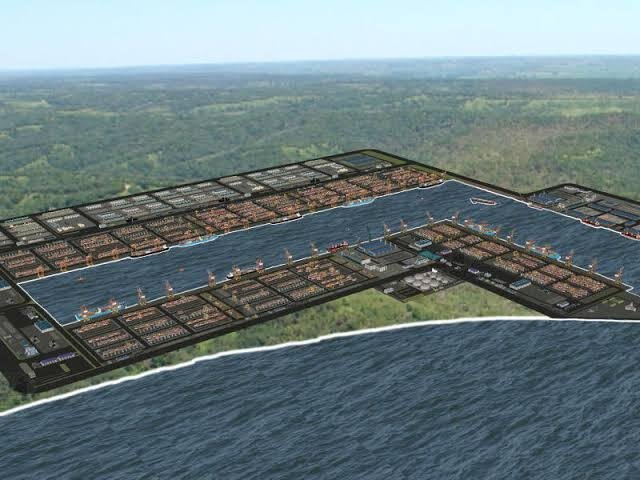
The long-delayed Badagry Deep-Seaport development has moved into a new phase after APM Terminals signed a Memorandum of Understanding with Badagry Port Development Limited to explore the project.
The agreement was signed in Copenhagen during a visit by Nigeria’s Minister of Marine and Blue Economy, Adegboyega Oyetola, and a Federal Government delegation. It commits the parties to exclusive negotiations over the proposed greenfield port.
The development is significant because the Badagry port project 2026 has faced delays, with the latest agreement offering a fresh route towards turning the proposed port into an operating maritime facility.
What the Badagry Port Could Change
The proposed port is designed to add deepwater capacity to Nigeria’s maritime infrastructure and allow larger container vessels to call at the country.
It is also expected to create new transshipment opportunities for Nigeria and the wider West African market. That could allow cargo moving through the region to be handled more efficiently and strengthen Nigeria’s position as a regional trade and logistics hub.
APM Terminals also sees the project as a way to ease congestion in existing city ports while creating new opportunities for trade.
That makes the Badagry Deep-Seaport APM Terminals partnership important beyond Lagos. A successful project could change how Nigeria handles large-scale container traffic and competes for regional transshipment business.
APM Terminals Already Has a Nigerian Footprint
The company is not entering Nigeria’s port sector for the first time. APM Terminals already operates concessions at the Lagos Port Complex in Apapa and the West Africa Container Terminal in Onne. During the Denmark discussions, the company also considered further long-term investment in those existing concessions.
The Badagry project would therefore add a greenfield facility to an existing Nigerian port network rather than represent APM Terminals’ first major investment in the country.
What Happens Next?
The MoU does not mean construction starts immediately. The parties will first enter exclusive negotiations to examine the development of the port.
The proposed project has previously been described as a $2.5 billion development under a Build, Own, Operate and Transfer public-private partnership model. The Federal Executive Council approved the concession structure in 2022.
The next important stage will therefore be whether the negotiations produce a final development agreement and move the project from plans into construction.
For Nigeria, that progress could be just as important as the MoU itself. The country is already recording stronger port activity, making additional deepwater capacity increasingly relevant as cargo volumes and vessel traffic grow.