









For millions of people living with sickle cell disease, the biggest challenge is not only the illness itself. It is getting regular access to medicines that can reduce painful crises and hospital visits. That is why Senegal’s sickle cell treatment, Drepaf, could be bigger than a new drug on the market.
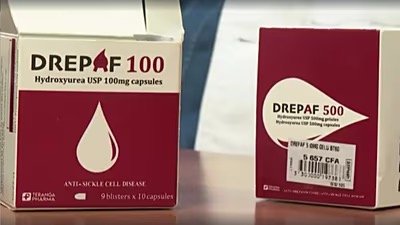
Produced by Senegalese pharmaceutical company Teranga Pharma, Drepaf is a generic version of hydroxyurea, a key medicine recommended for managing sickle cell disease. Its local production could help tackle one of Africa’s biggest healthcare problems: depending on expensive imported medicines for a disease that heavily affects the continent.
Why Drepaf Matters
Africa carries nearly 80 per cent of the world’s sickle cell disease burden, yet many patients have struggled with the cost and availability of treatment. A 2023 survey of healthcare workers across 13 French-speaking sub-Saharan African countries found frequent interruptions in hydroxyurea supplies.
That makes the Drepaf sickle cell drug significant because it is being manufactured in Africa rather than relying entirely on medicines shipped from Europe or the Americas.
Teranga Pharma launched Drepaf in November 2025. The company produces a 500mg version for adults and a 100mg version designed for children, with the paediatric formulation suitable from nine months of age.
A Cheaper Option for Patients
Cost is another major part of the story. Drepaf’s two formulations are sold to pharmacies at wholesale prices of 3,000 CFA francs and 1,500 CFA francs, with imported alternatives costing up to three times more, according to Medical Xpress.
For families managing a condition that requires long-term treatment, lower prices could make a major difference. The development also represents a shift towards healthcare self-reliance in Africa. Teranga Pharma says it wants to expand into countries including Burkina Faso, Guinea and Côte d’Ivoire, while other African countries have also shown interest.
What Comes Next for Africa
The real test will be whether production can grow fast enough to reach patients across the continent. Local manufacturing does not automatically solve every problem. Medicines still need strong regulation, reliable distribution and enough production capacity to prevent shortages. But Drepaf provides a model that other African pharmaceutical companies could follow.
The Africa-made sickle cell treatment could therefore become important not only because of the medicine itself, but because it shows what is possible when African countries begin producing more of the healthcare products their populations already need.