








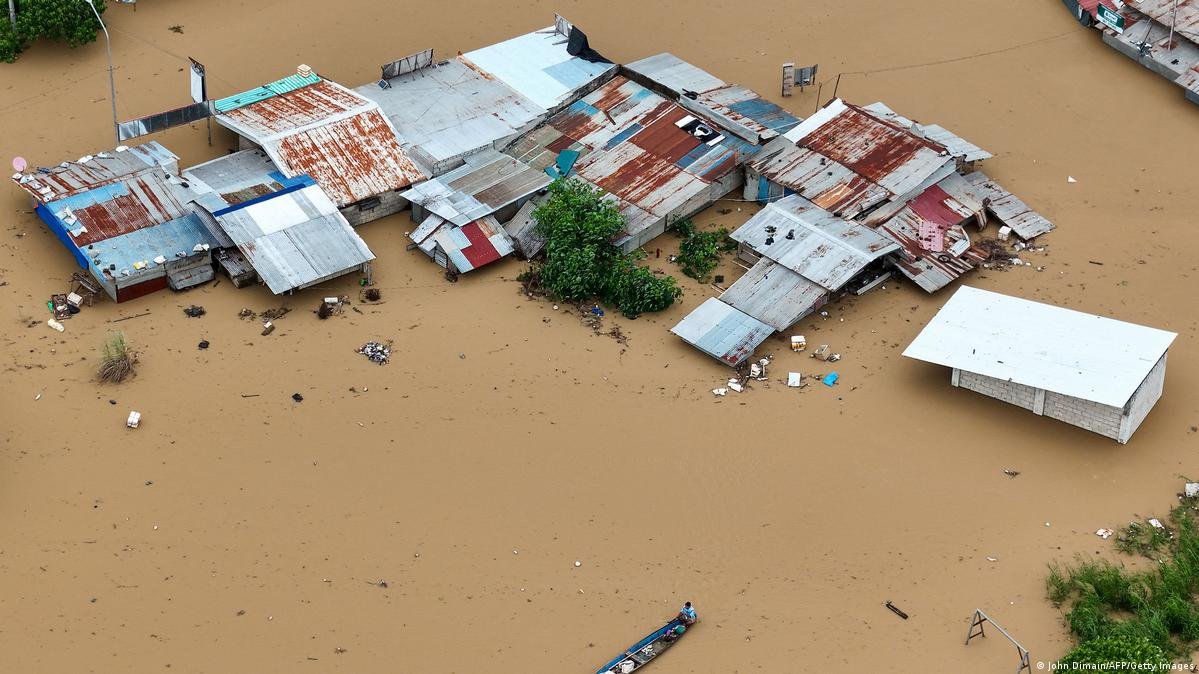
At least 13 people have died in the Philippines after nine consecutive days of heavy rain triggered flash floods, landslides and other accidents across the northern part of the country. Eight people were also reported missing, while more than half a million people across 33 provinces had been affected in the initial assessment.
But the bigger story is how quickly a familiar seasonal hazard has turned into a much wider disruption. The Philippines regularly experiences severe weather. The country sits along the Pacific cyclone belt and faces an average of around 20 storms and typhoons each year. What made this episode particularly dangerous was the combination of an already active southwest monsoon with tropical cyclones that intensified the rainfall.
And the consequences are spreading beyond isolated flood zones. Homes and businesses in Metro Manila have been inundated, while authorities have suspended classes and government work in several affected areas. Thousands of families have been forced into evacuation centers, with the wider disaster response later estimating that more than 3.7 million people had been affected by the combined effects of the monsoon and tropical cyclones Luis and Maymay.
That raises a difficult question for the Philippines: how much more extreme can the country’s rainy season become before existing infrastructure stops coping?
Flooding is not new to the country, but repeated extreme rainfall puts enormous pressure on drainage systems, roads, homes and emergency services. A city can recover from one major storm. The problem becomes much harder when another wave of rain arrives before the previous flooding has even receded.
That is particularly important for densely populated urban areas. When roads flood, people struggle to reach work or hospitals. When schools close, education is interrupted. When businesses cannot open, families lose income. And when waterways become overwhelmed, even relatively ordinary rainfall after the main storm can become dangerous.
The immediate priority remains rescue, evacuation and preventing further deaths. But once the waters recede, the Philippines will face another question: whether disaster preparedness is keeping pace with the intensity of the weather it is increasingly being asked to withstand.
For a country accustomed to storms, resilience can no longer simply mean surviving the next typhoon. It increasingly means building cities and infrastructure capable of functioning while extreme weather is happening.