








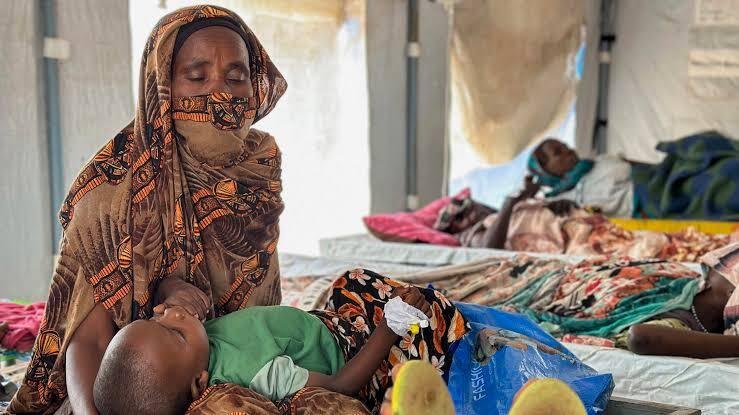
Sudan is facing a worsening humanitarian emergency as a deadly cholera outbreak continues to spread while the United Nations warns that civilians in the besieged city of El-Obeid are at risk of large-scale violence.
The World Health Organization (WHO) has confirmed that the latest cholera outbreak has killed more than 120 people, with over 1,100 suspected cases reported since May, primarily in conflict-affected areas where access to healthcare remains severely limited. Health officials say the outbreak is Sudan’s third major cholera wave in as many years and is being fuelled by the country’s prolonged civil war, damaged water infrastructure and collapsing health system.
The crisis comes as the rainy season approaches, raising fears that contaminated water supplies and limited sanitation services could accelerate the spread of the disease. The WHO warned that millions remain vulnerable as humanitarian agencies struggle to deliver medical supplies to areas cut off by fighting.
At the same time, the United Nations has issued an urgent warning over the security situation in El-Obeid, the capital of North Kordofan State. The city has endured an 18-month frontline siege, and UN officials fear an imminent assault could result in mass civilian casualties. Drone strikes have already damaged key infrastructure, disrupting access to electricity and clean drinking water while worsening humanitarian conditions.
Aid agencies say Sudan’s healthcare system has been devastated by more than three years of conflict between the Sudanese Armed Forces and the Rapid Support Forces (RSF), leaving many hospitals either destroyed or only partially operational. Millions of displaced people now face growing risks from disease, hunger and violence.
The WHO and the United Nations are calling for immediate humanitarian access, protection of civilians and increased international support, warning that without urgent intervention, Sudan’s combined health and security crises could deteriorate even further in the weeks ahead.